What Helps Language Development Most
The strongest support for toddler language development comes from simple, everyday moments.
Talking Little and Often
Short, clear phrases work best. Describe what you are doing, what your child is looking at, or what is happening around them.
You can see why this matters in
the benefits of talking with your toddler.
Repetition Without Pressure
Hearing the same words again and again helps toddlers remember them.
- Read the same books repeatedly
- Name favourite objects daily
- Repeat your child’s words back to them
This repetition builds confidence and understanding.
For practical techniques, visit
multisensory language techniques.
Responding, Not Testing
Toddlers learn more when language feels like a conversation, not a quiz.
Instead of asking lots of questions, comment on what they are doing or saying. This keeps communication relaxed and enjoyable.
If you would like step-by-step support, explore
parent coaching for language success.
Everyday Activities That Build Language
You do not need extra time or special equipment. Language learning fits naturally into daily routines.
For more structured ideas, see
daily routines that build language.
Mealtimes
- Name foods, colours, and actions
- Use simple phrases like more banana or all done
- Wait and respond to attempts to communicate
Playtime
Play is one of the most powerful language builders. Discover more in
how play encourages talking.
- Follow your child’s lead
- Name toys and actions as they play
- Repeat sounds or words they use
You can also try simple
language games for toddlers and use
songs to boost language.
Everyday Objects
Ordinary items around your home are perfect teaching tools. Read
using everyday objects to teach language for simple examples.
Group Play and Social Skills
As toddlers grow, language becomes more social. Learn about
social language skills in group play and how siblings can help in
how siblings help language growth.
Imitation also plays a big role. Explore
the role of imitation in language.
Nappy Changes and Getting Dressed
These quiet moments are ideal for one-to-one talking, with fewer distractions and lots of repetition.
Special Situations and Extra Support
Some children need a little more time or support, and that is completely okay.
If your toddler is slower to start talking, read
tips for slow talkers.
If you have concerns about development, see
early signs of speech delays for guidance on what to look for.
For families raising children in two languages, visit
bilingual toddler language tips.
If your child was born early, you may also find
language development in preterm babies helpful.
Using Books to Support Toddler Language Development
Picture books are one of the easiest and most effective ways to build language skills.
Books with clear images and one main object per page work especially well for toddlers.
How to Read for Language Growth
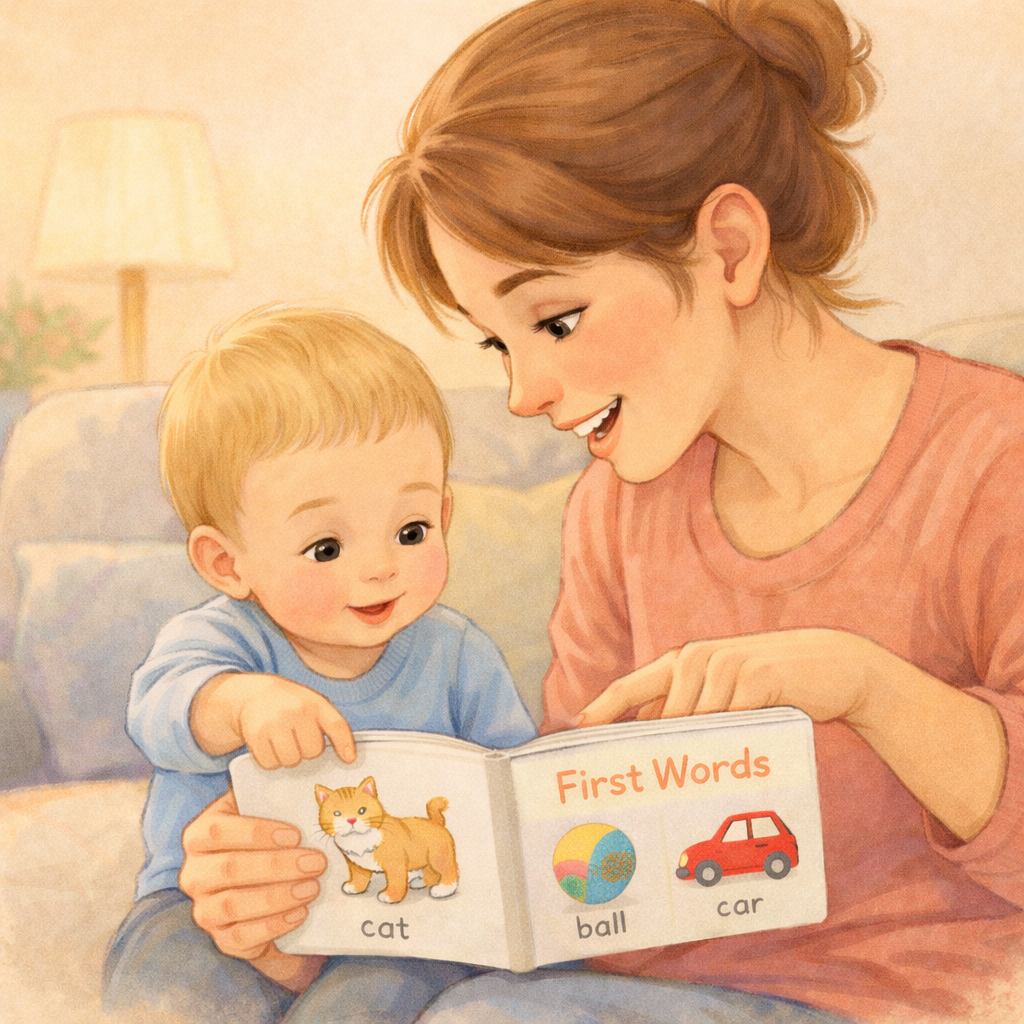
- Point to pictures and name them
- Pause to let your child look or respond
- Repeat key words rather than reading every word
- Link pictures to real-life objects

Books designed for early language, such as ChattyCubs First Words, are created specifically to support this stage of development through simple images and repetition. They work best when shared slowly, with pointing, talking, and time to respond.
You may also find it helpful to explore our wider
First Words Learning guide to understand how early vocabulary connects to long-term language skills.
Common Worries About Language Development
Many parents worry they are not doing enough or that their child is behind.
It is normal for toddlers to develop language at different speeds. Some focus on movement first, others on speech.
If your child understands what you say, responds in their own way, and is engaged with people, these are strong signs of healthy language development.
If you ever feel unsure, trust your instincts and speak to your GP or health visitor for reassurance.
How ChattyCubs Supports Toddler Language Development
ChattyCubs First Words books are designed to support natural language development through:
- Clear, uncluttered illustrations
- Everyday, useful first words
- Encouragement for parent-child interaction
- Simple formats that invite repetition
They work best when shared slowly, with pointing, talking, and time to respond.
Important: This page is for general information only and does not replace professional advice. Please read our Editorial Policy & Disclaimer.