ChattyCubs
£0.00 0

Basket

No products in the basket.

How Siblings Help Language Growth

How Siblings Help Language Growth

If you have more than one child, you might notice that younger siblings often seem to pick up words faster. This is not a coincidence. Siblings create a rich, natural language environment that supports early speech and communication.

From everyday chatter to imaginative play, siblings give toddlers extra opportunities to hear, practise, and use language in real life.

Why siblings support language development

Older siblings naturally talk, explain, and narrate what they are doing. Younger children are constantly listening, watching, and joining in.

This creates frequent, meaningful language exposure without it feeling like learning.
  • More words heard throughout the day
  • Language used in real situations, not lessons
  • Motivation to copy and join in
  • Natural turn-taking and conversation
Learning through listening and copying

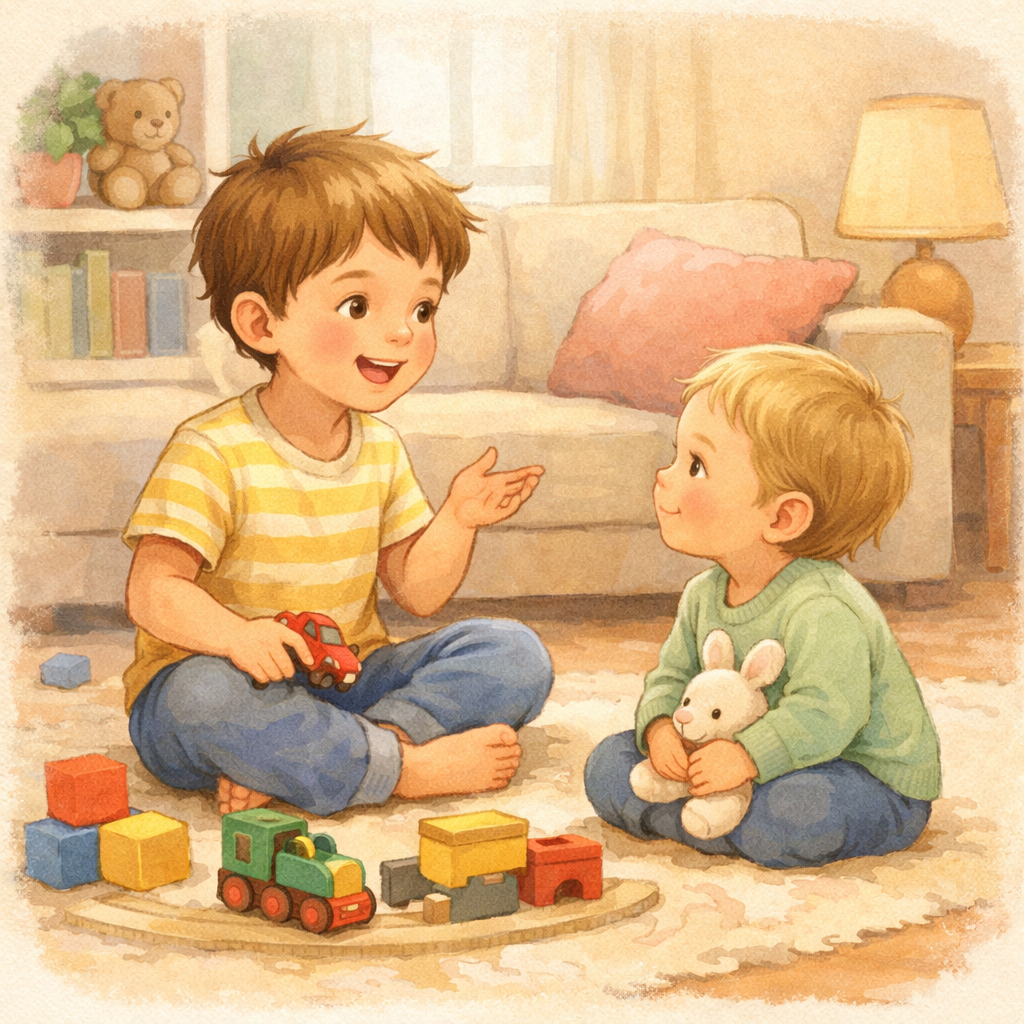
Younger siblings learn a huge amount just by listening. They hear conversations, instructions, jokes, and pretend play.

They often copy words, sounds, and phrases used by an older sibling, sometimes earlier than expected.
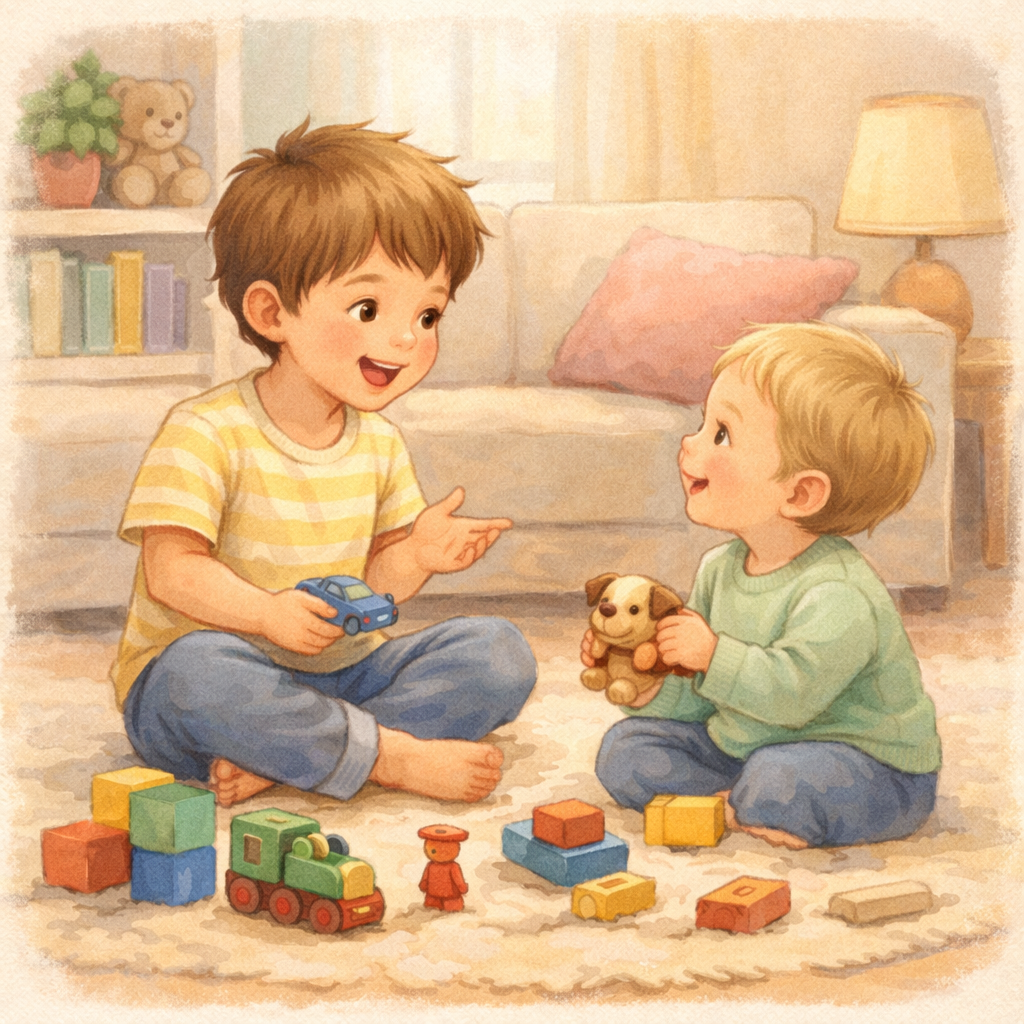
Younger sibling listening to an older sibling talking during play

Why copying matters

  • Helps toddlers practise new sounds safely
  • Builds confidence before using words independently
  • Supports pronunciation and rhythm of speech

Sibling play encourages talking

Play between siblings often involves problem-solving, pretending, and negotiating. All of this is excellent for language growth.

Even simple games encourage words like “mine”, “your turn”, “again”, and “help”.
Siblings playing together and using language during play

Types of play that boost language

  • Pretend play like shops, kitchens, or cars
  • Building games with blocks or train sets
  • Shared picture books and storytelling
  • Outdoor play with simple rules

The role of older siblings

Older siblings often act as informal teachers, even without realising it. They explain rules, label objects, and show how things work.

This peer-style language can sometimes feel easier for toddlers to understand than adult speech.
  • Shorter, simpler sentences
  • Repeated words and phrases
  • Clear links between words and actions

Supporting positive sibling communication

While sibling interaction is powerful, gentle guidance helps keep it positive and supportive.

You can help by modelling good language and stepping in when needed.
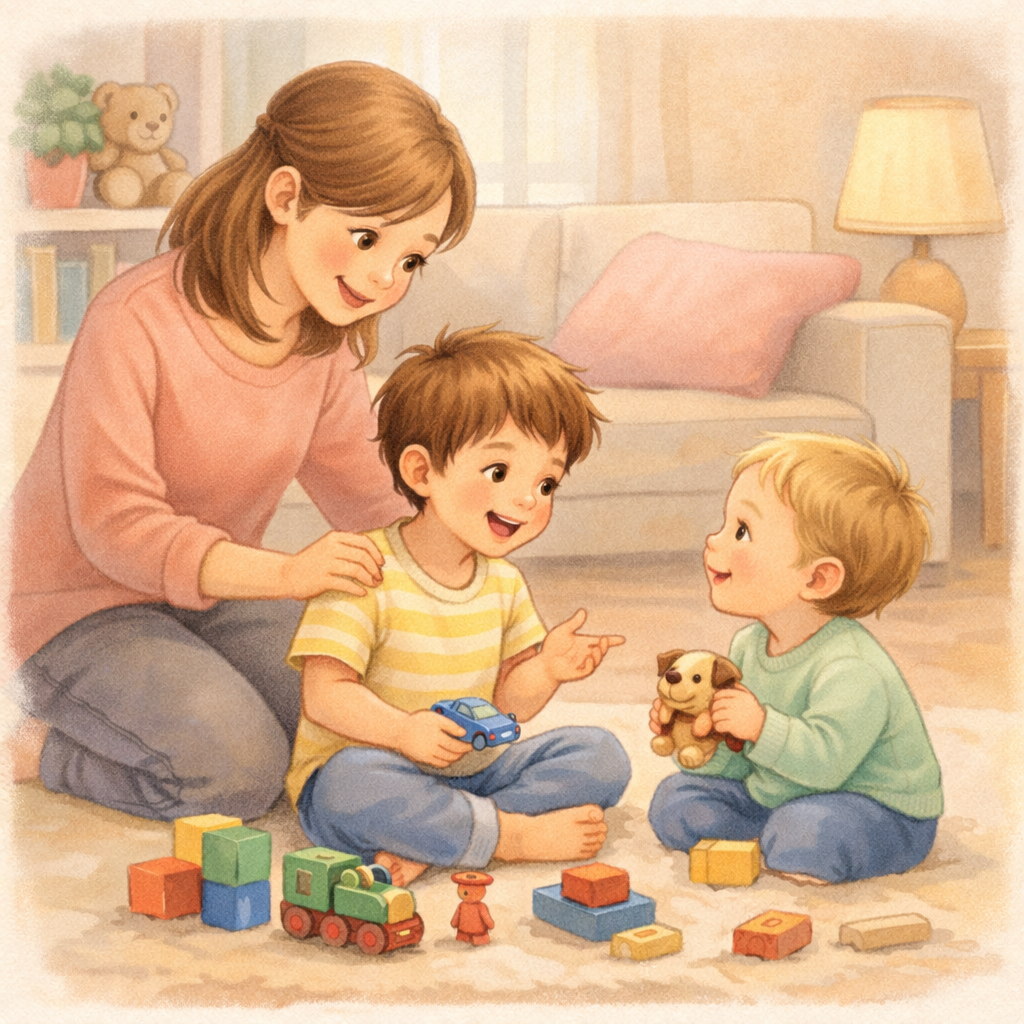
Parent encouraging positive language between siblings

Simple tips for parents

  • Praise kind and helpful talking
  • Model turn-taking in conversations
  • Rephrase rather than correct harshly
  • Give each child time to speak

What if my older child talks for the younger one?

This is very common. Older siblings often answer on behalf of younger ones.

It helps to gently pause and give the younger child a chance to respond, even if it takes a little longer.
  • Use expectant pauses
  • Encourage gestures or sounds as a start
  • Praise any attempt to communicate

Using books to support sibling language

Shared reading is a lovely way to encourage siblings to talk together. Older children often enjoy “reading” pictures to younger ones.

Simple first words books work especially well for this.

When siblings have different language levels

Every child develops at their own pace. Some younger siblings talk early, others take longer.

Sibling interaction still supports understanding, even if spoken words come later.

If you have concerns, trust your instincts and seek advice, but remember that variation is normal.

Siblings create a natural, playful language-rich environment. Through listening, copying, and playing together, toddlers get extra opportunities to develop speech and communication every day.

With gentle support from parents, sibling relationships can become one of the strongest drivers of early language growth.

Related Toddler Language Pages

If you are building confidence with toddler language development, these pages may help next:
Stages of Toddler Language Development How Toddlers Learn To Speak How to Practice First Words Daily How First Words Develop Into Sentences Using Picture Books for First Words

Newsletter

Join our Early Readers Club for fun learning tips, sneak peeks at new books, and free printable activities!
ChattyCubs™ 2026 All Rights Reserved.