ChattyCubs
£0.00 0

Basket

No products in the basket.

Phonemic Awareness for Beginners

Phonemic Awareness for Beginners

Phonemic awareness is one of the earliest building blocks for reading.

It sounds technical, but it is actually very simple. It means helping your child hear and play with the sounds inside words.

Before children can read letters, they need to notice sounds. This page explains how to gently build that skill at home.

If you are new to early literacy, start with our main guide to Early Literacy Skills.

What Is Phonemic Awareness?

Phonemic awareness is the ability to hear and notice the small sounds in words.

For example, the word “cat” has three sounds:
  • /c/
  • /a/
  • /t/
It is about listening, not reading.

Your toddler does not need to know letters yet. They simply need to hear and play with sounds.

Why It Matters for Reading Later

Reading becomes much easier when children can:
  • Hear the first sound in a word
  • Notice when two words start the same
  • Break a short word into separate sounds
  • Blend sounds together to make a word
This is a natural next step after early Pre-Reading Skills in Toddlers.

It is not about pushing formal reading early. It is about building strong foundations through play.

What Phonemic Awareness Looks Like at Different Ages

Around 18–24 Months

Most toddlers at this age are:
  • Enjoying rhymes
  • Copying sounds
  • Repeating funny noises
They are not breaking words into sounds yet. They are simply tuning into how words sound.

Around 2–3 Years

Many children begin to:
  • Notice words that sound the same
  • Join in with repeated phrases
  • Recognise familiar sound patterns
You might hear them say, “Ball and baby both start with b!”

That is early phonemic awareness growing naturally.

Simple Activities to Try at Home

Keep it light and playful. No flashcards needed.

1. Sound Matching Game

Say two words and ask if they start the same.
  • “Sun and sock”
  • “Cat and dog”
Keep your tone curious, not testing.

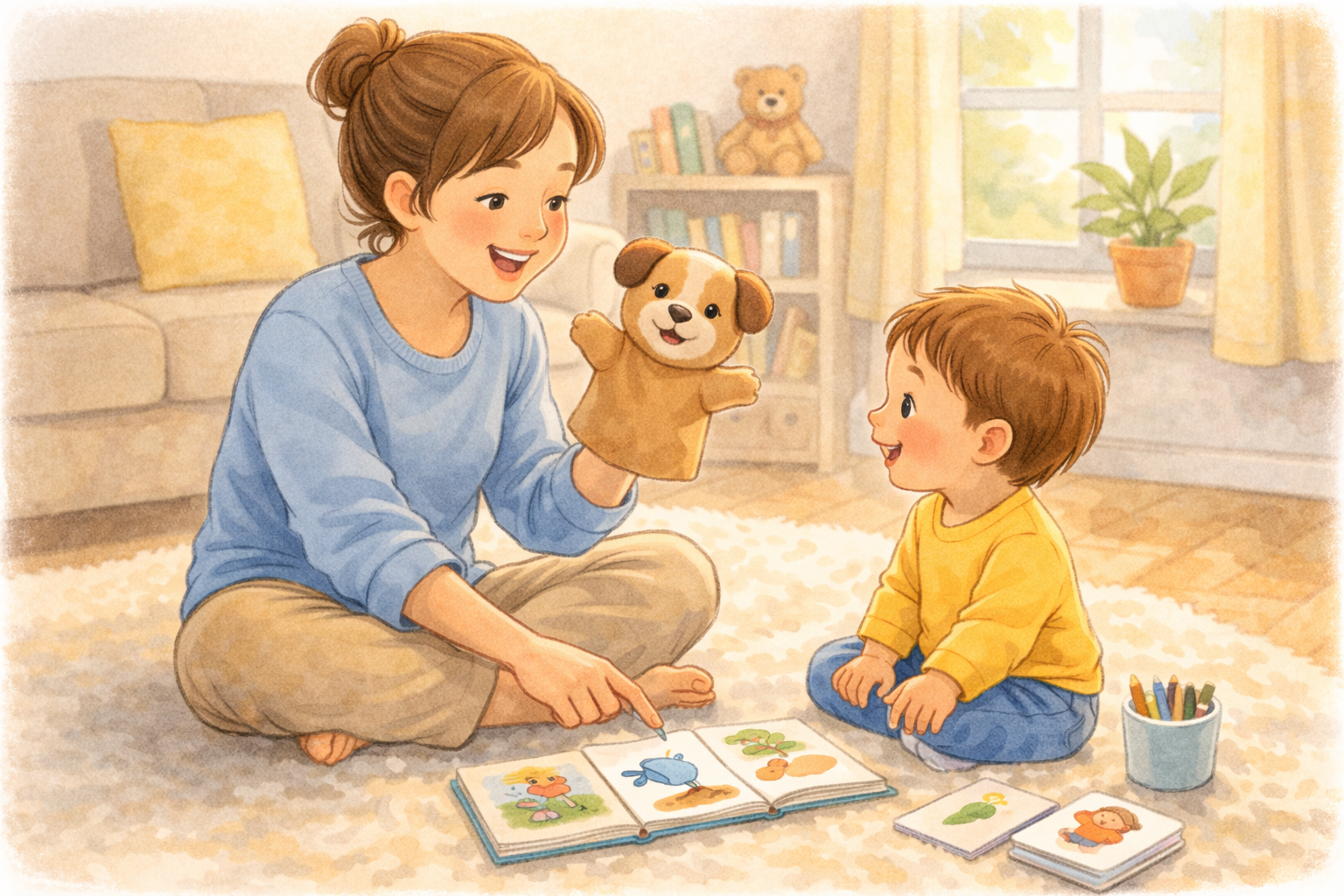
2. Silly Sound Play

Stretch out sounds in a fun way.

“B-b-b-banana!”

Toddlers love exaggeration. It makes sounds easier to hear.

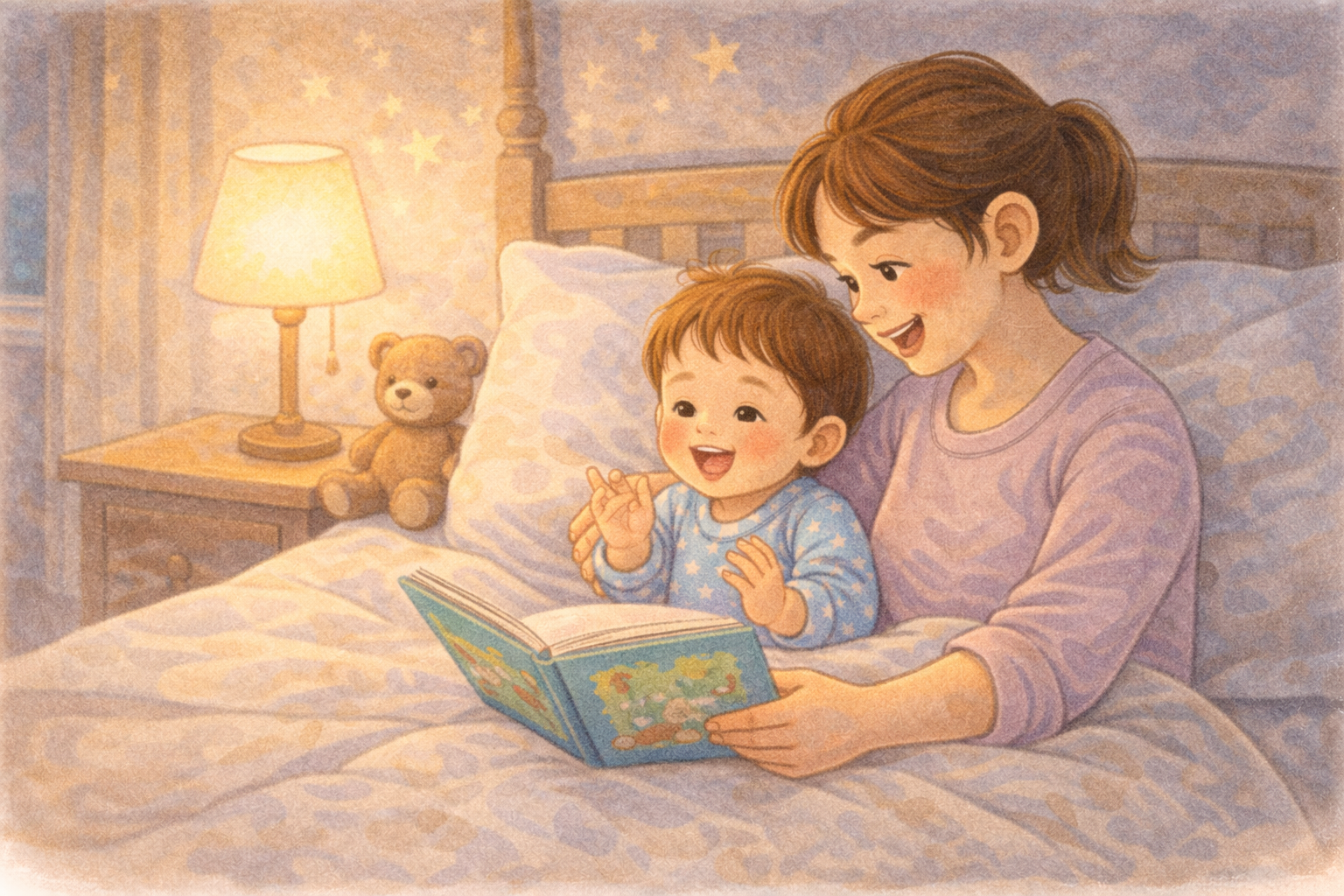
3. Rhyme Time

Sing nursery rhymes often.

Pause before the last word and let your child fill it in.

This links beautifully with How Reading Aloud Builds Literacy.

4. Clap the Beats

Clap once for each part of a word.
  • Ap-ple
  • Ba-na-na
This builds sound awareness without pressure.

Using First Words Books to Support Sound Awareness

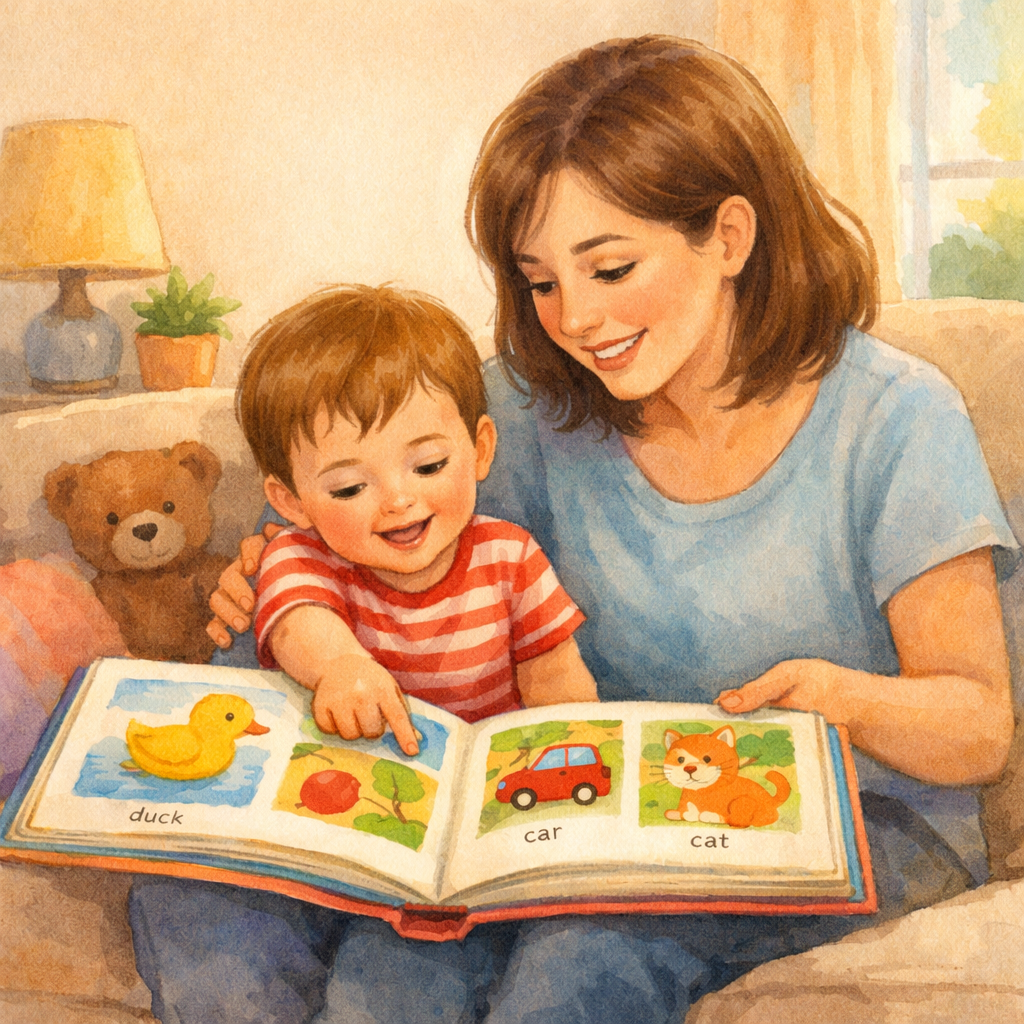
Picture books are perfect for sound play.

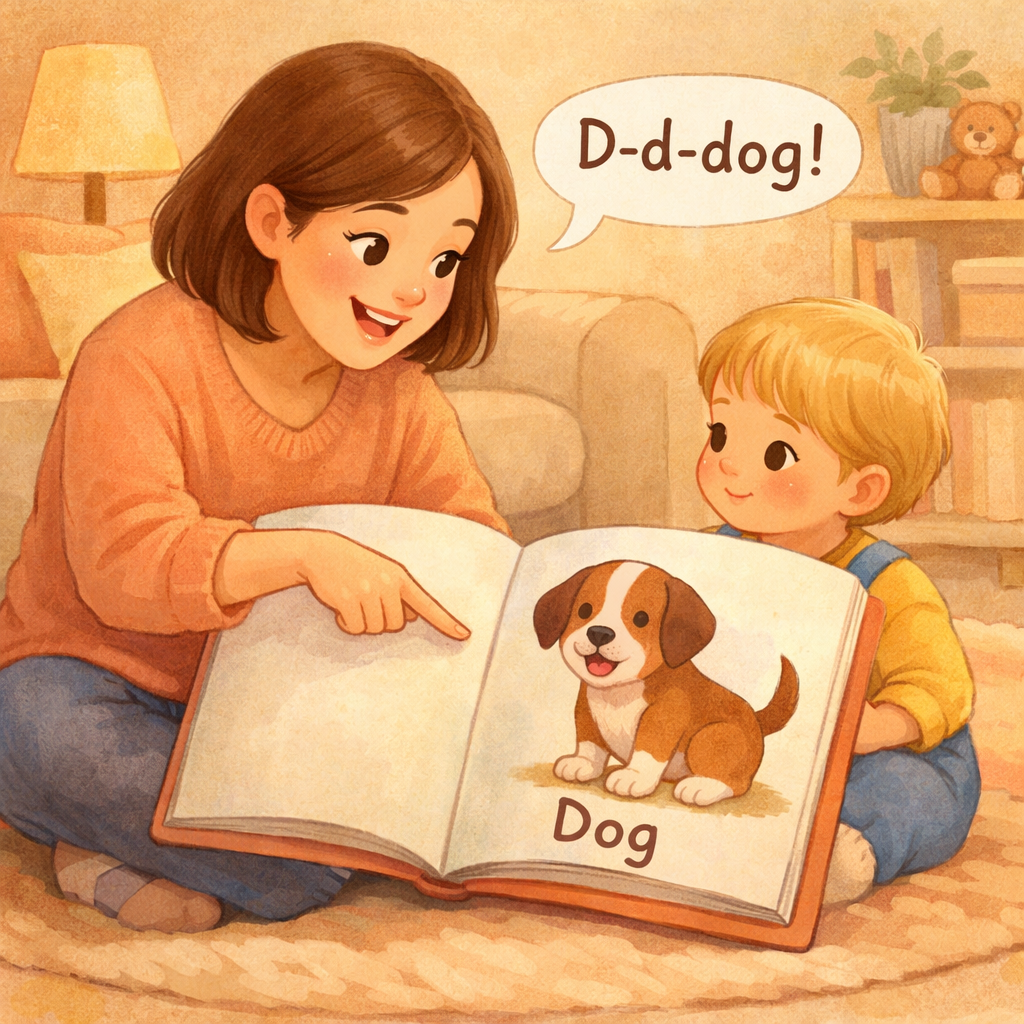
When reading a simple animal book, you might say:
  • “Dog starts with d.”
  • “Can you hear the d sound?”
  • “D-d-dog.”
Keep it short. Keep it natural.

A clear, uncluttered first words book makes this much easier because your child is focused on one image and one word at a time.
Parent stretching the first sound of a word while reading with a toddler.

What Phonemic Awareness Is Not

It is not:
  • Formal phonics lessons for toddlers
  • Worksheets or drills
  • Correcting every pronunciation
  • Forcing letter learning too early
It is playful listening.

If you are unsure whether your child is on track, our guide to Tracking Literacy Milestones can help you see the bigger picture.

Gentle Reassurance for Parents

Some children tune into sounds quickly.

Others take longer.

Both are normal.

Your role is not to teach reading at two years old.

Your role is to create a home full of language, books, songs and conversation.

Phonemic awareness grows naturally in that environment.

And the best part?

It often feels like pure play.

Newsletter

Join our Early Readers Club for fun learning tips, sneak peeks at new books, and free printable activities!
ChattyCubs™ 2026 All Rights Reserved.