Young children learn language through repetition, attention, and emotional connection. Parent coaching supports all three.
When parents adjust how they talk and respond:
- Children hear clearer, more meaningful language
- Turn-taking becomes more natural
- Children feel confident trying new sounds and words
Because this happens during normal routines, children practise language many times a day without it feeling like learning.
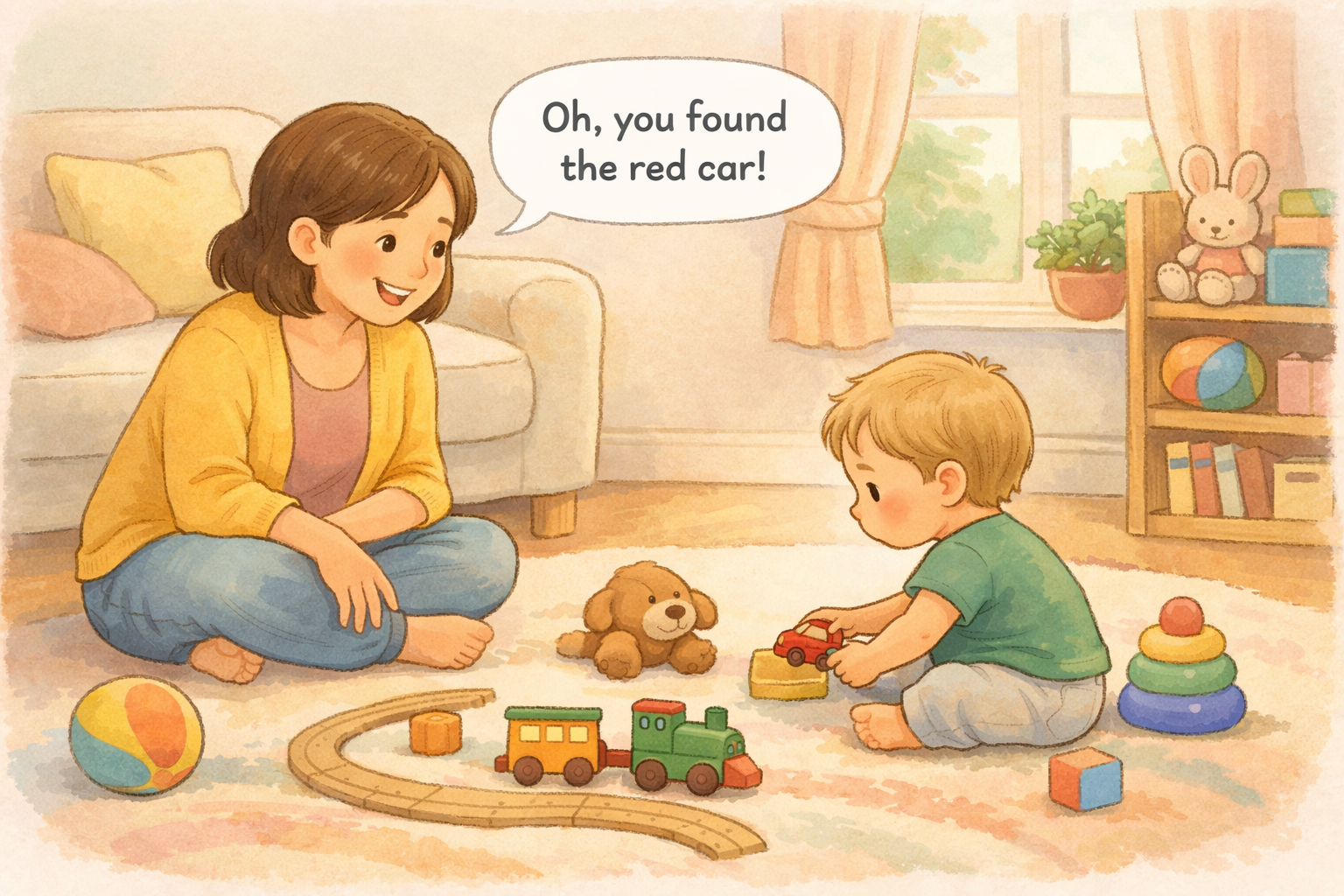
Watch what your child is interested in and talk about that, rather than directing play.
- If they pick up a car, talk about the car
- If they look at a dog, name the dog
- If they repeat an action, comment on it
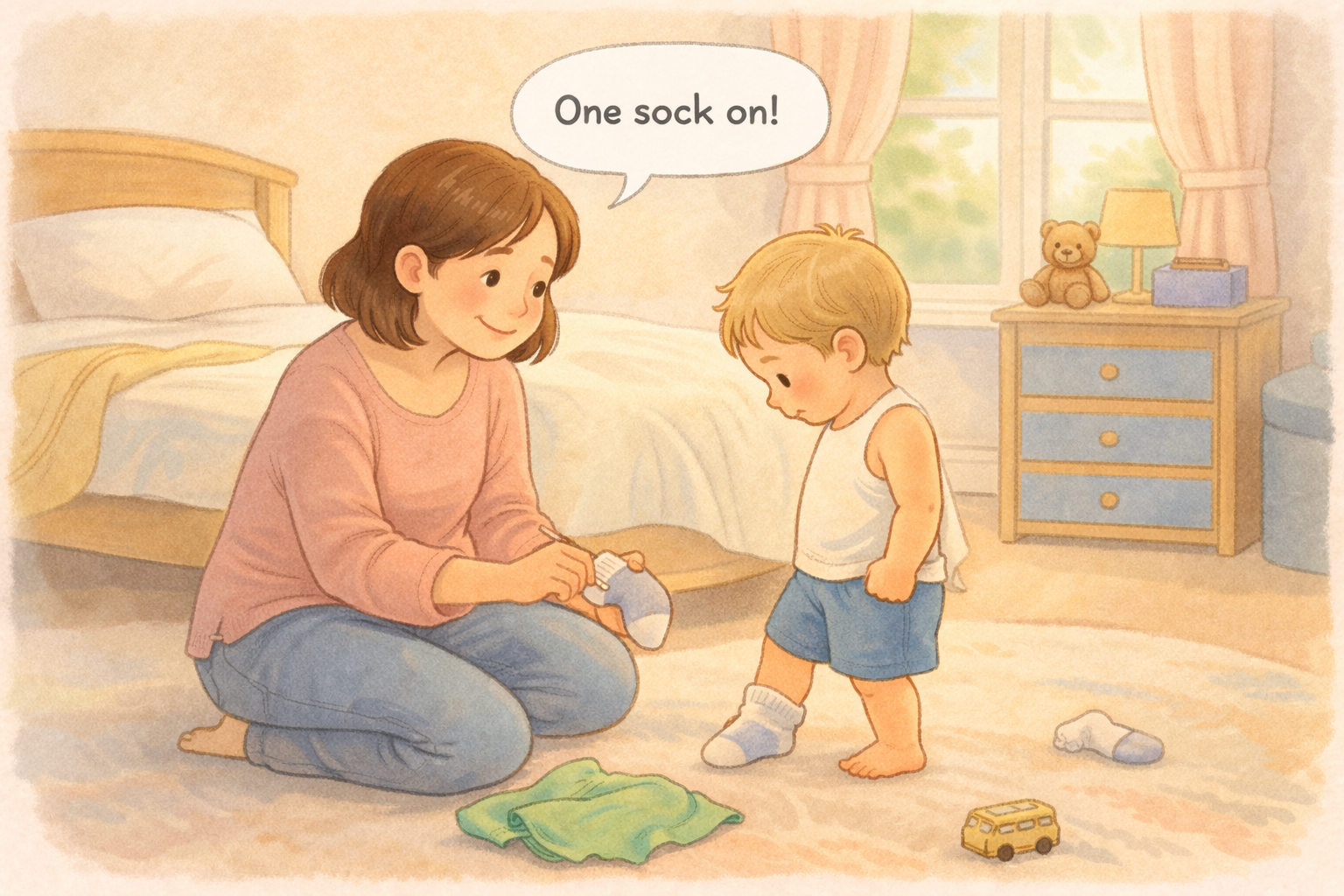
Short phrases are easier for children to understand and copy.
- “Ball roll” instead of “The ball is rolling across the floor”
- “More juice” instead of “Would you like some more juice?”
- “Big dog” instead of “That dog is very big”
This helps children focus on the key words.
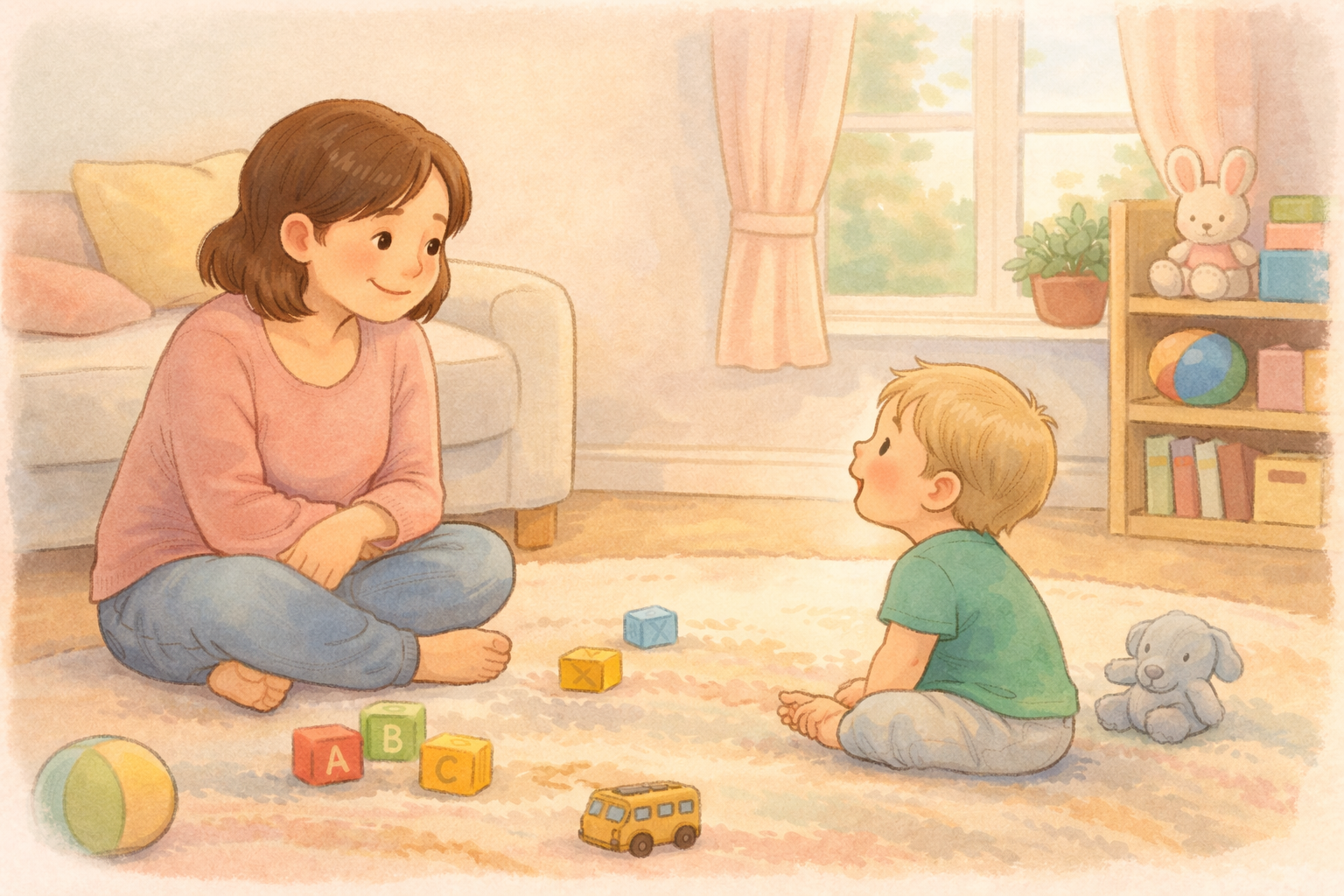
After you say something, pause and give your child time to respond.
Even a look, sound, or movement counts as communication.
- Say the word, then wait
- Look expectant and smile
- Respond to any attempt
Pausing shows your child that their communication matters.
When your child uses a sound or word, repeat it and add one more word.
- Child: “Car” Parent: “Red car”
- Child: “Up” Parent: “Up high”
- Child: “Dog” Parent: “Dog running”
This models the next step without correcting or pressuring them.