ChattyCubs
£0.00 0

Basket

No products in the basket.

Encouraging Questions and Curiosity in Toddlers

Encouraging Questions and Curiosity in Toddlers

Toddlers are naturally curious. They want to know what things are, how they work, and what will happen next. Encouraging questions, even before they can fully form them, helps build strong language skills and confident communication.

You do not need to teach your toddler to ask questions formally. Simple everyday interactions already create the perfect foundation.

Why Curiosity Matters for Language Development

Curiosity drives learning. When a toddler is interested, they are more likely to listen, copy words, and try new sounds.

Encouraging curiosity helps toddlers:
  • Hear and practise new vocabulary
  • Learn how conversations work
  • Build confidence expressing ideas
  • Develop problem-solving skills alongside language
Even pointing, looking closely, or making questioning sounds like “uh?” are early forms of asking questions.

How Toddlers Show Early Questioning

Most toddlers start showing curiosity long before they say “why”.

Early signs include:
  • Pointing at objects and looking at you
  • Pausing and waiting after an action
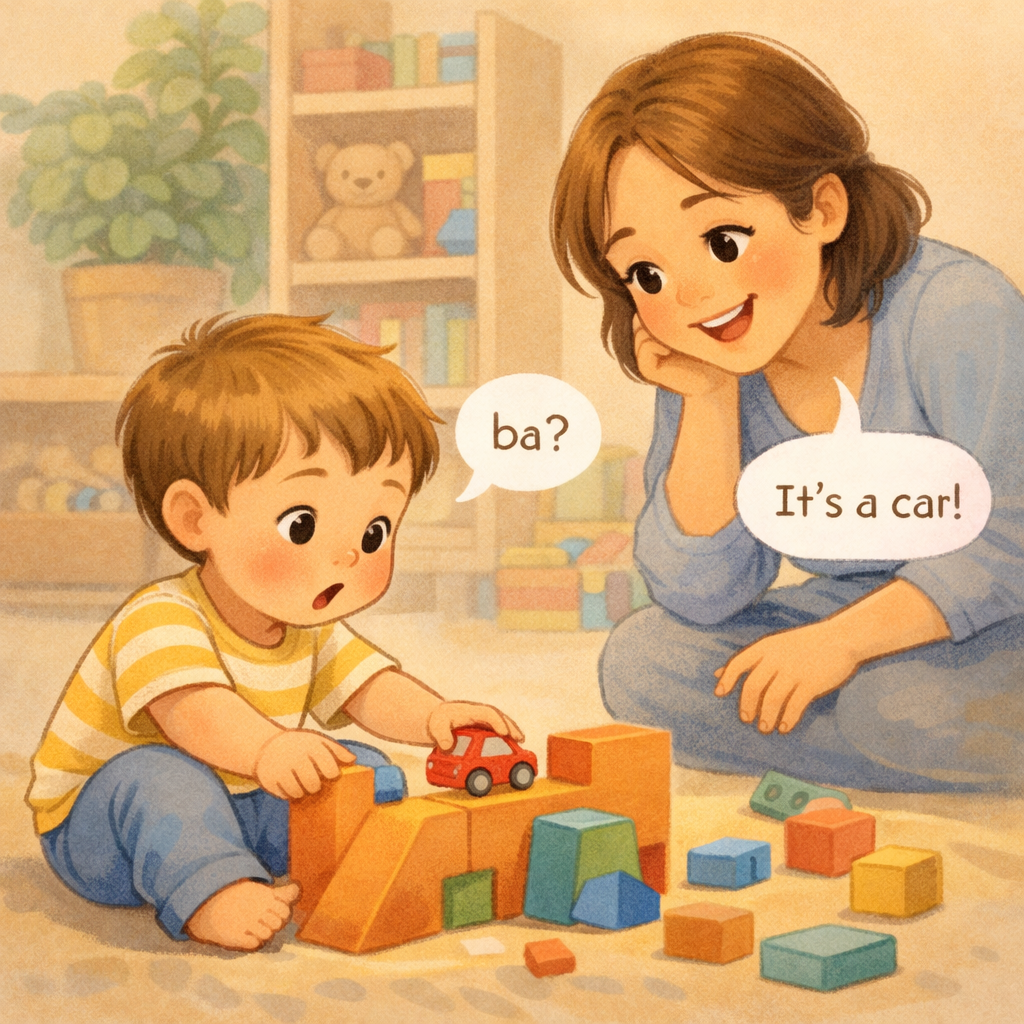
  • Using rising tones like “ba?” or “dat?”
  • Repeating actions to see what happens
These moments are invitations to talk.

How to Encourage Questions Through Everyday Talk

Talk Out Loud About What You See

Narrate what is happening around you. This gives toddlers language for their curiosity.

For example:
  • “That’s a big truck. It’s very loud.”
  • “The light turned on. It’s bright.”
  • “You’re looking at the cat. She’s sleeping.”
This models how observations turn into words.
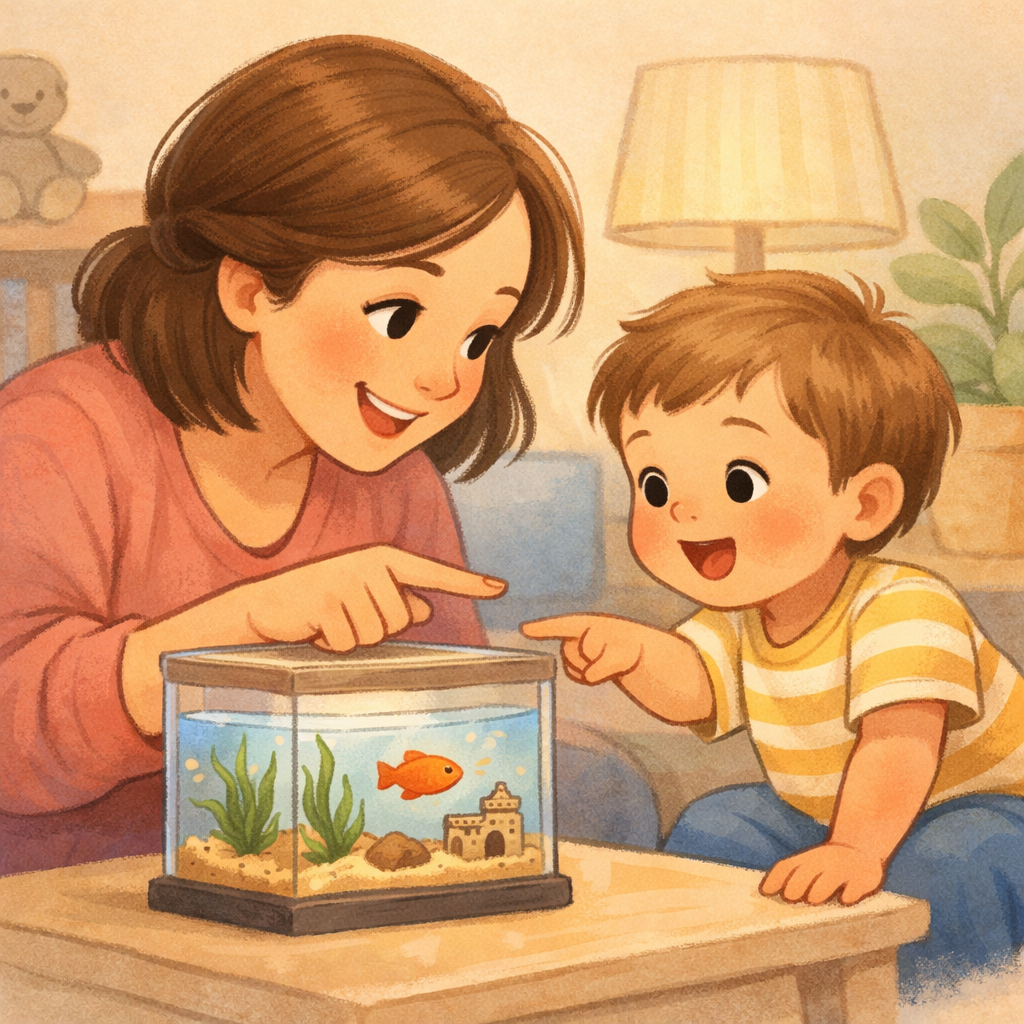
Parent and toddler noticing and talking about something together.

Pause and Wait

After your toddler points or looks at something, pause for a moment.

This pause gives them space to:
  • Make a sound
  • Point again
  • Try a word
Respond warmly to whatever they offer. This shows their attempts matter.

Answer Simply and Clearly

When toddlers ask questions with sounds or gestures, keep your answers short.

For example:
  • “Yes, that’s a dog.”
  • “It’s hot.”
  • “The ball rolled away.”
Clear, simple responses help toddlers connect curiosity with meaning.

Using Play to Spark Curiosity

Play naturally encourages questions and exploration.

Toy Play

Use toys to create moments of wonder:
  • Hide a toy and reveal it slowly
  • Roll a car and wait to see if they look at you
  • Stack blocks and pause before the last one
These moments invite anticipation and communication.
Toddler exploring toys and showing curiosity during play.

Books and Pictures

Picture books are perfect for encouraging questions.

Try:
  • Pointing and waiting before naming objects
  • Asking gentle prompts like “What’s that?”
  • Letting your toddler turn pages and lead
First words books with clear images work especially well here.

Encouraging “Why” Without Pressure

Some toddlers move quickly into asking “why”, others take longer. Both are completely normal.

You can encourage this stage by:
  • Explaining reasons simply
  • Talking through cause and effect
  • Staying patient with repeated questions
For example: “The coat keeps you warm” or “We wash hands to get them clean”.

When to Keep It Light

Curiosity should feel enjoyable, not demanding.

If your toddler:
  • Looks away
  • Moves on quickly
  • Seems frustrated
Follow their lead and change activity. Language grows best when it feels safe and relaxed.

How This Supports First Words

Encouraging curiosity creates natural opportunities to practise first words and early phrases.

You may find it helpful to explore:

These pages build on the same gentle, everyday approach.

Curiosity is already there. By noticing it, responding warmly, and talking often, you help turn questions into confident communication.
Best first words to teach toddlers How play encourages talking Why first words matter for later language

Newsletter

Join our Early Readers Club for fun learning tips, sneak peeks at new books, and free printable activities!
ChattyCubs™ 2026 All Rights Reserved.