Bilingual Toddler Language Tips
Raising a bilingual toddler can feel exciting and a little daunting. Many parents worry about confusion or delays, but learning two languages from an early age is completely natural for young children.
With the right support, bilingual toddlers can build strong language skills in both languages. These tips focus on simple, everyday ways to help your child feel confident and supported as they learn.
Is it okay to raise a toddler with two languages?
Yes. Toddlers are very good at learning languages, especially in the first three years of life. Hearing two languages regularly does not confuse them.
Some bilingual toddlers may start speaking slightly later, or mix words from both languages at first. This is a normal part of bilingual development and usually settles with time.
Use one language per person where possible

Using one language per person can help toddlers understand which words belong to which language.
For example, one parent may always speak English, while the other uses another language. This does not need to be strict, but consistency helps toddlers make sense of what they hear.
Talk little and often in both languages
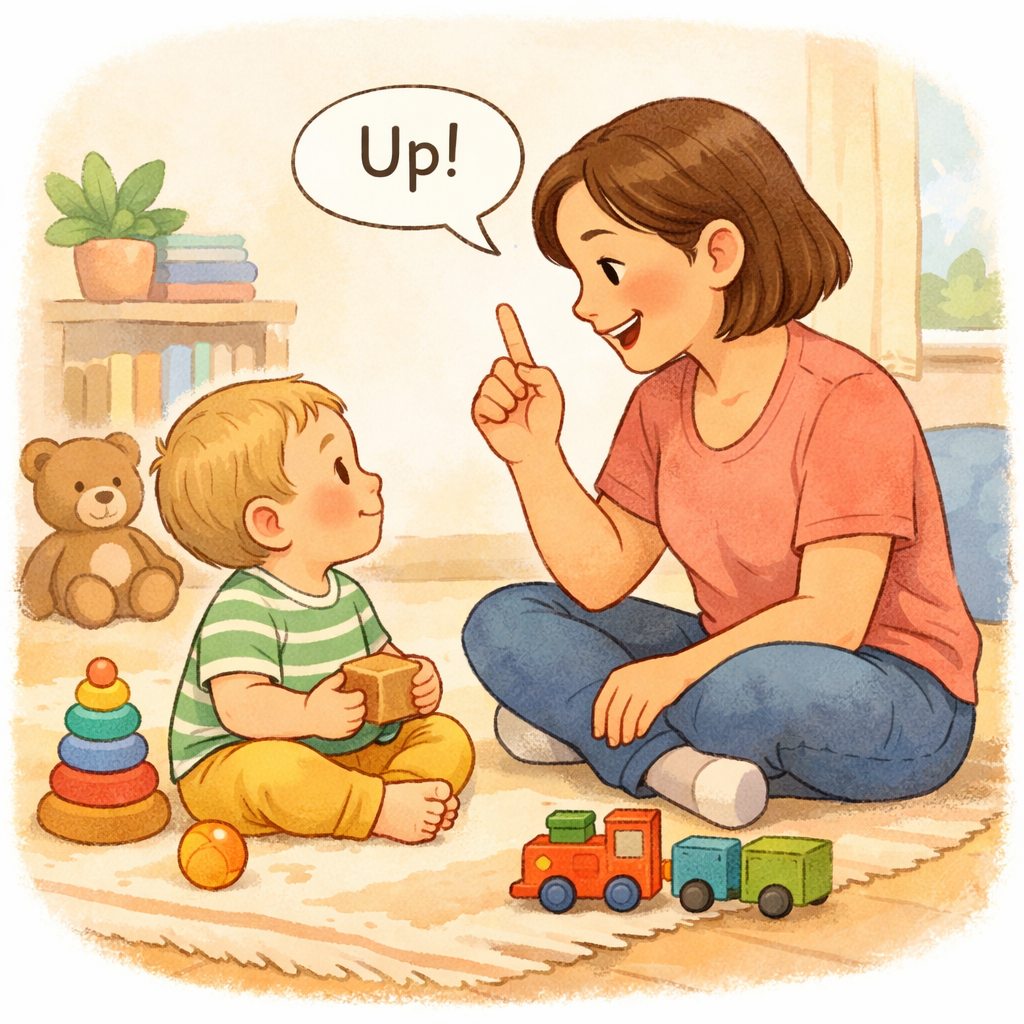
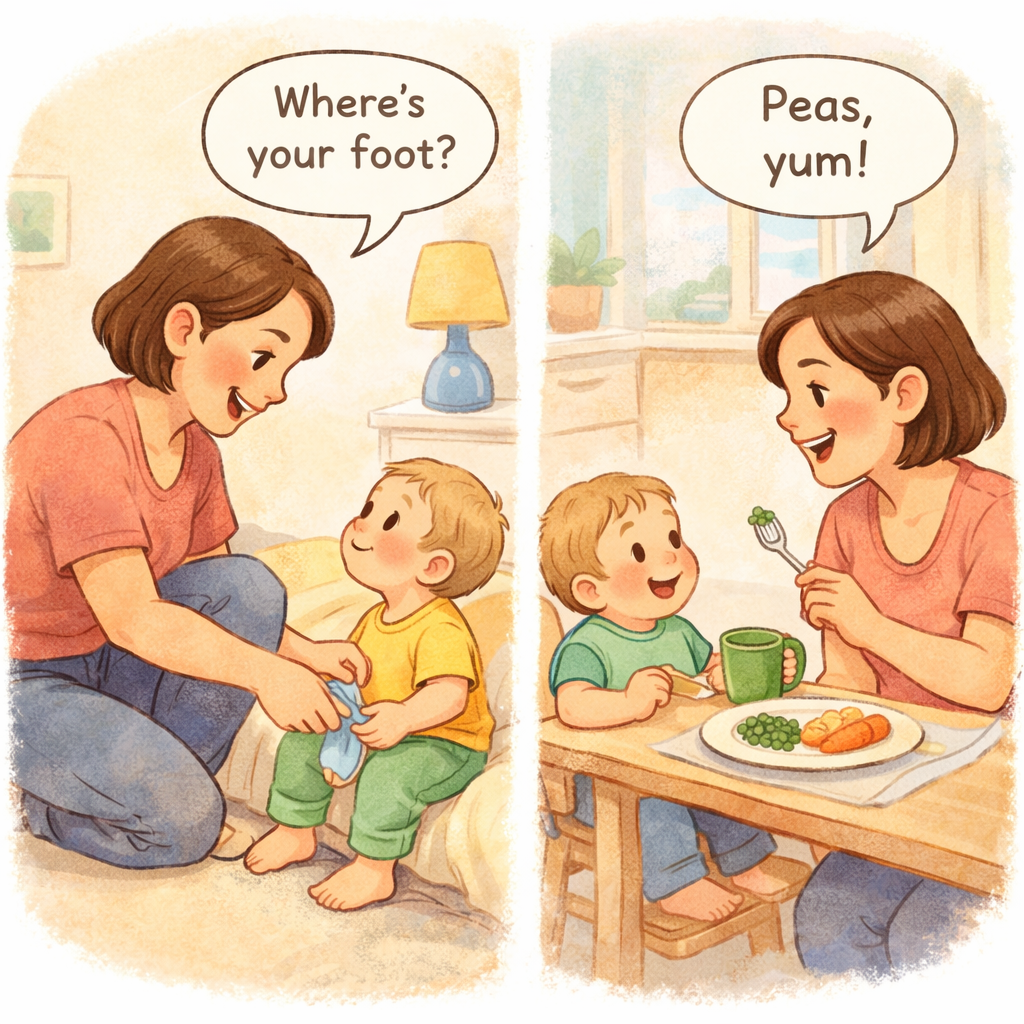
Everyday routines are perfect for language learning. Talk about what you are doing, what your child is doing, and what is happening around them.
You do not need long sentences. Simple, repeated words in both languages are very effective.
Everyday moments to use both languages
- Getting dressed and naming clothes
- Mealtimes and food words
- Bath time and body parts
- Outdoor walks and things you can see
Read books in both languages
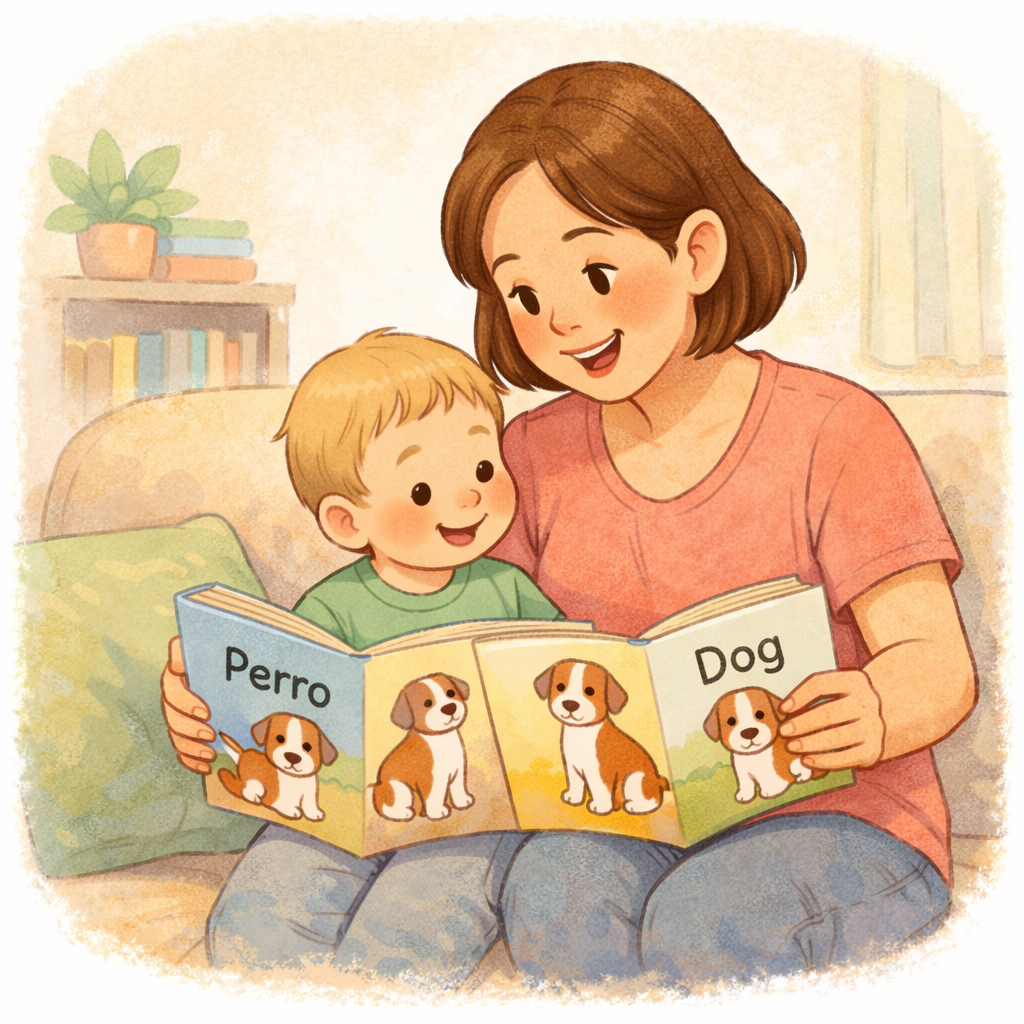
Picture books are a gentle way to support bilingual learning. You can read the same book in both languages, or have different books for each language.
First words books work especially well because they focus on clear pictures and single words. Point to the picture, say the word, and give your toddler time to respond.
Do not worry about mixing languages
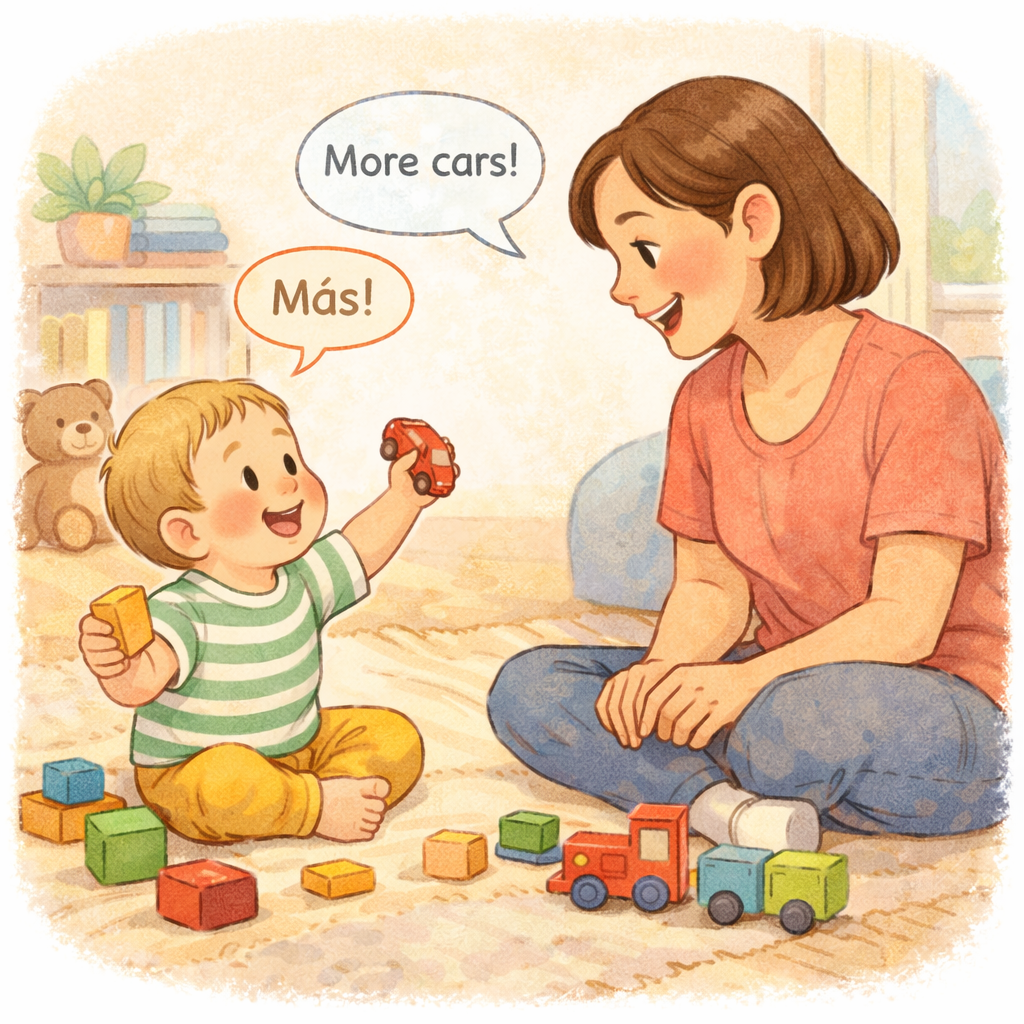
Mixing languages in the same sentence is very common in bilingual toddlers. It shows they are using all the words they know to communicate.
Continue responding naturally. You can repeat the word back in the correct language without correcting or interrupting.