ChattyCubs
£0.00 0

Basket

No products in the basket.

Stages of Language Development 0–3

Stages of Language Development 0–3

Understanding toddler language development can feel confusing, especially when children all seem to develop at different speeds. The early years are full of small but meaningful steps that build towards talking, understanding, and communicating.

This guide walks through the typical stages of language development from birth to age three, with simple examples and gentle ways you can support learning at home.

Language Development From Birth to 6 Months

In the earliest months, language learning is all about listening, watching, and responding.

Babies are tuning into voices, facial expressions, and sounds long before they say any words.
Parent talking face to face with a baby to support early language development

What you might notice

  • Turning towards familiar voices
  • Cooing and vowel sounds like “ah” and “oo”
  • Smiling or responding when spoken to
  • Quietening when hearing a familiar voice

How to support this stage

  • Talk slowly and clearly throughout the day
  • Pause after speaking to give space for responses
  • Copy your baby’s sounds back to them
  • Use eye contact and facial expressions

Language Development From 18 to 24 Months

Vocabulary grows more quickly during this stage, sometimes in sudden bursts.

Children begin to link words together and use language more intentionally.
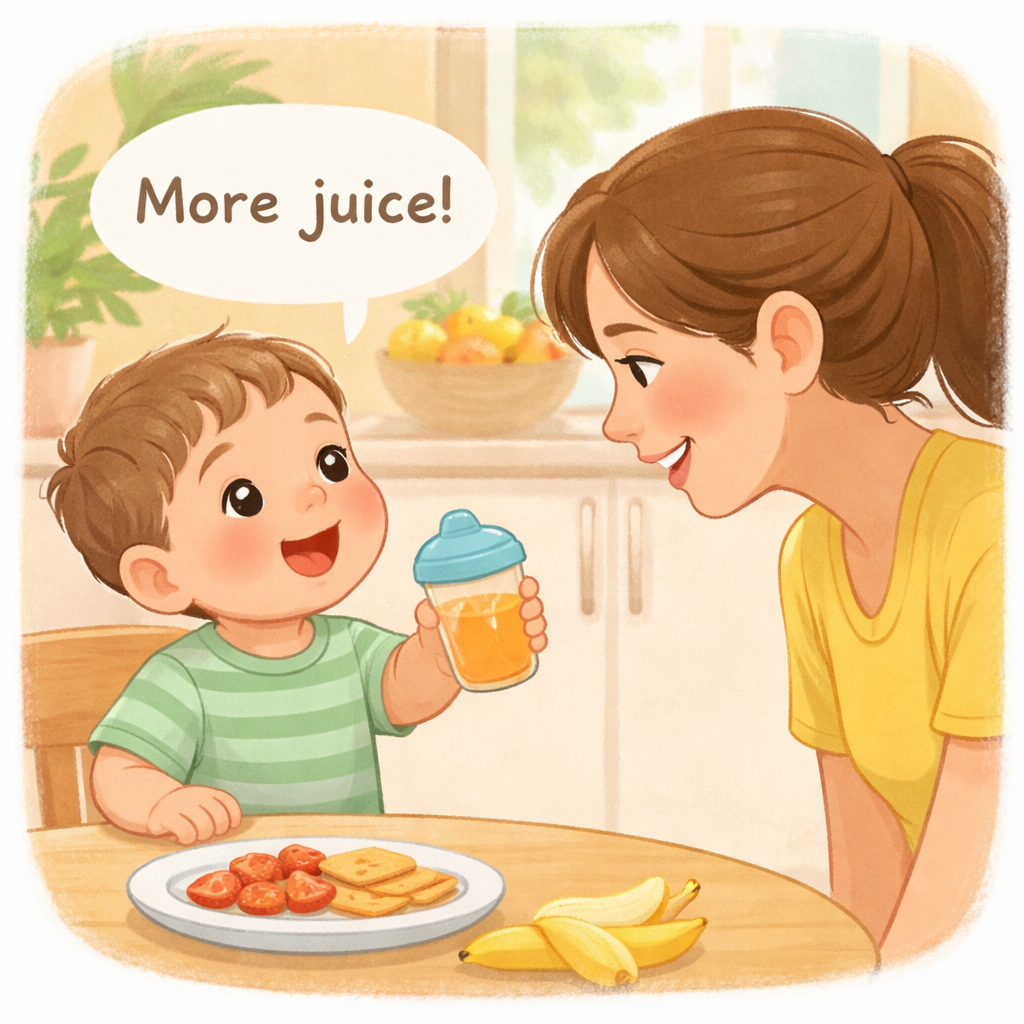
Toddler using two-word phrases during everyday routines

What you might notice

  • Using 20 to 50 or more words
  • Combining words like “more snack”
  • Naming familiar people and objects
  • Using words to ask for help

How to support this stage

  • Model short phrases your child can copy
  • Talk through daily routines out loud
  • Respond positively to attempts to speak
  • Avoid correcting pronunciation directly

Language Development From 2 to 3 Years

By age three, language becomes more flexible and expressive.

Children use words to share ideas, feelings, and experiences.
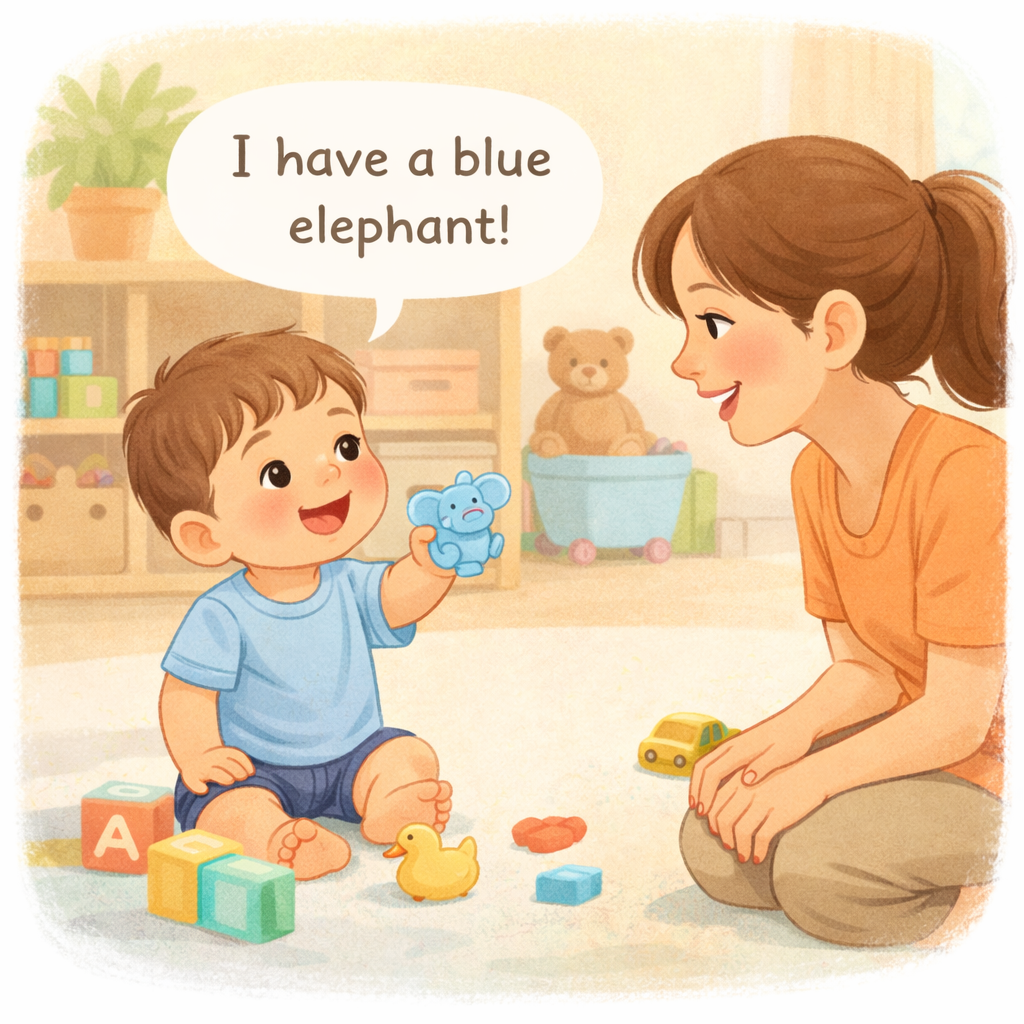
Toddler talking during playtime to practise language skills

What you might notice

  • Using short sentences of three or more words
  • Asking simple questions
  • Talking about past or future events
  • Being understood most of the time

How to support this stage

  • Ask open-ended questions during play
  • Read stories and talk about pictures
  • Expand sentences gently
  • Give plenty of time to respond

Remember Every Child Develops Differently

Language development is not a race. Some children speak earlier, others take longer, and both can be completely typical.

If your child is engaged, responsive, and making steady progress, small variations in timing are usually nothing to worry about.

For practical ideas, you may also find these helpful:
Why First Words Matter First Word Milestones by Age How to Practice First Words Daily
ChattyCubs First Words books are designed to support these stages naturally through clear images, repetition, and shared reading moments that fit easily into everyday life.

Newsletter

Join our Early Readers Club for fun learning tips, sneak peeks at new books, and free printable activities!
ChattyCubs™ 2026 All Rights Reserved.