ChattyCubs
£0.00 0

Basket

No products in the basket.

Multisensory Language Techniques for Toddlers

Multisensory Language Techniques for Toddlers

Toddlers learn best when more than one sense is involved. Hearing a word, seeing it, touching something, and moving their body all help the brain make stronger connections.

Multisensory language techniques are simple ways to support speech and understanding during everyday play and routines. You do not need special equipment, just a bit of intention.

This approach works well for all toddlers, and can be especially helpful for late talkers or children who seem to understand more than they can say.

What Are Multisensory Language Techniques?

Multisensory learning means using more than one sense at the same time. For language, this usually involves combining:
  • Hearing words
  • Seeing objects, pictures, or actions
  • Touching or holding items
  • Moving the body or copying actions
When toddlers experience words in different ways, they are more likely to remember them and try to use them themselves.

Why Multisensory Learning Helps Toddlers Talk

Toddlers are active learners. Sitting still and listening is hard at this age, but moving, touching, and exploring comes naturally.

Using multiple senses:
  • Makes words more meaningful
  • Supports understanding before talking
  • Keeps toddlers engaged for longer
  • Helps different learning styles
It also reduces pressure. Your child does not need to repeat the word for learning to be happening.

Easy Multisensory Language Activities at Home

Talk During Hands-On Play

Blocks, cars, dolls, and puzzles are perfect for multisensory learning.
  • Hold the toy while saying the word
  • Describe what your child is doing
  • Use short, clear phrases
For example, “Car go”, “Big block”, or “In box”.
Parent talking about toys while a toddler plays on the floor.

Use Actions and Movement

Movement helps words stick. Try pairing words with actions your toddler can copy.
  • Jump, clap, wave, stomp
  • Push, pull, roll
  • Up, down, in, out
Say the word as you do the action. Repetition happens naturally through play.
Toddler copying actions while learning simple words.

Combine Touch and Talk

Everyday objects offer great opportunities for touch-based learning.
  • Talk about textures during dressing or bath time
  • Name foods while your child handles them
  • Describe objects as your child explores them
For example, “Soft towel”, “Cold water”, or “Crunchy apple”.

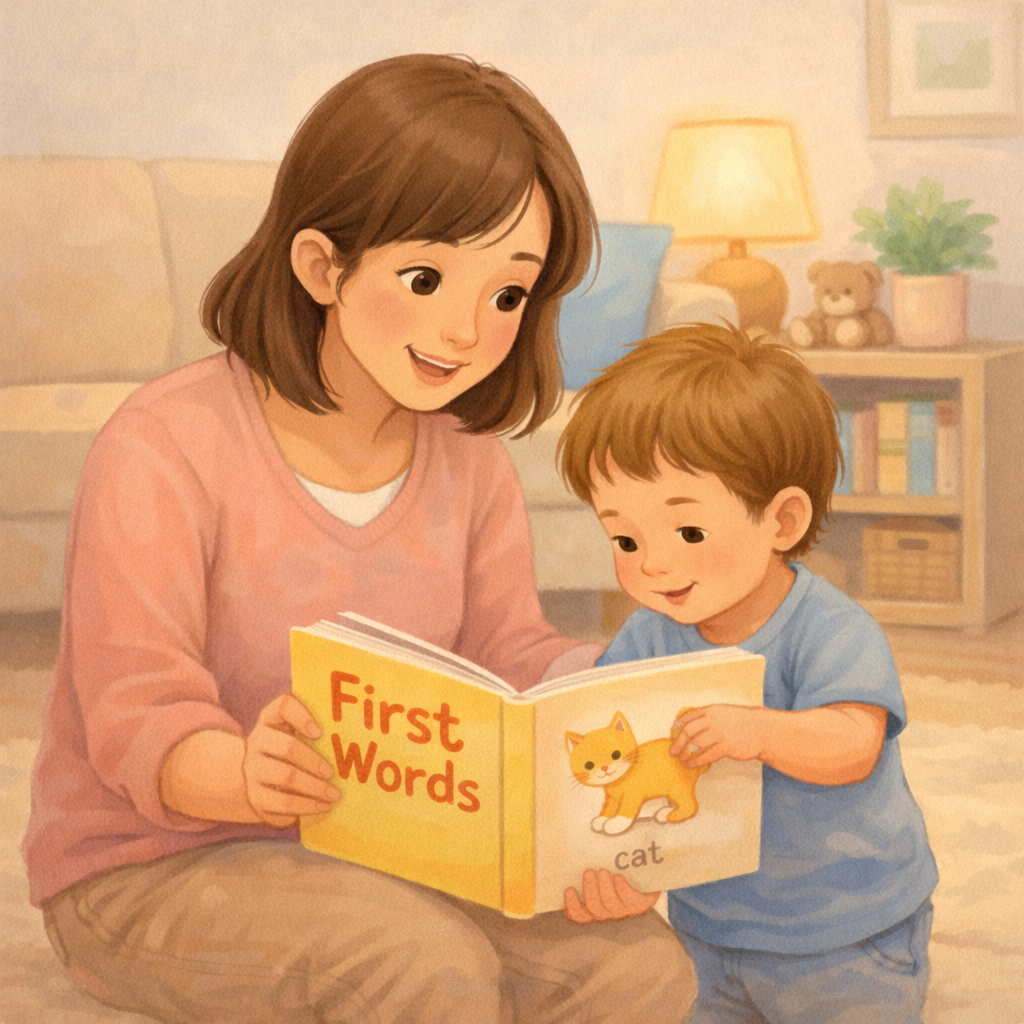
Multisensory Reading with First Words Books

First words books work best when they are interactive.
  • Point to the picture while saying the word
  • Let your toddler touch the page
  • Copy sounds or actions together
Books with clear images and one main word per page are ideal.
This is where structured first words books can really support language learning.
Parent and toddler using a first words book together.

Tips for Using Multisensory Techniques Daily

You do not need to do everything at once. Small moments add up.
  • Follow your child’s lead
  • Keep language simple
  • Repeat words naturally
  • Focus on enjoyment, not performance
If your toddler does not repeat the word, that is still okay. Understanding comes first.

When to Expect Progress

Some toddlers show quick changes, others build skills slowly over time. Multisensory techniques support learning even when progress is not immediately visible.

If you have concerns about your child’s language development, these techniques can be a helpful foundation alongside professional advice.

Similar Topics to Discover

Role of Imitation in Language Development How Play Encourages Talking Using Songs to Boost Language Tips for Slow Talkers

Newsletter

Join our Early Readers Club for fun learning tips, sneak peeks at new books, and free printable activities!
ChattyCubs™ 2026 All Rights Reserved.