ChattyCubs
£0.00 0

Basket

No products in the basket.

How to Expand Toddler Vocabulary

How to Expand Toddler Vocabulary

Toddlers learn new words every day, often in small bursts that quickly add up. Vocabulary growth does not need flashcards or long teaching sessions. It happens best through everyday talking, play, and shared moments.

This guide explains simple, realistic ways to expand your toddler’s vocabulary in a way that feels natural, calm, and enjoyable for both of you.

Talk About What Your Toddler Is Doing

Children learn words fastest when they match what they are already focused on. Describing actions, objects, and feelings in the moment helps words stick.
  • Name actions as they happen, such as “jumping”, “pouring”, or “washing”.
  • Label objects your toddler is holding or pointing to.
  • Use short phrases rather than single words once your child starts talking.
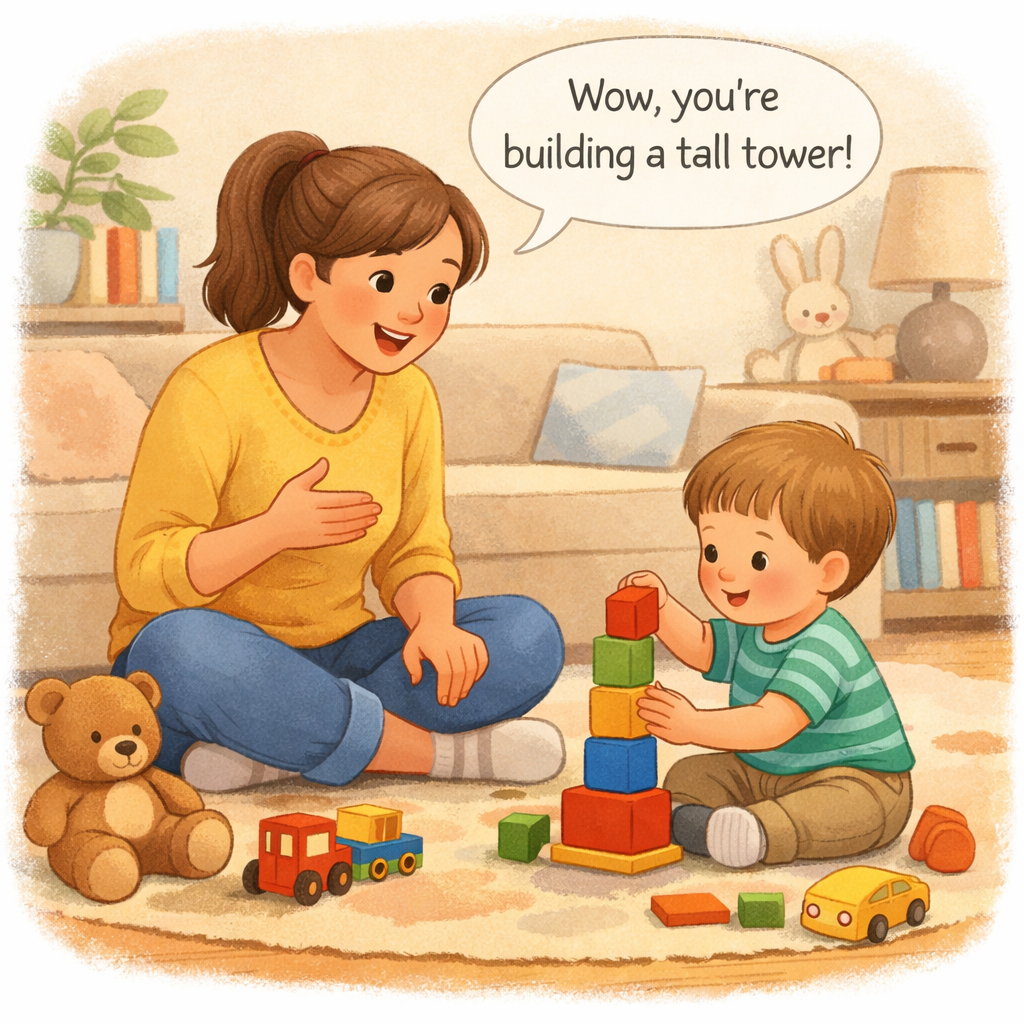
Parent talking about what a toddler is doing during play.

Build on the Words Your Toddler Already Uses

Expanding vocabulary does not mean correcting your child. It means gently adding a little more language to what they say.

If your toddler says “car”, you might say “yes, a red car” or “the car is fast”. This models new words without pressure.

  • Repeat your toddler’s word and add one extra detail.
  • Keep sentences short and clear.
  • Avoid asking your child to repeat words back.
If your baby says “ba” or “da”, try repeating it back clearly. Pause and wait. This back-and-forth teaches them that sounds can be shared.

Read the Same Books Again and Again

Repetition is powerful for language learning. Familiar books help toddlers recognise words and begin to predict what comes next.
  • Re-read favourite books often, even several times a day.
  • Pause to talk about pictures rather than reading every word.
  • Point to and name objects clearly.
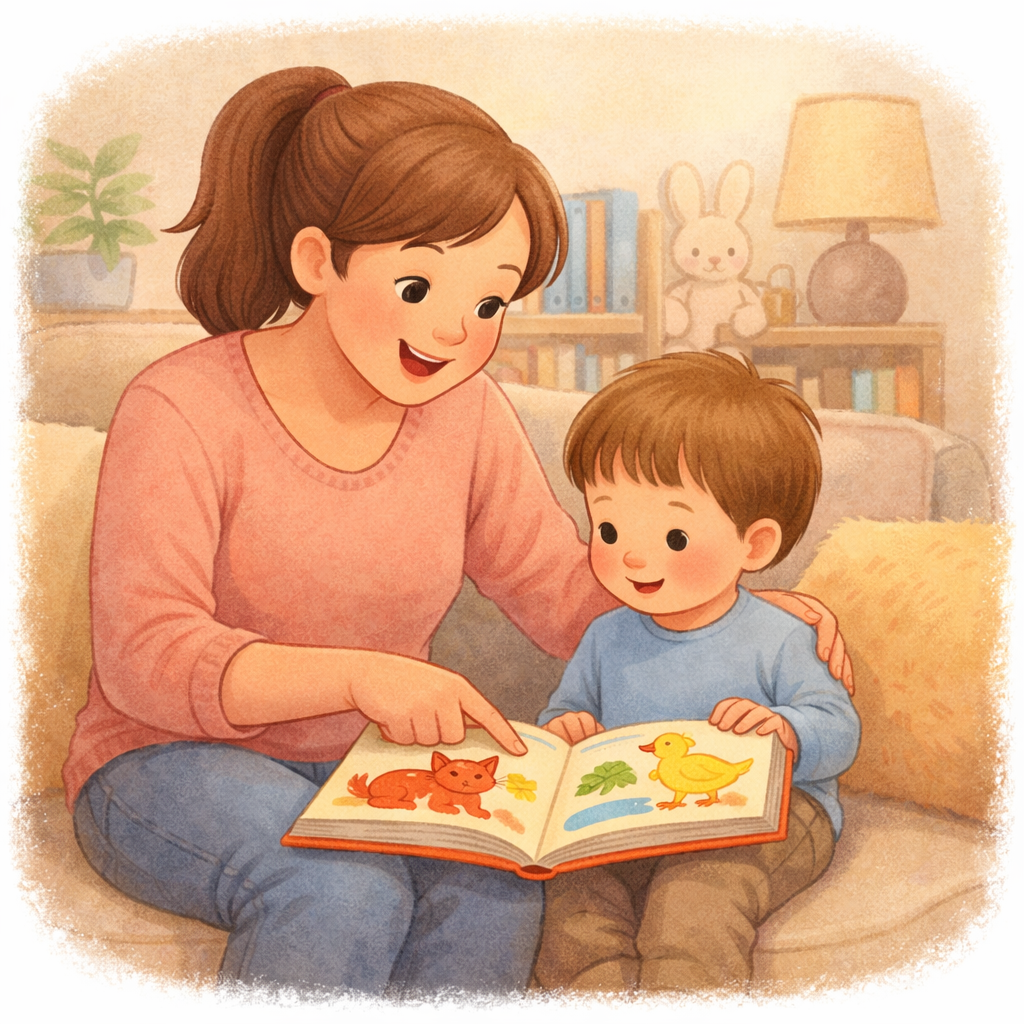
Parent and toddler talking about pictures in a book.

Use Everyday Routines as Language Moments

Daily routines are full of opportunities to introduce new words without extra effort. Bath time, meals, and getting dressed all repeat naturally.
  • Name clothes, body parts, and actions during dressing.
  • Talk about food colours, textures, and tastes at mealtimes.
  • Use the same words consistently each day.

Sing Songs and Use Simple Rhymes

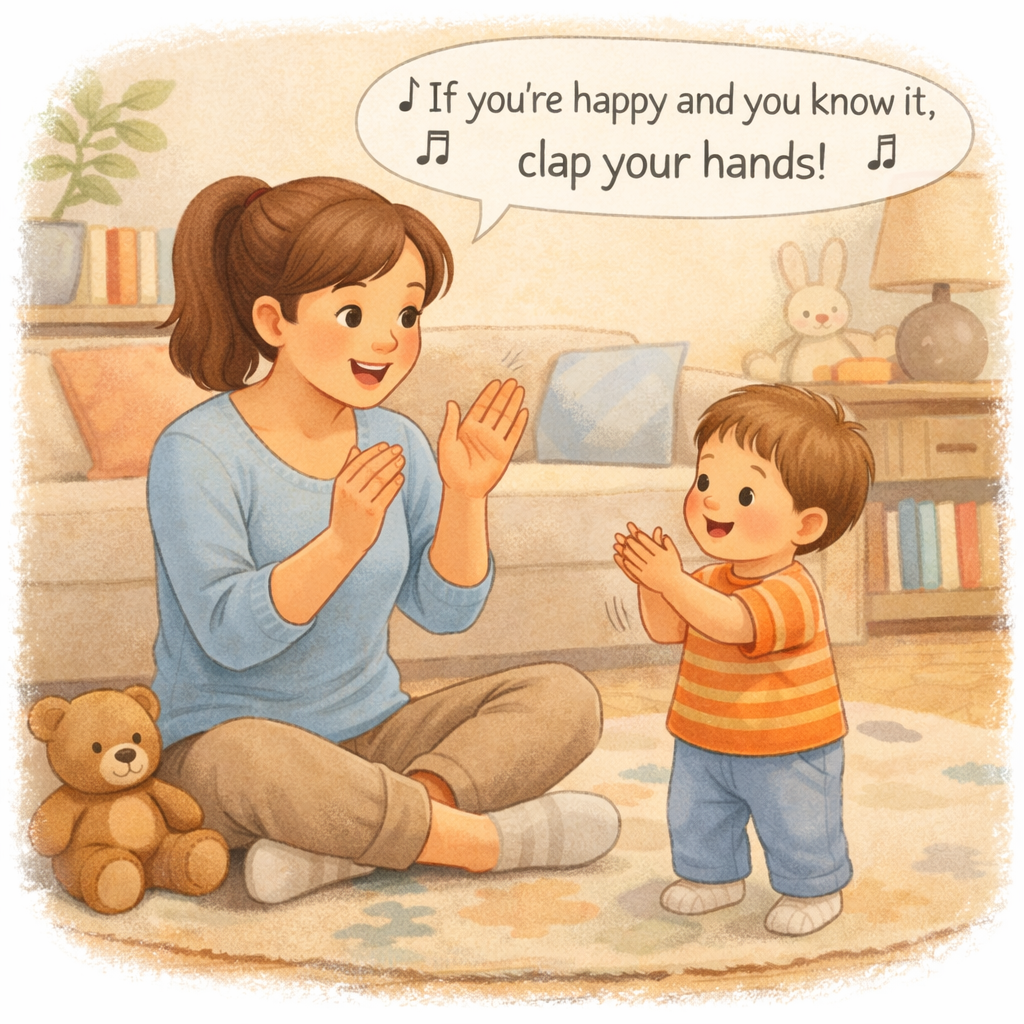
Songs help toddlers hear new words clearly and remember them more easily. Actions make the words even more meaningful.
  • Choose songs with actions like clapping or pointing.
  • Repeat the same songs regularly.
  • Pause before key words to encourage anticipation.
Toddler copying actions during a simple song.

Follow Your Toddler’s Lead

Children learn best when they feel heard and understood. Letting your toddler guide interactions builds confidence as well as vocabulary.
  • Respond when your child points, babbles, or uses words.
  • Wait and give them time to communicate.
  • Keep conversations relaxed and playful.

How Many Words Should a Toddler Know?

Every child develops at their own pace. Vocabulary size varies widely, especially between quiet talkers and chatty ones.

What matters most is steady progress over time, not comparing your child to others.

If you are ever worried about your toddler’s speech or understanding, speaking to your health visitor is a good first step.

Supporting Vocabulary at Home

You do not need special equipment or long sessions. A few small habits repeated every day make a big difference.
  • Talk slowly and clearly.
  • Repeat words often.
  • Enjoy the interaction rather than focusing on outcomes.
For more gentle ways to support early language, see:
Encouraging Questions and Curiosity How Play Encourages Talking Using Songs to Boost Language
You can also support vocabulary growth with clear, simple picture books designed for pointing and naming, such as the ChattyCubs First Words series.

Newsletter

Join our Early Readers Club for fun learning tips, sneak peeks at new books, and free printable activities!
ChattyCubs™ 2026 All Rights Reserved.