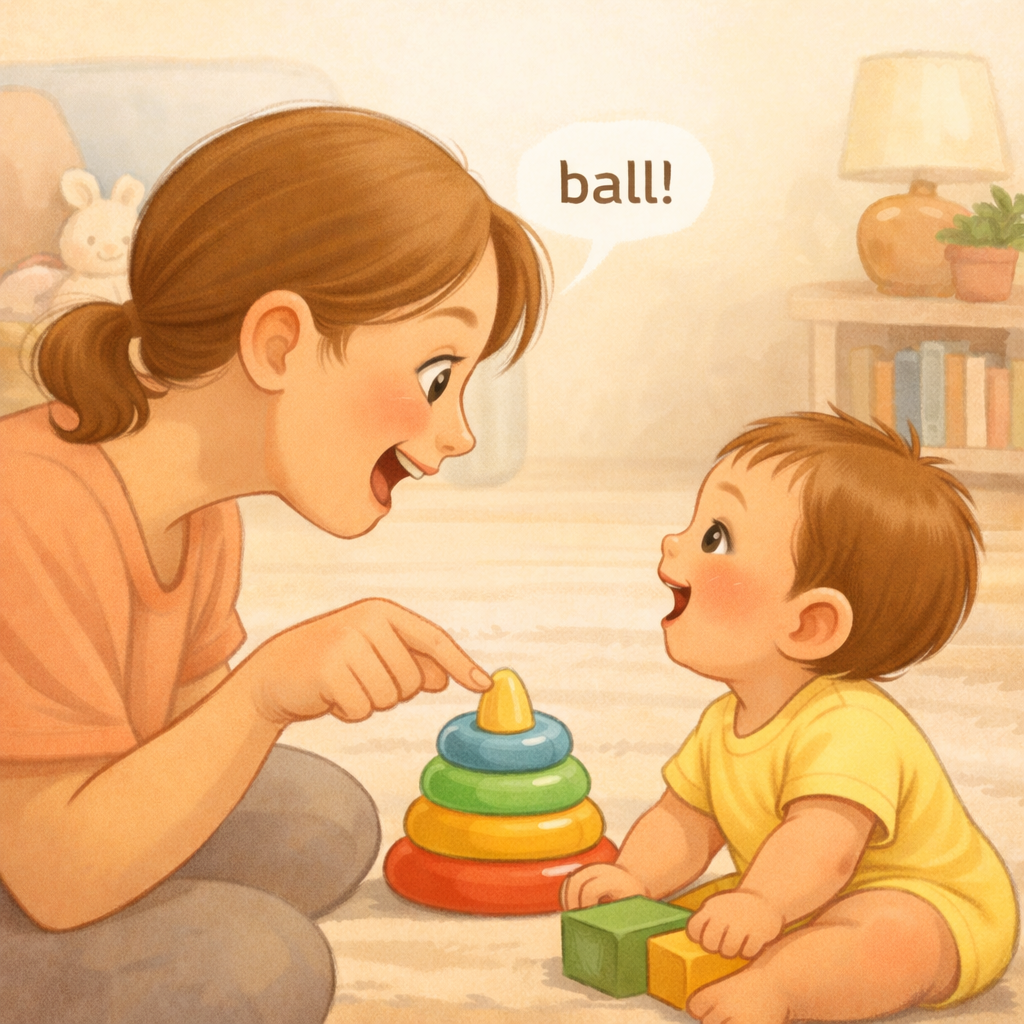
Once you have copied the sound, gently add a real word.
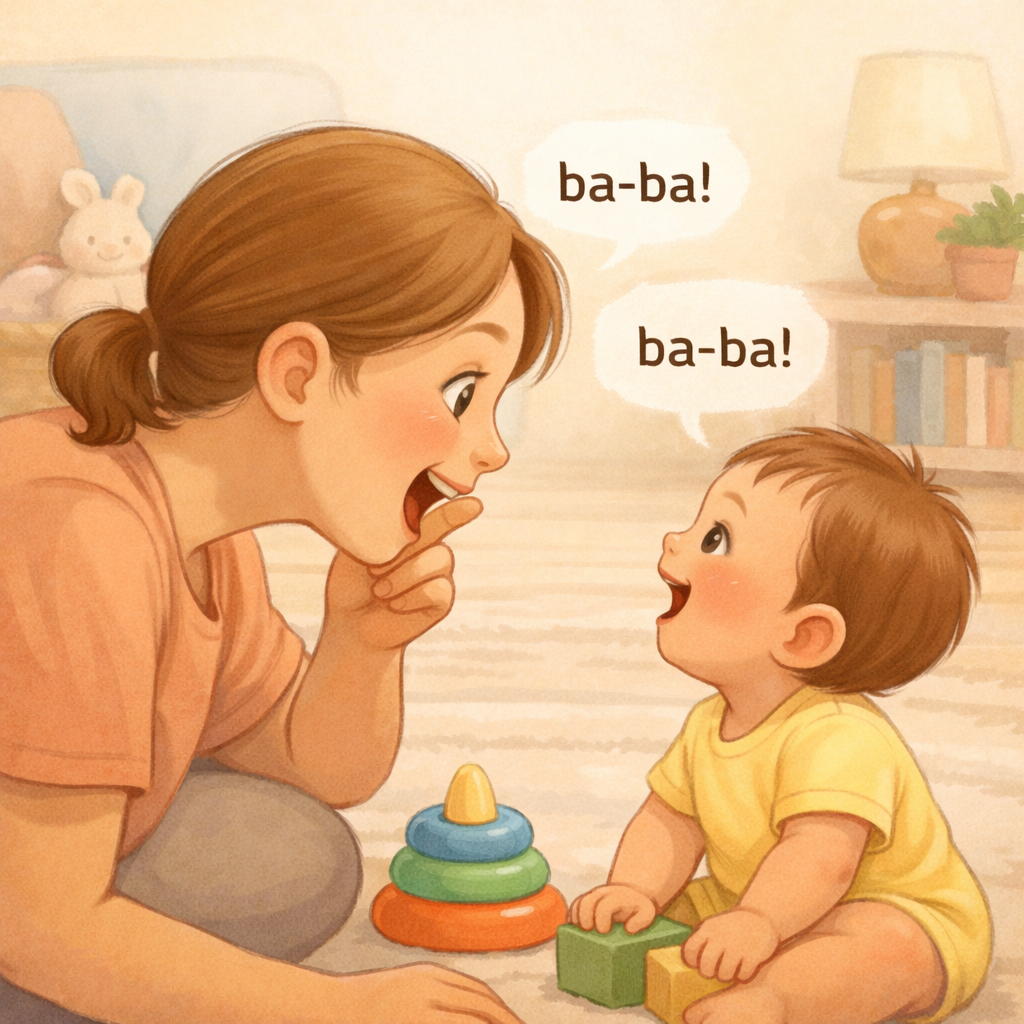
- Baby: “ba”
- Adult: “ba… ball!”
This links their sound practice to real language without pressure.
Your tone matters more than perfect words.
- Smile and sound interested
- Use a slightly sing-song voice
- Slow your speech a little
his keeps your baby engaged and focused.
Respond to what your baby is looking at or playing with. This makes language easier to understand.
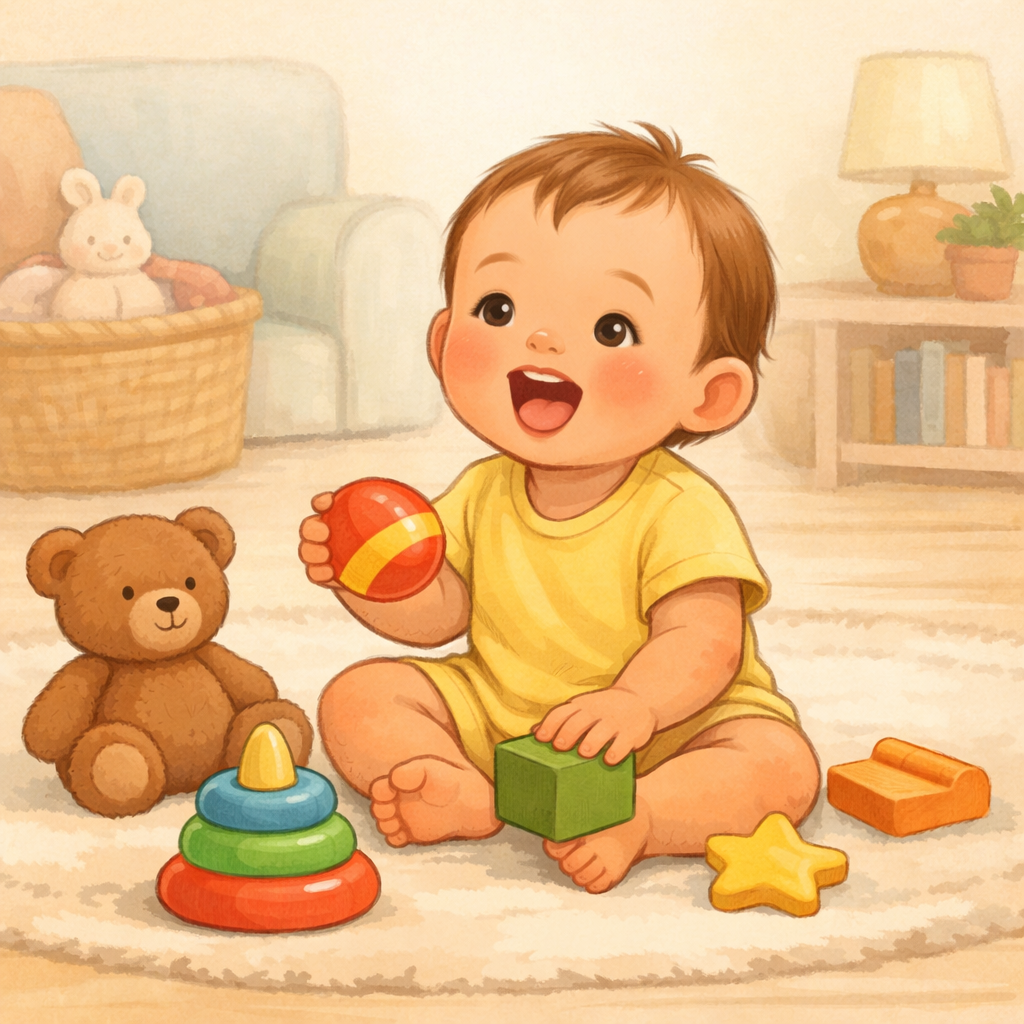
- Name the toy they are holding
- Comment on what they are doing
- Avoid changing the topic too quickly
Babies learn best when words match what they can see and touch.
Many parents worry they are doing something wrong. Most of the time, they are not.
- You do not need to correct sounds
- You do not need to push real words too early
- You do not need long conversations
Short, frequent responses are more helpful than long teaching moments.
Picture books are a lovely way to respond to babbling together.
- Point to pictures your baby notices
- Repeat their sounds and add simple words
- Let them babble while you read