Mornings are full of natural chances to talk, even if things feel rushed.
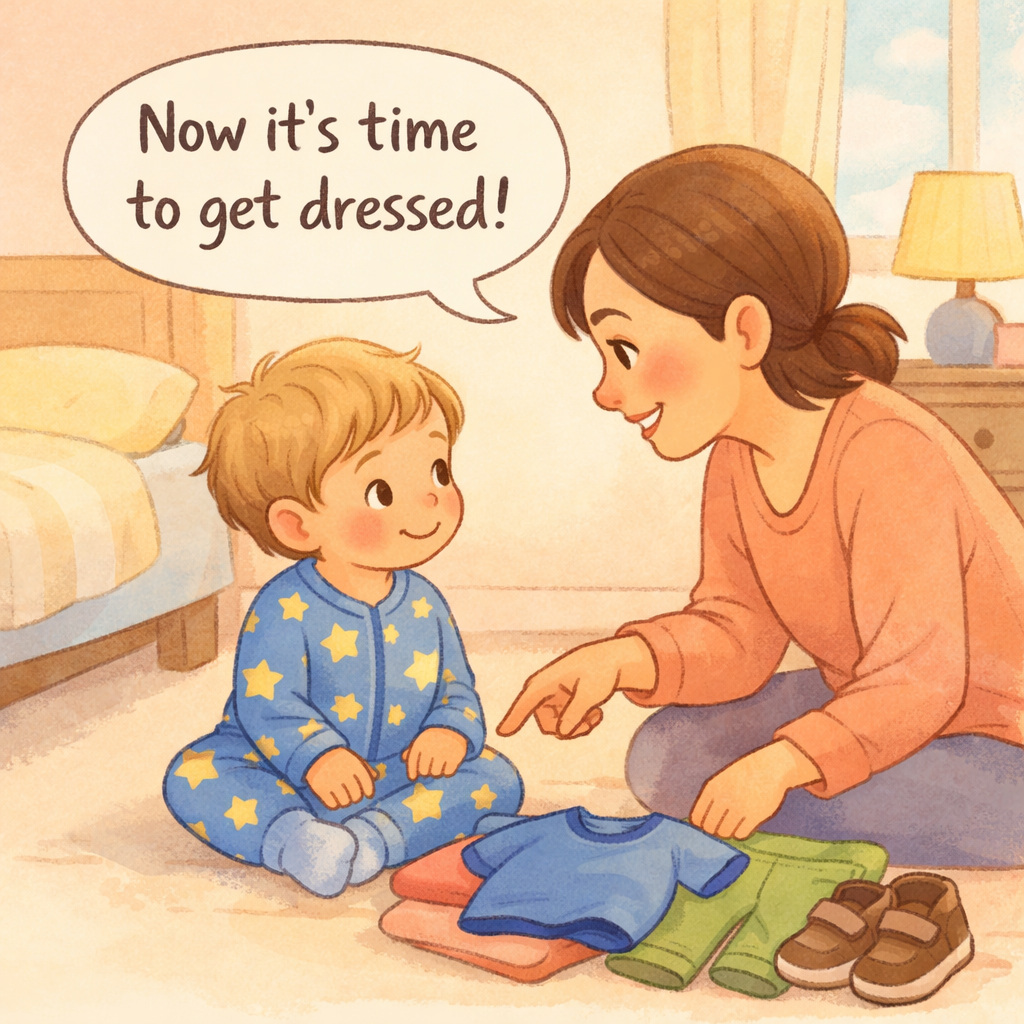
Name clothing items and describe what’s happening.
- “Socks on”
- “Blue jumper”
- “Shoes next”
Pause and wait. Even a look, sound, or attempt at a word counts as communication.
Food routines are ideal for first words because children are motivated.
- Name foods as you serve them
- Use simple choices like “banana or toast?”
- Repeat favourite words often
Play does not need to be educational to support language. Talking about what your child is already doing is enough.
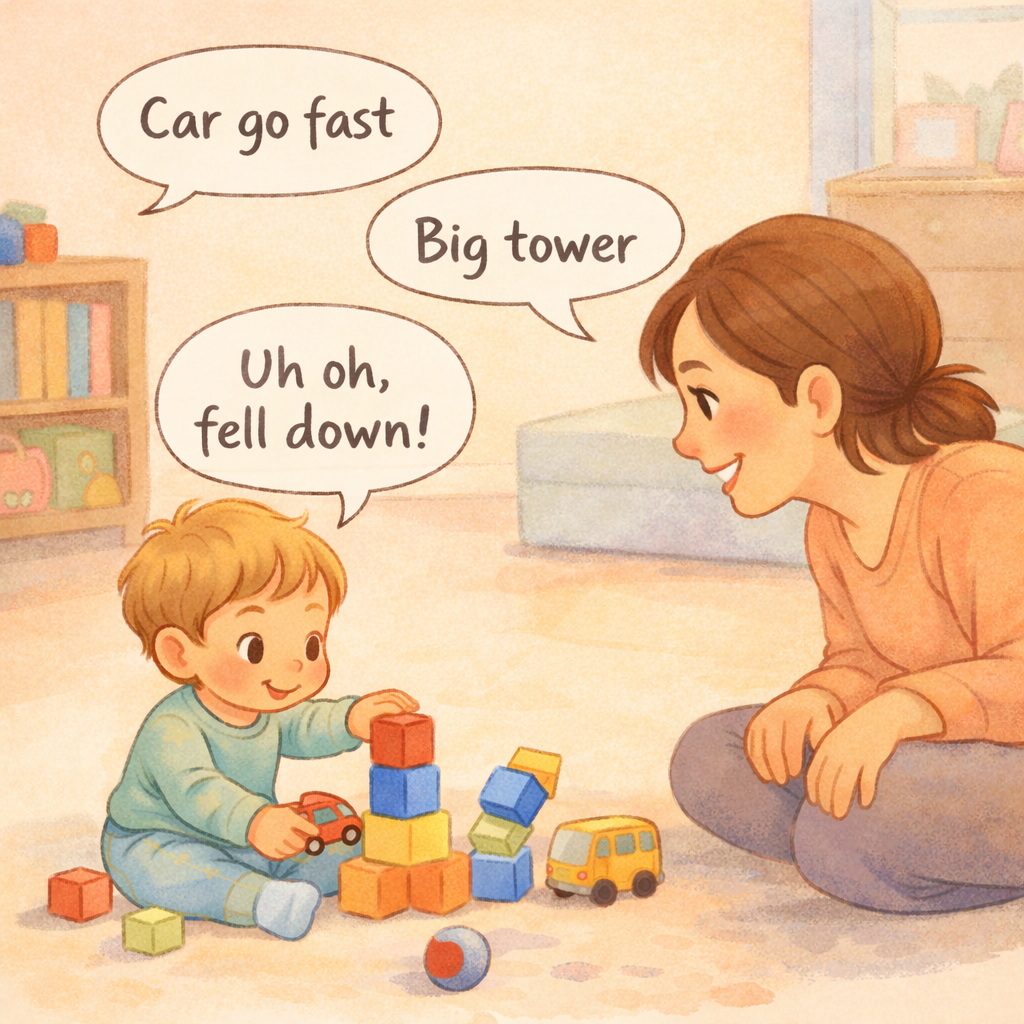
Follow your child’s lead and describe their actions.
- “Car go fast”
- “Big tower”
- “Uh oh, fell down”
Avoid testing or quizzing. Modelling words works better than asking questions.
Trips outside are packed with new words.
- Name things you see together
- Point and label naturally
- Repeat key words like “bus”, “dog”, “tree”
Evening routines are calmer and perfect for slower, gentle language.
Predictable bedtime language helps words stick.
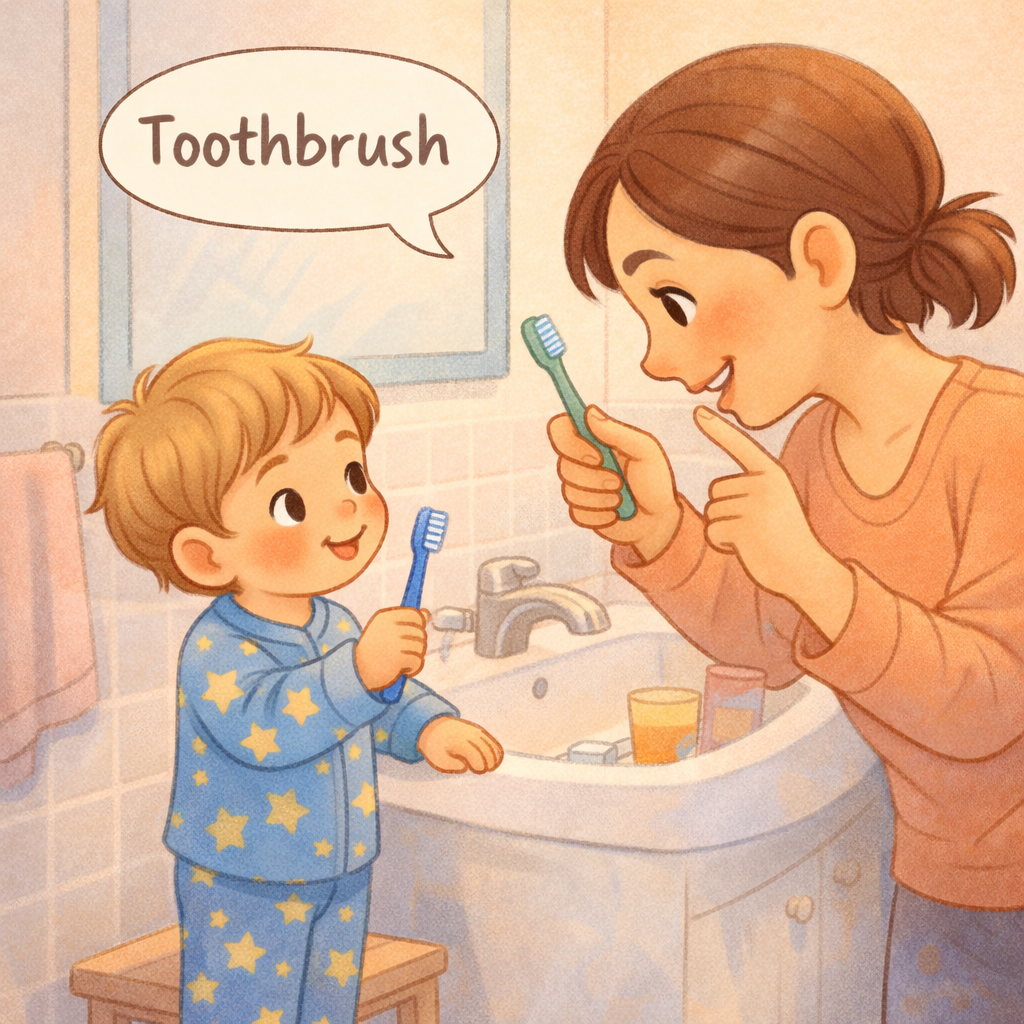
- Talk through brushing teeth and pyjamas
- Use the same phrases each night
- Share a simple picture book together
Water play encourages interaction and repetition.
- Name body parts
- Talk about actions like “wash”, “splash”, “pour”
- Repeat favourite words each night