ChattyCubs
£0.00 0

Basket

No products in the basket.

How Play Encourages Talking

How Play Encourages Talking

Play is one of the most powerful ways children learn to talk. When play feels relaxed and fun, children are more likely to experiment with sounds, words, and short phrases. There is no pressure to get things right, just plenty of chances to hear language and have a go themselves.

From the first peekaboo games to imaginative play as toddlers grow, play creates natural moments for talking, listening, and copying words.

Why play is so good for language development

Play gives children a reason to communicate. They want to ask for a turn, name what they see, or share excitement.

  • Play feels safe and enjoyable, which encourages children to try new sounds
  • Repetition happens naturally during games, helping words stick
  • Adults tend to talk more during play without realising
  • Children can take the lead, choosing what interests them

Types of play that encourage talking

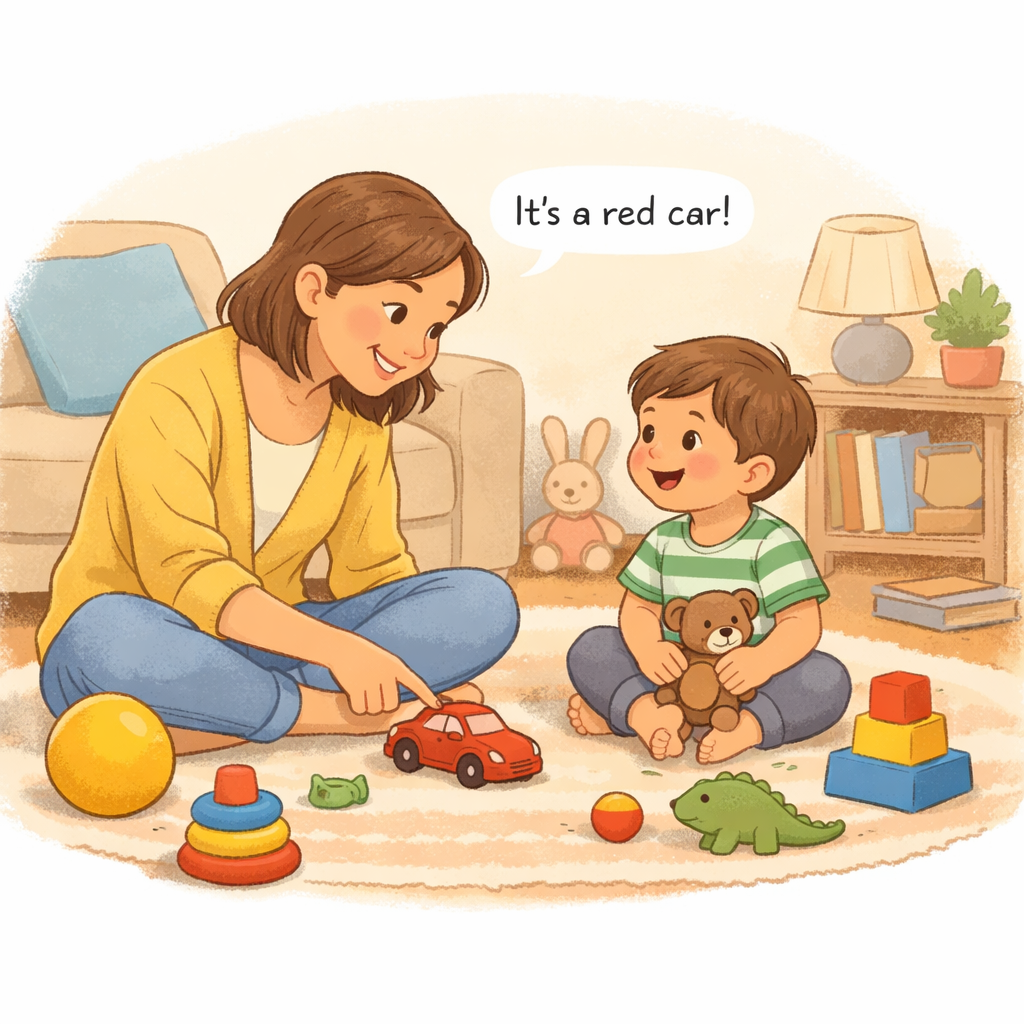
Floor play with toys

Simple toys like cars, animals, balls, or blocks invite lots of easy language.
  • Name what your child is holding or looking at
  • Use short, clear phrases like “red car” or “big ball”
  • Repeat words often without correcting or testing
Parent and toddler talking together during floor play

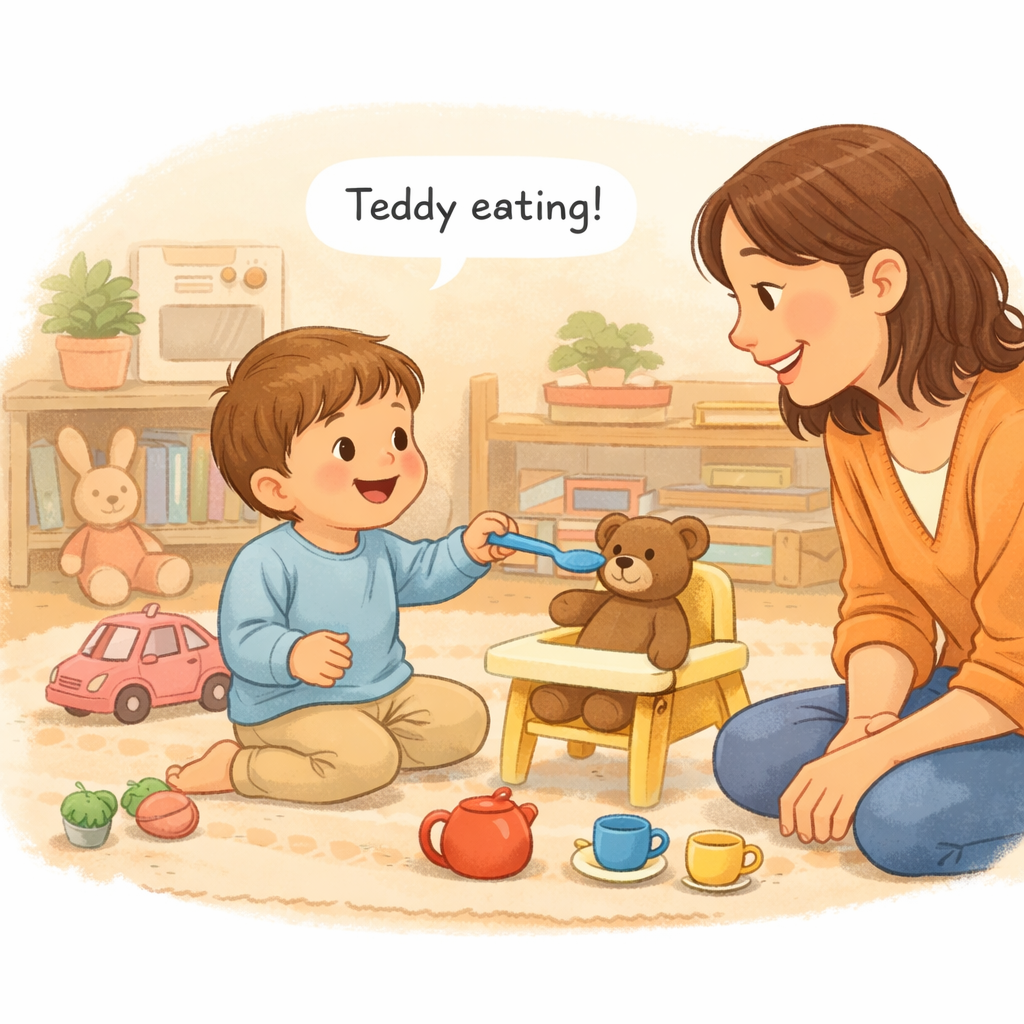
Pretend play

Pretend play helps children use language to describe actions and ideas.
  • Talk about what is happening, such as “teddy sleeping” or “car goes fast”
  • Add one extra word to what your child says
  • Follow their ideas rather than directing the play
Toddler using pretend play to practise talking

How to talk during play without pressure

Children learn best when talking feels natural.
  • Comment on what your child is doing rather than asking lots of questions
  • Keep sentences short and clear
  • Repeat words your child tries to say
  • Let silence happen so your child has time to respond

If your child is quiet during play

Some children talk less but still learn a lot through listening.
  • Keep talking and modelling words anyway
  • Respond to gestures, sounds, or pointing as communication
  • Focus on enjoyment rather than getting words out
Language often comes after long periods of listening and watching.

Supporting play with books and pictures

Picture books fit naturally into play and help link words to images.
  • Read little and often, even for a few minutes
  • Point to pictures and name them clearly
  • Let your child turn pages and choose books
First words books with clear pictures and everyday objects are especially helpful during play sessions. They give children familiar words they can practise again and again.

Related pages to explore

Play does not need to be complicated or planned. Simple, everyday play moments give children everything they need to start talking with confidence.
Stages of toddler language development Benefits of Talking With Your Toddler Best toys for encouraging first words Reading routines to boost first words

Newsletter

Join our Early Readers Club for fun learning tips, sneak peeks at new books, and free printable activities!
ChattyCubs™ 2026 All Rights Reserved.