ChattyCubs
£0.00 0

Basket

No products in the basket.

Using Songs to Boost Language

Using Songs to Boost Language

Songs are one of the easiest and most enjoyable ways to support your toddler’s language development. You do not need a good singing voice. What matters is the rhythm, repetition, and shared attention that songs naturally create.

From nursery rhymes to simple action songs, music helps toddlers tune into sounds, words, and patterns in a relaxed, playful way.

Why songs help toddlers learn language

Songs slow language down and make it predictable. This gives toddlers more time to hear sounds clearly and join in when they are ready.
  • Repetition helps words stick
  • Rhythm highlights syllables and sounds
  • Melody keeps toddlers engaged for longer
  • Actions add meaning to words
Many toddlers say their first clear words through songs before using them in everyday speech.

Simple songs that work best for language

You do not need complex lyrics or long songs. Short, repetitive songs are often the most effective.

Action songs

Songs with actions help toddlers connect words to movement and meaning.
  • Head, shoulders, knees and toes
  • If you’re happy and you know it
  • Row, row, row your boat
Toddler copying actions during a simple nursery rhyme.

Repetitive nursery rhymes

Repetition helps toddlers anticipate what comes next, which encourages them to attempt words.
  • Twinkle, twinkle, little star
  • Old MacDonald had a farm
  • Baa baa black sheep
Animal sounds are especially powerful. Many toddlers will happily say “moo” or “baa” long before full words.

How to use songs during everyday routines

Songs do not need to be a special activity. They work best when woven into daily life.
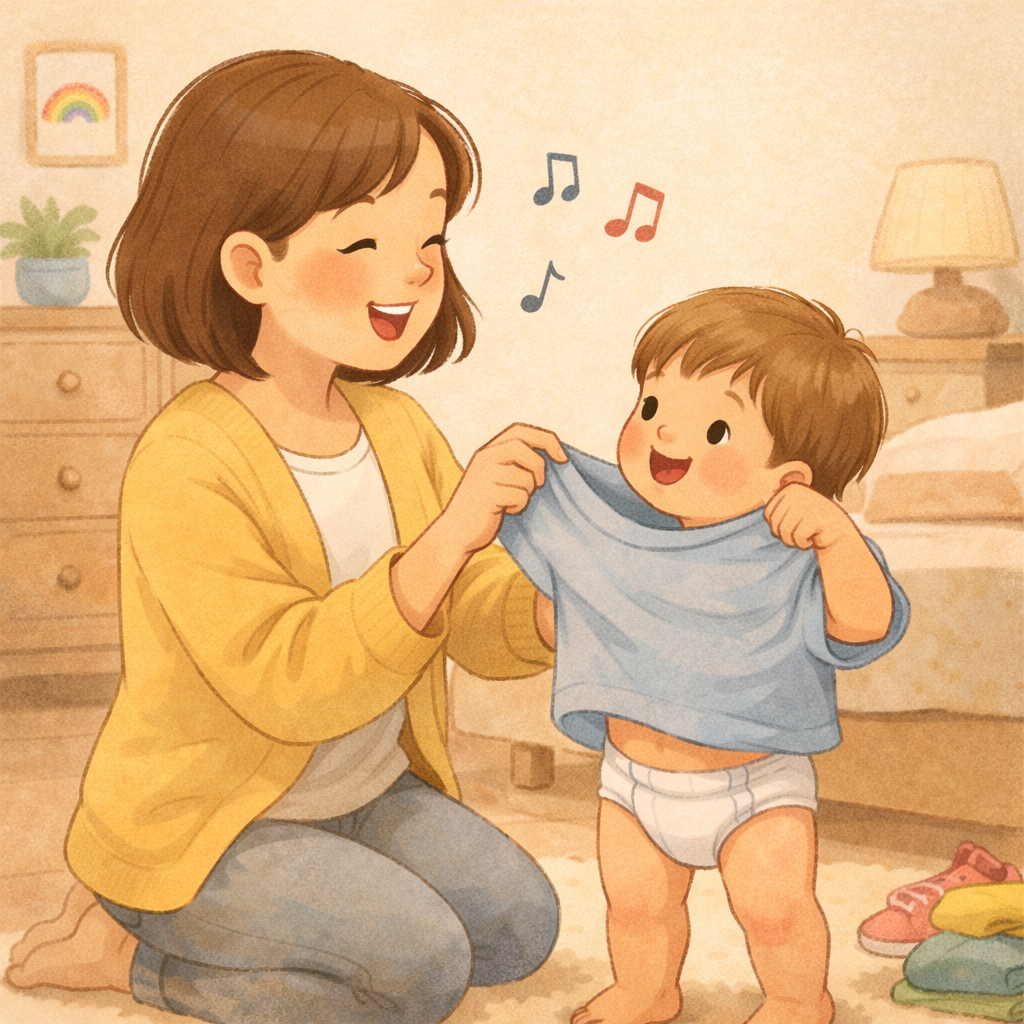
  • Singing while getting dressed
  • Songs during bath time
  • A calm song before bed
  • Tidy-up songs after play
Parent singing to a toddler during a daily routine.

Tips to get the most language benefit from songs

You can gently boost learning without turning singing into a lesson.
  • Sing slowly and clearly
  • Pause to give your toddler a chance to join in
  • Repeat favourite songs often
  • Use gestures and facial expressions
  • Follow your toddler’s lead if they request the same song again
If your toddler only joins in with actions or sounds at first, that still counts as language learning.

What if my toddler does not join in?

Some toddlers listen quietly for a long time before joining in. This is completely normal.

Listening builds understanding, even if your child is not yet singing or copying words. Keep songs fun and pressure-free.

Supporting songs with books and pictures

Books that include songs or familiar rhymes can help toddlers connect spoken words with pictures.

Point to pictures as you sing and name key words slowly. This reinforces meaning and supports early vocabulary.

Related pages to explore

Play does not need to be complicated or planned. Simple, everyday play moments give children everything they need to start talking with confidence.
Stages of toddler language development Benefits of Talking With Your Toddler Reading routines to boost first words Best toys for encouraging first words

Newsletter

Join our Early Readers Club for fun learning tips, sneak peeks at new books, and free printable activities!
ChattyCubs™ 2026 All Rights Reserved.