ChattyCubs
£0.00 0

Basket

No products in the basket.

Tips for Slow Talkers

Tips for Slow Talkers

Some toddlers take longer to start talking, and that can feel worrying. In most cases, it is simply a different pace of development. There is a wide range of what is considered typical, especially between 18 months and 3 years.

The good news is there is a lot you can do day to day to gently support language without pressure. Small changes to how you talk and play together really do add up.

What does “slow talker” mean?

A slow talker is usually a toddler who understands plenty but uses fewer words than expected for their age. They might rely more on pointing, sounds, or gestures instead of spoken words.

This does not automatically mean there is a problem. Many slow talkers catch up naturally with the right support.

Focus on understanding, not just words

Before words come out, understanding needs to be strong. A toddler who follows instructions, recognises familiar objects, and reacts to what you say is building solid foundations.

Signs understanding is developing well include:
  • Responding to their name
  • Looking at or pointing to objects you name
  • Following simple instructions like “come here” or “give it to me”

Talk little and often

Long sentences can be overwhelming. Short, clear phrases help your toddler hear and copy words more easily.

Try:
  • Naming what they are holding or looking at
  • Using one or two key words at a time
  • Repeating the same words throughout the day
For example, instead of “Do you want to put the red ball into the box now?”, try “Ball in” or “Red ball”.
Parent using short phrases while talking to a toddler during play.

Follow your child’s lead

Talking works best when it is linked to what your toddler is already interested in. Let them choose the activity, then talk about it.

This could be:
  • Commenting on their play instead of asking questions
  • Copying what they do and naming it
  • Waiting and giving them time to respond
If they are pushing a car, you might say “car”, “fast car”, or “go”.

Build words into everyday routines

Daily routines are predictable, which makes language easier to learn. The same words come up again and again.

Good moments for language include:
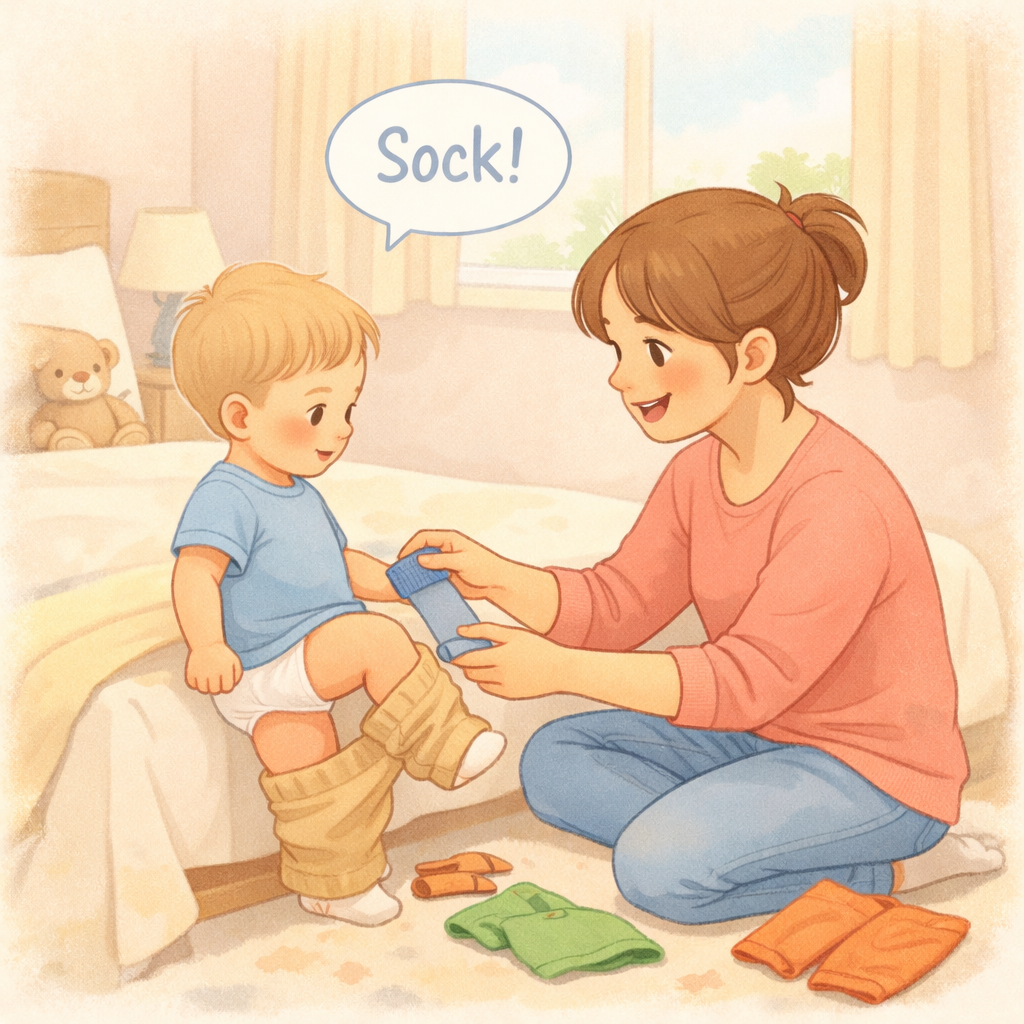
  • Getting dressed
  • Mealtimes
  • Bath time
  • Going out in the buggy
Repeat the same words each day so your toddler starts to expect and recognise them.
Parent talking to a toddler during a dressing routine.

Use books as a talking tool

Books are especially helpful for slow talkers because there is no pressure to perform. Your toddler can listen, look, and join in when ready.

Try:
  • Pointing to pictures and naming them
  • Repeating favourite words across pages
  • Letting your toddler turn pages or point
Books with clear pictures and single words work particularly well.

Celebrate all attempts to communicate

Every child develops at their own pace. Vocabulary size varies widely, especially between quiet talkers and chatty ones.
aSounds, gestures, and partial words all count. Respond warmly to any attempt your toddler makes to communicate.

You can:
  • Repeat the word back clearly
  • Add one extra word
  • Smile and show you are listening
If they say “ba”, you might respond with “ball”.
What matters most is steady progress over time, not comparing your child to others.

If you are ever worried about your toddler’s speech or understanding, speaking to your health visitor is a good first step.

When to seek extra support

If your toddler:
  • Is not using words by around 2 years
  • Seems to struggle to understand simple language
  • Has lost words they previously used
It is a good idea to speak to your health visitor or GP for reassurance and guidance. Early support is helpful and does not mean anything is “wrong”.

Related reading and next steps

You may also find these pages helpful:
Responding to Babbling The Role of Imitation in Language Development Using Songs to Boost Language
Slow talkers often thrive with calm, consistent support. Trust your instincts, keep talking together, and remember that every child finds their voice in their own time.

Newsletter

Join our Early Readers Club for fun learning tips, sneak peeks at new books, and free printable activities!
ChattyCubs™ 2026 All Rights Reserved.