ChattyCubs
£0.00 0

Basket

No products in the basket.

How Toddlers Learn to Speak

How Toddlers Learn to Speak

Toddlers do not learn to talk all at once. Speech builds slowly through listening, watching, copying, and practising during everyday moments.

Understanding how toddlers learn to speak can help you feel more confident supporting language at home, without pressure or drills.

This page explains what is happening behind the scenes and how you can help, even if your child is not talking much yet.

According to the NHS, babies start by making sounds and babbling before gradually learning to form words and short phrases. This early stage is an important part of learning to talk. Learn more on the NHS development guide.

Toddlers Learn Speech by Listening First

Before toddlers say words, they spend months listening.

They tune into voices, sounds, rhythm, and tone long before speech appears. This is why talking to babies from birth matters, even when they cannot reply.
Parent talking to baby to support early language development
Listening helps toddlers learn:
  • What words sound like
  • How sentences flow
  • Which sounds matter in their language
  • That communication goes back and forth
Quiet, screen-free moments make it easier for toddlers to focus on voices.

Understanding Comes Before Talking

Most toddlers understand far more than they can say.

A child may follow simple instructions, point to named objects, or respond to familiar words long before speaking clearly.

This stage is normal and important. It shows that language is developing, even if speech feels slow.

You might notice your toddler:
  • Pointing instead of speaking
  • Bringing objects when asked
  • Responding to familiar routines
  • Showing excitement when they recognise words

Copying Is How Speech Starts

Toddlers learn to speak by copying what they hear.

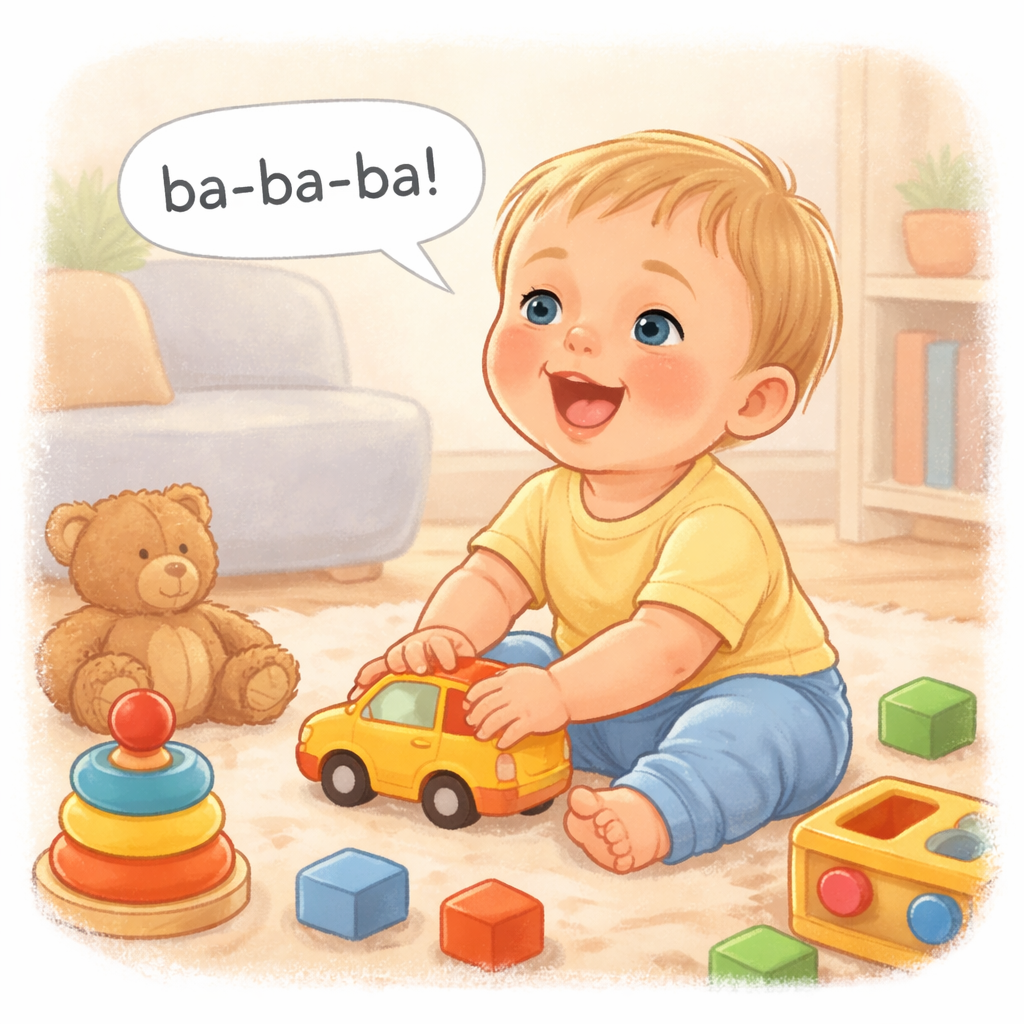
At first this looks like babbling, sound play, and repeated syllables. Over time, these sounds start to resemble real words.
Toddler babbling during play as an early step in learning to speak
Copying includes:
  • Repeating sounds
  • Trying familiar words
  • Imitating actions and gestures
  • Matching tone and rhythm
Responding positively to these attempts encourages more speech.

Everyday Routines Build Language

Toddlers learn to speak through repetition in daily life.

Meals, bath time, dressing, and play all give natural chances to hear the same words again and again.

Simple repetition helps words stick:
  • Naming objects as you use them
  • Using the same phrases each day
  • Talking about what is happening now
  • Linking words to actions
Picture books work well because they repeat clear words in a calm, focused way. This is why first words books are often so effective for early language.

Interaction Matters More Than Correction

Toddlers learn best when speech feels safe and enjoyable.

Correcting mistakes or pushing for perfect words can make children quieter rather than more talkative.

Helpful ways to respond:
  • Repeat the word correctly without pressure
  • Expand what they say into a short phrase
  • Show interest rather than correcting
  • Give time for them to respond
If a toddler says “dog”, you might reply “Yes, a big dog” rather than asking them to repeat it.

Every Toddler Develops at Their Own Pace

Speech development varies widely.

Some toddlers talk early, others focus on movement, listening, or understanding first. All of these are part of healthy development.

Support matters more than speed. Talking, reading, and responding daily builds a strong foundation over time.

If you want practical ideas for daily support, explore:
  • Toddler language development stages
  • How to practise first words daily
  • Using picture books for first words
Gentle, everyday interaction is the most powerful tool you have.

Remember Every Child Develops Differently

Language development is not a race. Some children speak earlier, others take longer, and both can be completely typical.

If your child is engaged, responsive, and making steady progress, small variations in timing are usually nothing to worry about.

For practical ideas, you may also find these helpful:
Why First Words Matter First Word Milestones by Age How to Practice First Words Daily
ChattyCubs First Words books are designed to support these stages naturally through clear images, repetition, and shared reading moments that fit easily into everyday life.


Newsletter

Join our Early Readers Club for fun learning tips, sneak peeks at new books, and free printable activities!
ChattyCubs™ 2026 All Rights Reserved.