ChattyCubs
£0.00 0

Basket

No products in the basket.

First Word Milestones by Age

First Word Milestones by Age

Understanding first word milestones can be reassuring for parents. Babies do not all follow the same path, but there are common patterns in how words develop from birth to age three.

This guide walks through typical word milestones by age, what counts as progress, and how you can gently support language at home without pressure.

What Are First Word Milestones?

First word milestones describe the usual stages babies move through as they learn to understand and say words. These milestones include listening, recognising words, babbling, and eventually speaking.

Reaching a milestone early or late is usually normal. Language development is about steady progress, not exact dates.

Word Milestones from Birth to 6 Months

At this stage, babies are not speaking words yet, but important foundations are forming.
  • Turns towards familiar voices
  • Responds to sounds and music
  • Makes cooing and gurgling noises
  • Enjoys face-to-face interaction
These early sounds are the building blocks for later words.
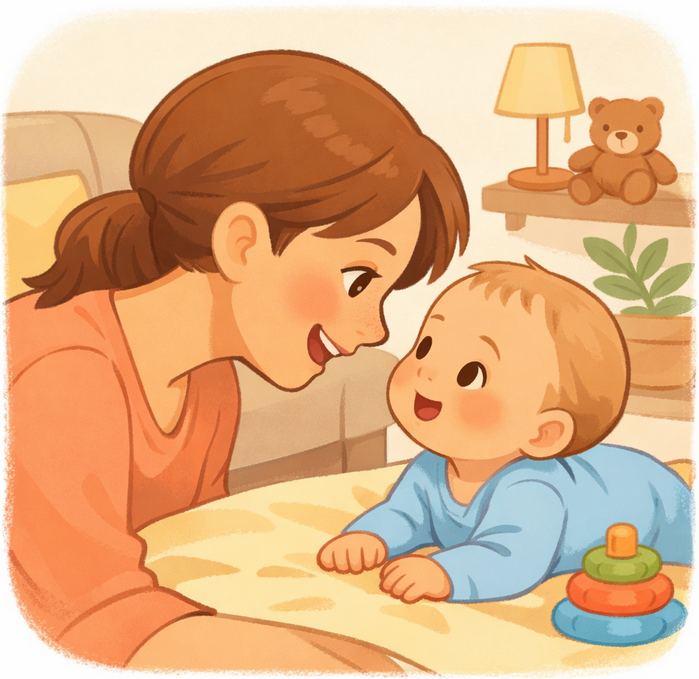
Parent talking to their baby to support early language development

Word Milestones from 6 to 12 Months

Babies begin to understand familiar words before they can say them.
  • Responds to their name
  • Understands simple words like “no” or “bye-bye”
  • Babbling sounds start to sound like speech (ba-ba, da-da)
  • Uses gestures such as pointing or waving
Some babies may say a first clear word towards the end of this stage, but many do not, and that is completely fine.

Word Milestones from 12 to 18 Months

This is when many parents hear a first recognisable word.
  • Says one to ten simple words
  • Uses words for familiar people or objects
  • Understands far more words than they can say
  • Uses sounds or gestures to communicate needs
Words may not be pronounced clearly at first. Consistency matters more than clarity.
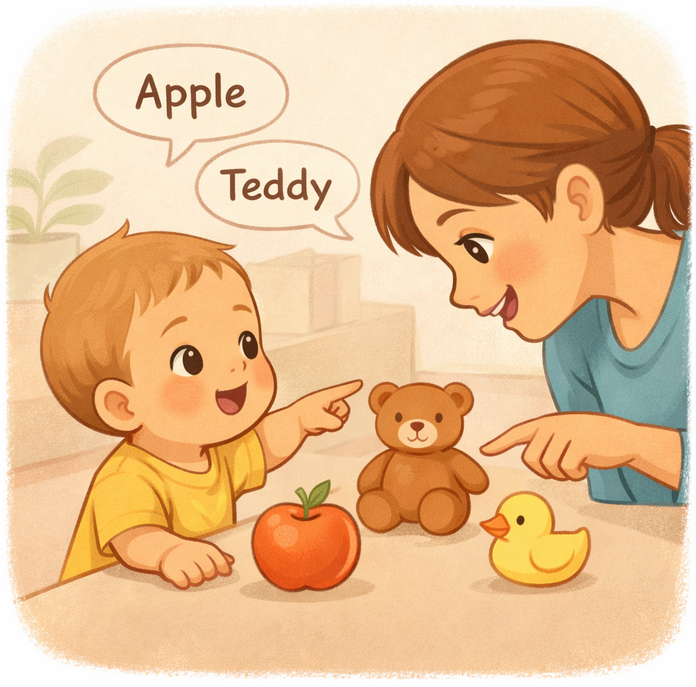
Toddler learning first words by pointing at objects

Word Milestones from 18 to 24 Months

Vocabulary often grows quickly during this period.
  • Uses 20 to 50 or more words
  • Begins to combine two words, such as “more milk”
  • Names familiar objects and people
  • Understands simple instructions
This stage can feel sudden. One week it seems quiet, then new words appear almost daily.

Word Milestones from 2 to 3 Years

Language becomes more complex and expressive.
  • Uses short sentences
  • Vocabulary continues to expand rapidly
  • Asks simple questions
  • Can be understood by familiar adults most of the time
Mistakes are normal. Children learn by trying, copying, and hearing words repeated naturally.
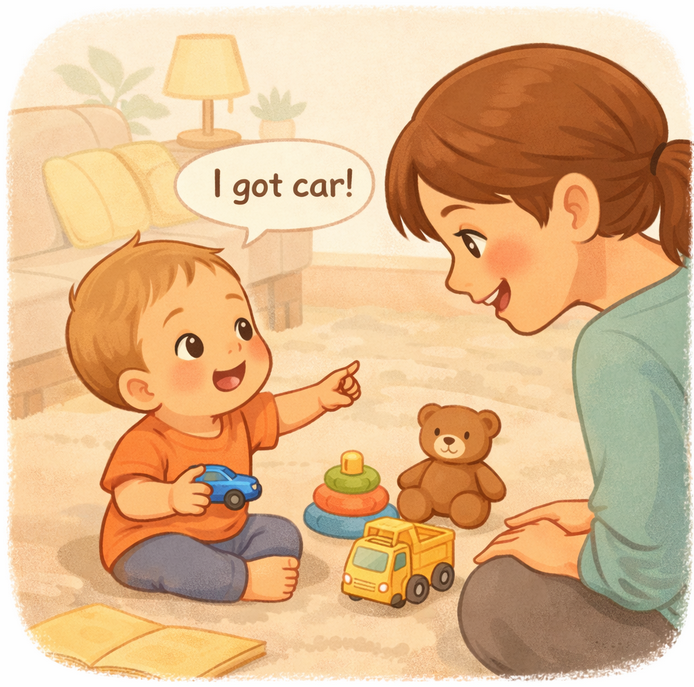
Toddler practising language during play

What Counts as a First Word?

A first word does not need to sound perfect. It counts if your child:
  • Uses the same sound consistently
  • Uses it with meaning
  • Directs it towards the right object or person
For example, “ba” for ball can still be a real word.

How to Support Word Milestones Gently

You do not need flashcards or drills. Everyday moments are enough.
  • Talk about what you are doing
  • Name objects your child shows interest in
  • Read simple picture books together
  • Repeat words clearly without correcting
You may find it helpful to explore How to Practice First Words Daily and Best First Words for Babies for practical ideas that fit into busy routines.

ChattyCubs First Words books are designed for this stage, with clear pictures that invite pointing, naming, and conversation at your child’s pace.

When to Seek Extra Support

If your child is not meeting milestones, it does not always mean there is a problem. However, consider speaking to your health visitor or GP if:
  • Your baby shows little interest in sounds or interaction
  • There are no words by around 18 months
  • Understanding seems limited compared to peers
Early reassurance or support can make a big difference.

A Gentle Reminder for Parents

First word milestones are guides, not deadlines. Some children focus on movement first, others on language. Progress comes in many forms.

If you would like to continue learning, the First Words Learning hub links all related guides together, helping you build confidence step by step.

Common Questions About Language Milestones

Yes, very often they do. In the early years, understanding usually grows before spoken language does. A toddler may recognise familiar words, follow simple instructions, respond to names of favourite objects, or show understanding through gestures long before they can say many words clearly. This can be reassuring for parents because it shows language is still developing beneath the surface. Looking at understanding as well as speech gives a fuller picture of progress and can help you notice strengths even when spoken words are still limited.

There is a wide range of normal, but many toddlers around age 2 are beginning to use a growing vocabulary and may start combining two words together. Some children are chatty early, while others build language more gradually. Rather than focusing only on one number, it is often more helpful to look at whether your child is making progress over time, understanding everyday language, using gestures, and trying to communicate in different ways. Steady progress and growing interaction are usually the most useful signs to watch for.

Yes, language development is often uneven. A child might understand a lot but say very little, or suddenly start using more words after a quieter period. Some children focus first on sounds, others on gestures, and others on single words they use again and again. Uneven progress does not always mean something is wrong. What matters more is whether communication is moving forward over time and whether your child is engaging, responding, and finding ways to connect with people around them.

Parents often seek advice when a child is not using many words, is not making steady progress, seems hard to engage, does not respond consistently, or becomes frustrated when trying to communicate. Delays can show up in different ways, so it is helpful to think about speech, understanding, gestures, play, and social interaction together. You do not need to diagnose anything yourself. If you are concerned, asking a GP, health visitor, or speech and language professional for advice can help you understand what to watch and what support may be useful.

It is natural to notice what other children are doing, but comparisons can sometimes add stress more than clarity. Children develop at different speeds, and one child being very verbal does not mean another child is falling behind in a meaningful way. It is often more useful to compare your child with their own earlier progress. Are they understanding more, using more sounds, pointing more, or trying to communicate more than they were a few months ago? That kind of progress usually tells you more than side-by-side comparison with another child.

Important: This page is for general information only and does not replace professional advice. Please read our Editorial Policy & Disclaimer.

Related learning pages

What are first words When Do Babies Say Their First Word? First words by category

Newsletter

Join our Early Readers Club for fun learning tips, sneak peeks at new books, and free printable activities!
ChattyCubs™ 2026 All Rights Reserved.