ChattyCubs
£0.00 0

Basket

No products in the basket.

Why First Words Matter

Why First Words Matter

Your baby’s first words are more than just a milestone to tick off. They are the building blocks for communication, confidence, and learning that will support your child right through toddlerhood and beyond.

Long before children can form sentences, first words help them understand the world, express needs, and connect with the people around them. Even a single word can make a big difference to daily life.

What Are First Words?

First words are the simple, meaningful words babies learn to understand and say in the early years. These are usually words your child hears every day and can link to real experiences.
  • Names of familiar people, such as mum or dada
  • Everyday objects like cup, ball, or book
  • Common actions such as up, go, or eat
  • Social words like hi and bye
These words often appear between understanding and speaking. Your baby will usually understand many words before saying them out loud.

How First Words Support Brain Development

Hearing and using words helps your baby’s brain make important connections. Each repeated word strengthens understanding and memory.
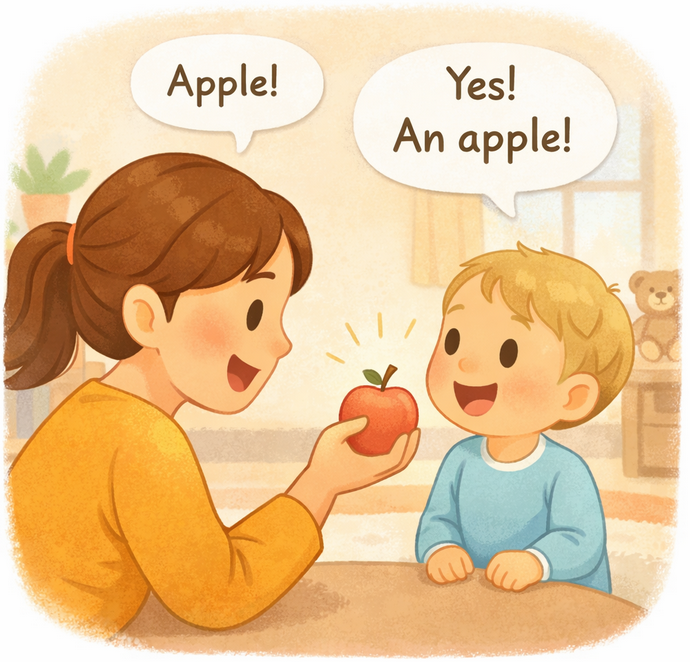
Parent pointing to objects and saying words to help baby learn language
When you name objects, actions, and feelings during everyday routines, you help your child:
  • Build vocabulary naturally
  • Improve listening and attention
  • Understand cause and effect
  • Develop early thinking skills
This happens through repetition, not formal teaching. Simple talk during play, meals, and bath time is enough.

Why First Words Reduce Frustration

Before children can speak clearly, they often know what they want but cannot explain it. First words give them a way to communicate needs.
  • Saying milk instead of crying when thirsty
  • Using up to ask to be picked up
  • Pointing and naming favourite toys
This early communication can reduce frustration for both you and your child, making daily routines calmer and more enjoyable.

First Words and Emotional Confidence

When children realise their words have meaning and are understood, it boosts confidence. They learn that communication works.
Toddler smiling after using words to communicate successfully
Responding warmly to your child’s attempts, even if the word is not clear, encourages them to keep trying. This builds self-esteem alongside language skills.

How First Words Support Later Speech and Learning

First words form the foundation for combining words later on. Once your child has a bank of familiar words, they can start putting them together.
  • Single words lead to two-word phrases
  • Understanding supports clearer speech
  • Early vocabulary links to later reading skills
Children who hear lots of simple, clear language often find it easier to expand their speech as toddlers.

How You Can Support First Words at Home

You do not need flashcards or formal lessons. Everyday moments are the best opportunities for learning.
  • Talk about what you are doing as you do it
  • Name objects your child is looking at or holding
  • Repeat favourite words often
  • Pause to give your child time to respond
Sharing simple picture books together is also a powerful way to reinforce first words through repetition and visual support.

Using First Words Books to Support Learning

First words books help children link pictures to spoken language. Pointing to clear images while naming them makes learning more concrete.

Books like ChattyCubs First Words focus on everyday vocabulary, encouraging parents to talk, point, and repeat words naturally during reading time.

If you are building a routine around early language, you may also find these pages helpful:

Related learning pages

What are first words When Do Babies Say Their First Word? First words by category

Reassurance for Parents

Every child develops language at their own pace. Some children say their first words early, others take a little longer.

What matters most is exposure to language, warm interaction, and shared moments. By talking, playing, and reading together, you are already giving your child exactly what they need to thrive.

Newsletter

Join our Early Readers Club for fun learning tips, sneak peeks at new books, and free printable activities!
ChattyCubs™ 2026 All Rights Reserved.