Fluency develops gradually between 18 months and 3 years.
Some hesitations are normal.
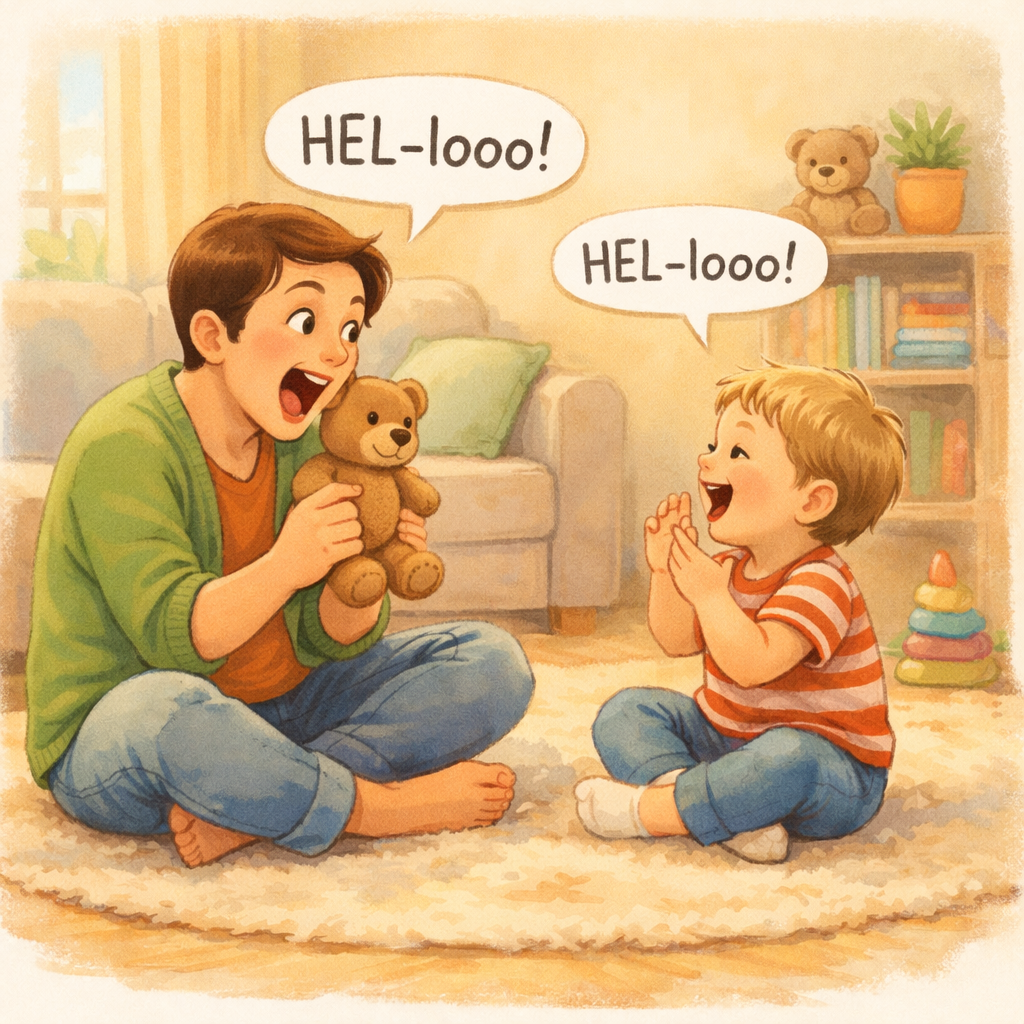
If your child repeats sounds or pauses often, stay calm. Slow your own speech. Keep eye contact gentle. Avoid finishing every word for them.
The
Role of Eye Contact in Communication explains how connection supports confidence.
If you ever feel unsure about your child’s speech development, trust your instincts and speak with your health visitor or GP.
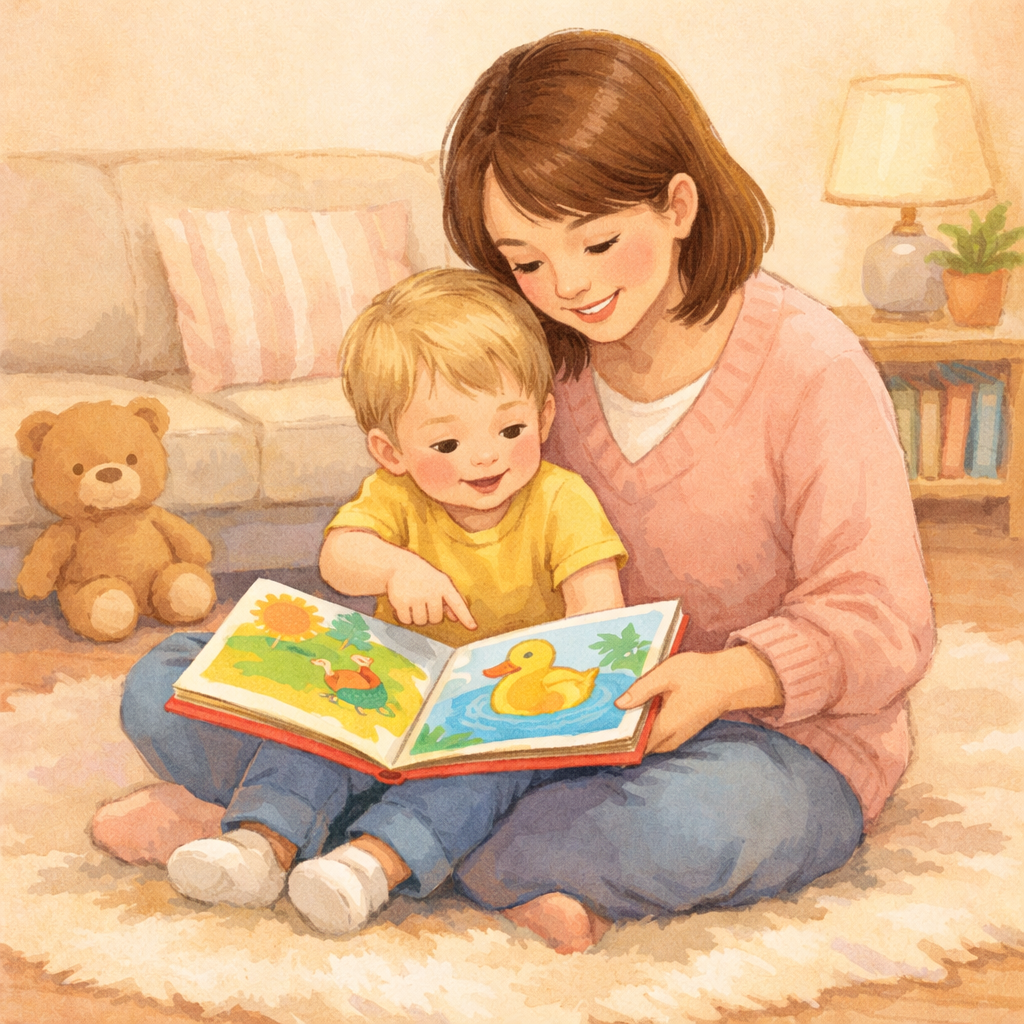
Books give children predictable language patterns.
Repetition builds smoothness.
Pause before the final word in a sentence. Let your toddler attempt it.
Our animal-themed pages in ChattyCubs First Words encourage this naturally. You can pause at:
“The lion says…”
“The duck goes…”
Reading together also supports rhythm and pacing. Explore
Reading Aloud to Support Speech for practical tips.
You do not need long sessions.
Two or three minutes of playful speech each day is enough.
- Morning dressing, stretch a word slowly
- Snack time, pause for a word
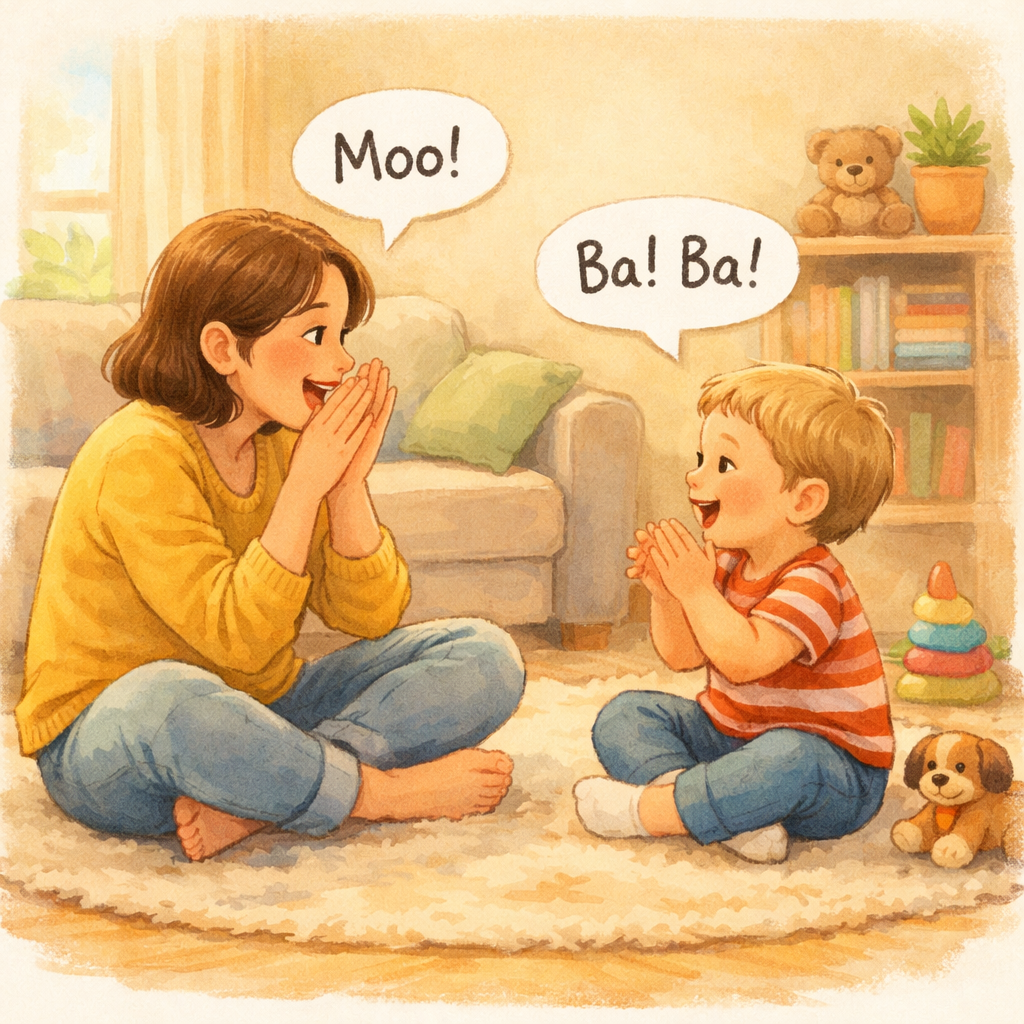
- Bath time, copy funny sounds
Consistency matters more than duration.
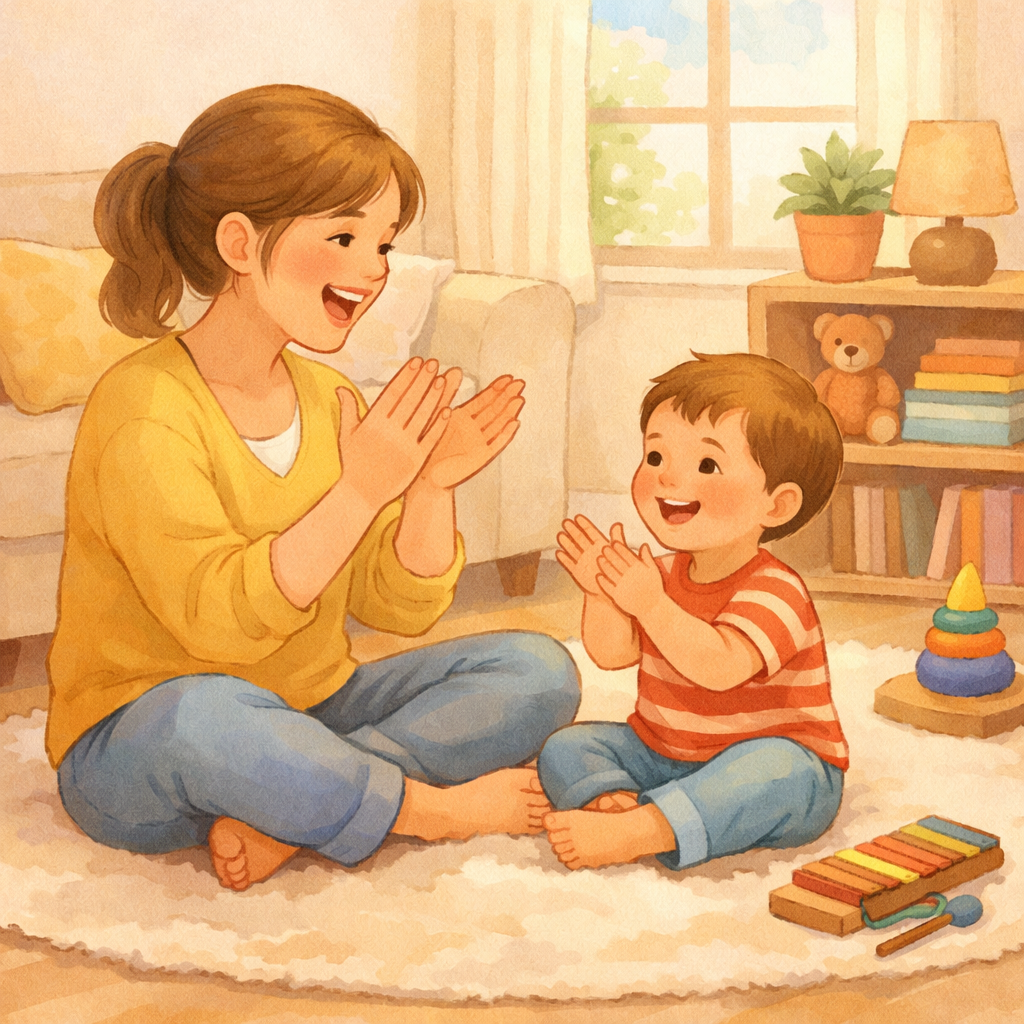
Speech games should feel like laughter, not lessons.
That is where fluency grows.