Before a child says “mummy” or “ball”, they learn to:
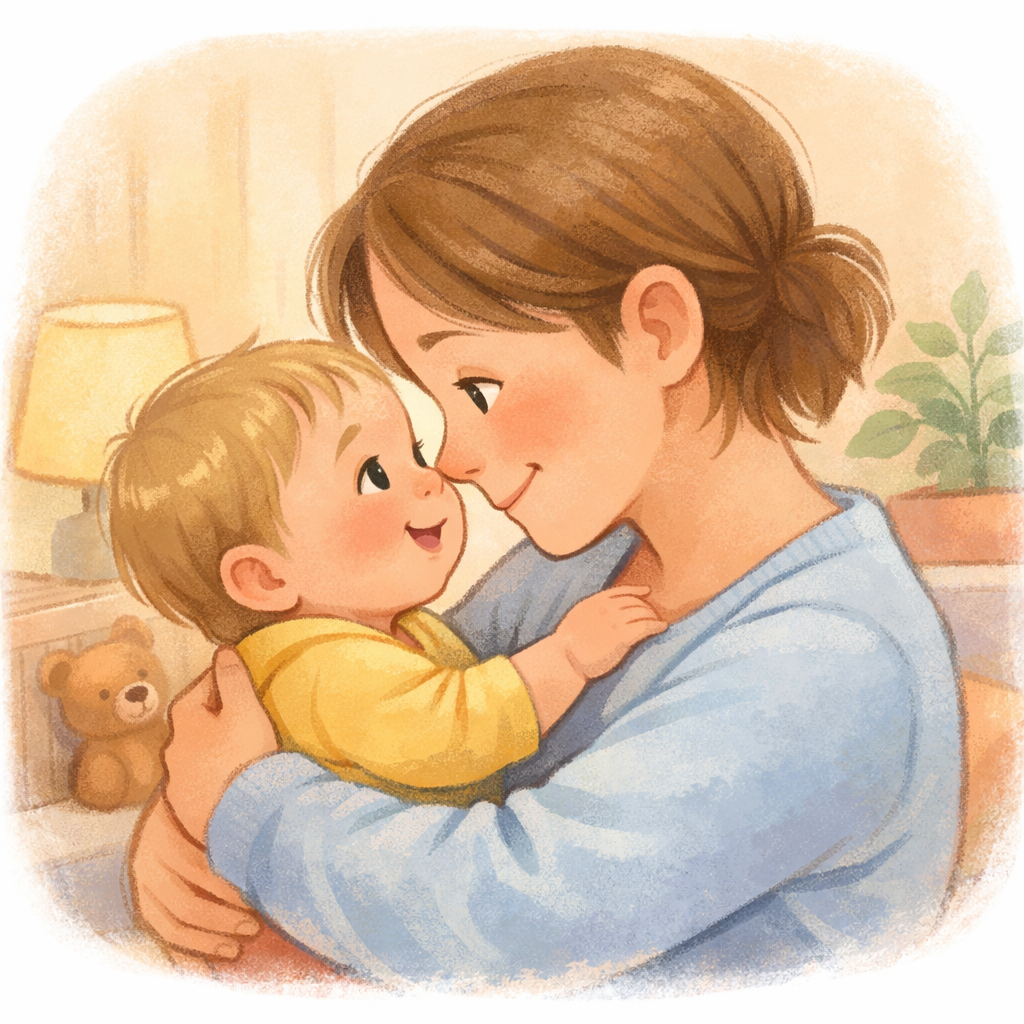
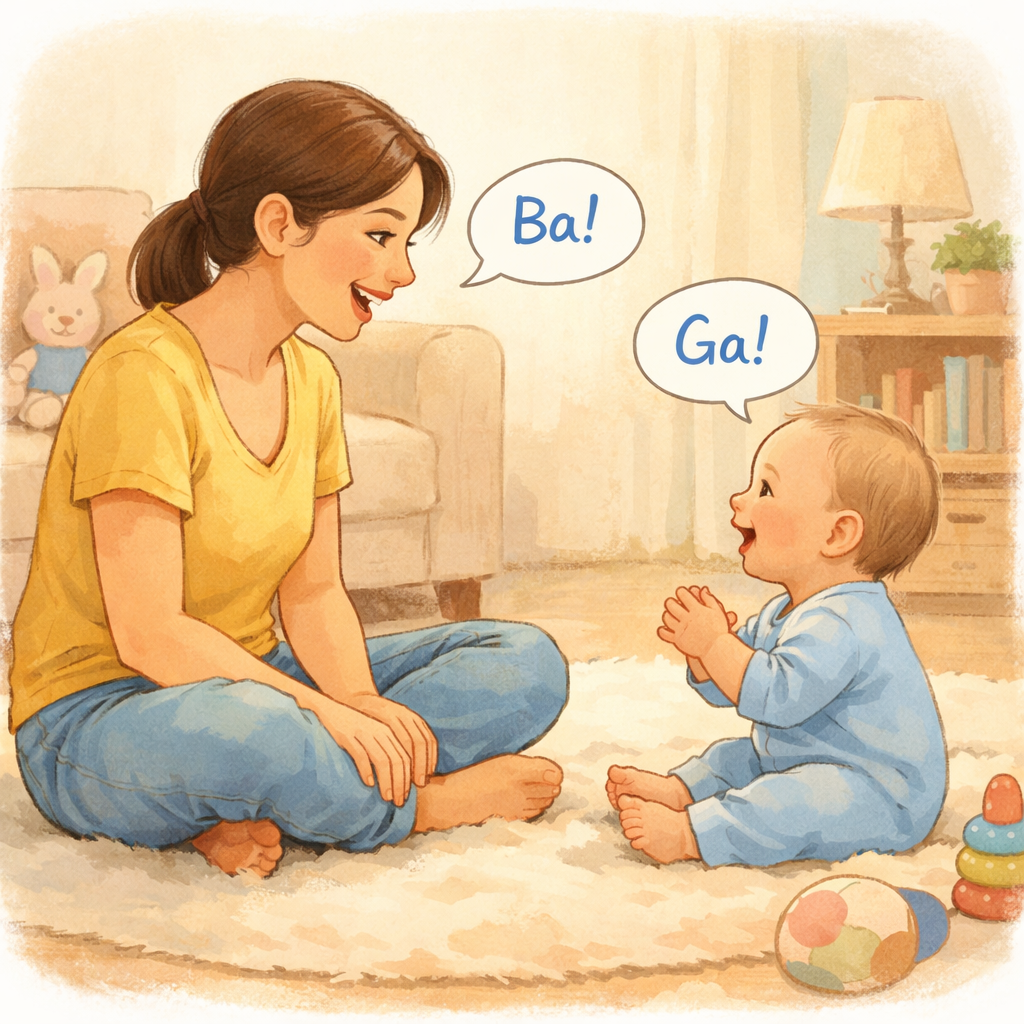
- Look at your face when you speak
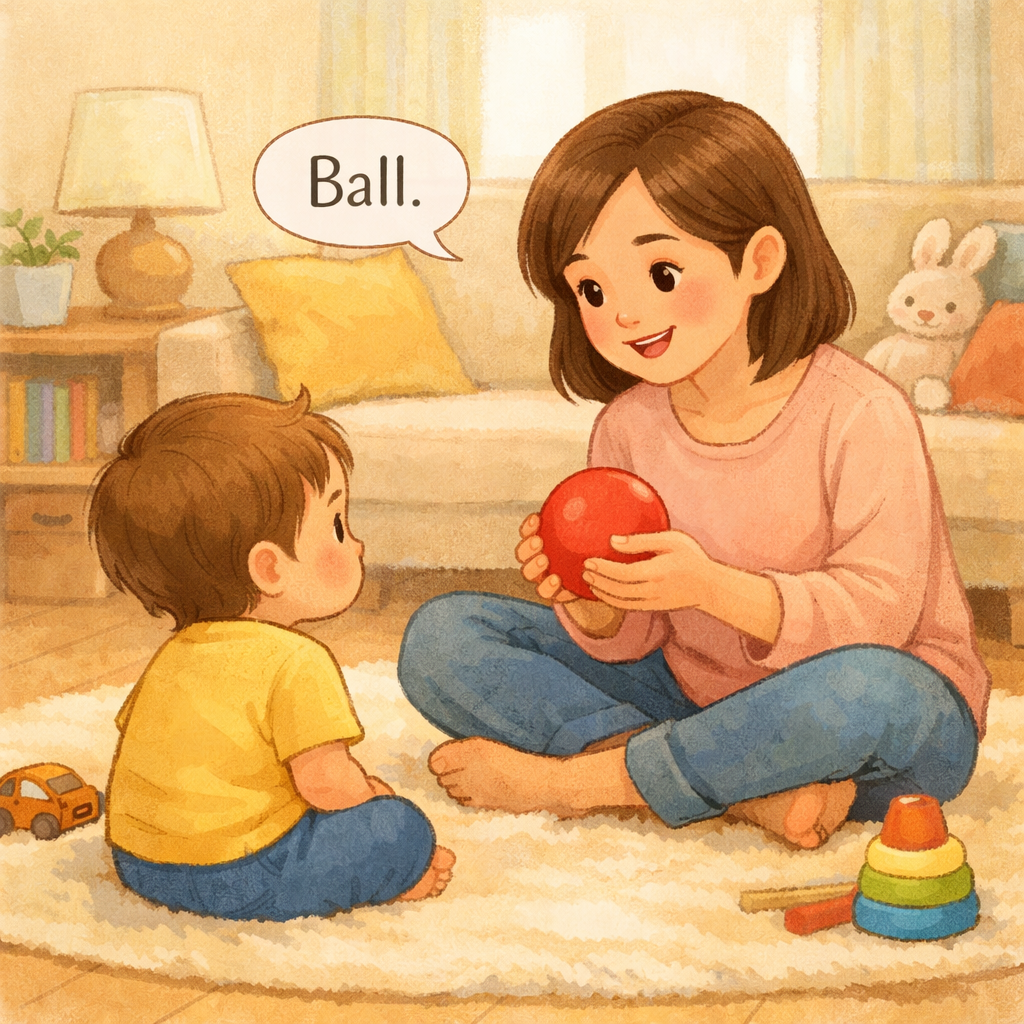
- Shift their gaze between you and an object
- Wait for your reaction
- Smile or copy your expression
This shared attention is powerful.
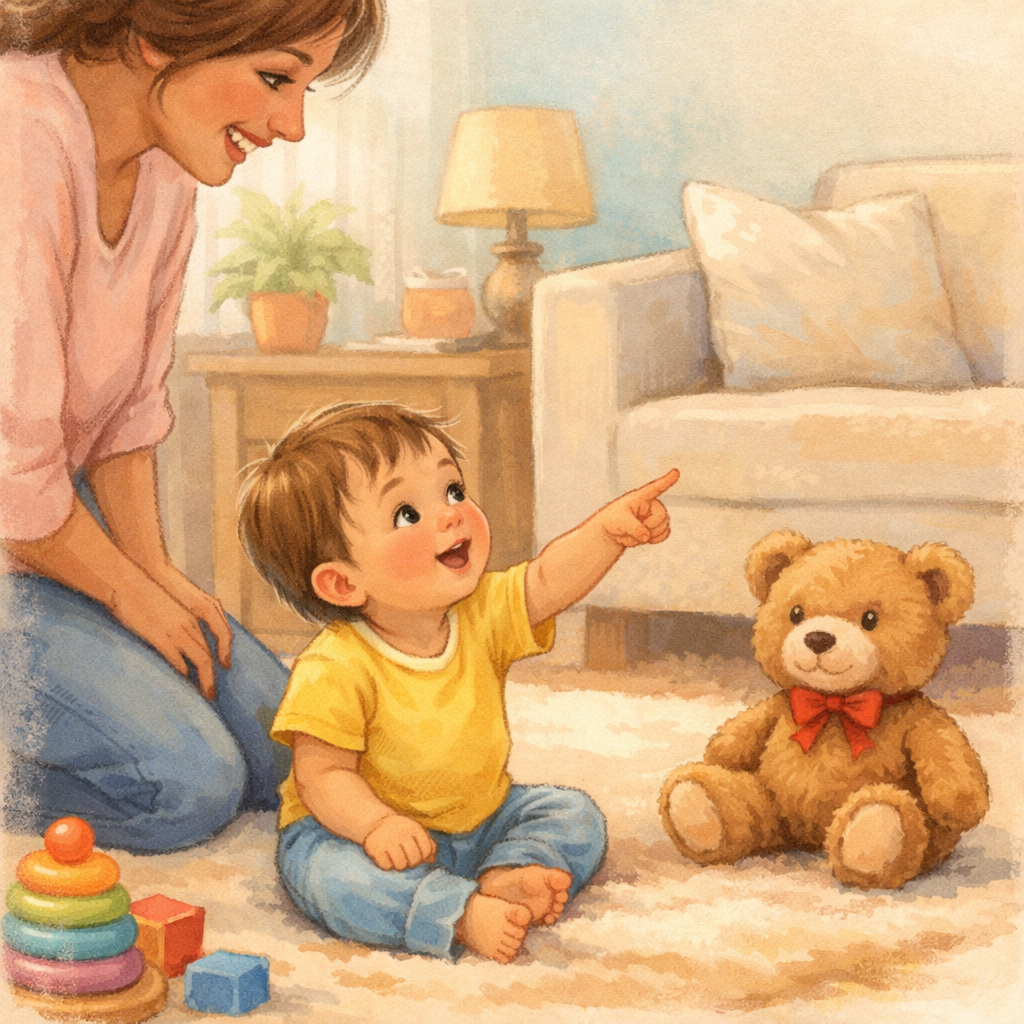
When your toddler looks at a dog and then back at you, they are inviting you into the moment. If you say “Yes, dog”, you are linking word, object and connection all at once.
That is how vocabulary grows naturally.
Eye contact should feel warm and natural, never forced.
Here are gentle ways to encourage it:
- Get down to your child’s eye level when speaking
- Pause after you say a word and wait
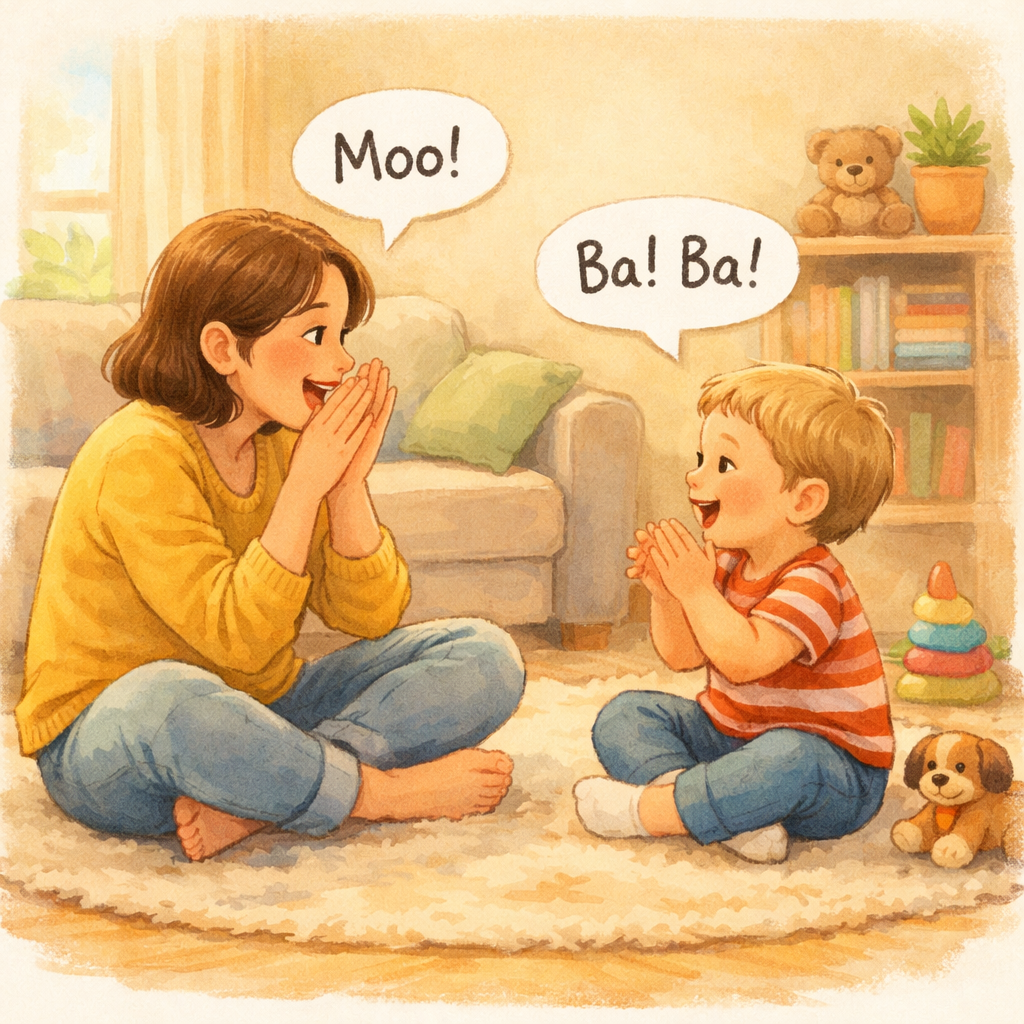
- Smile and exaggerate simple facial expressions
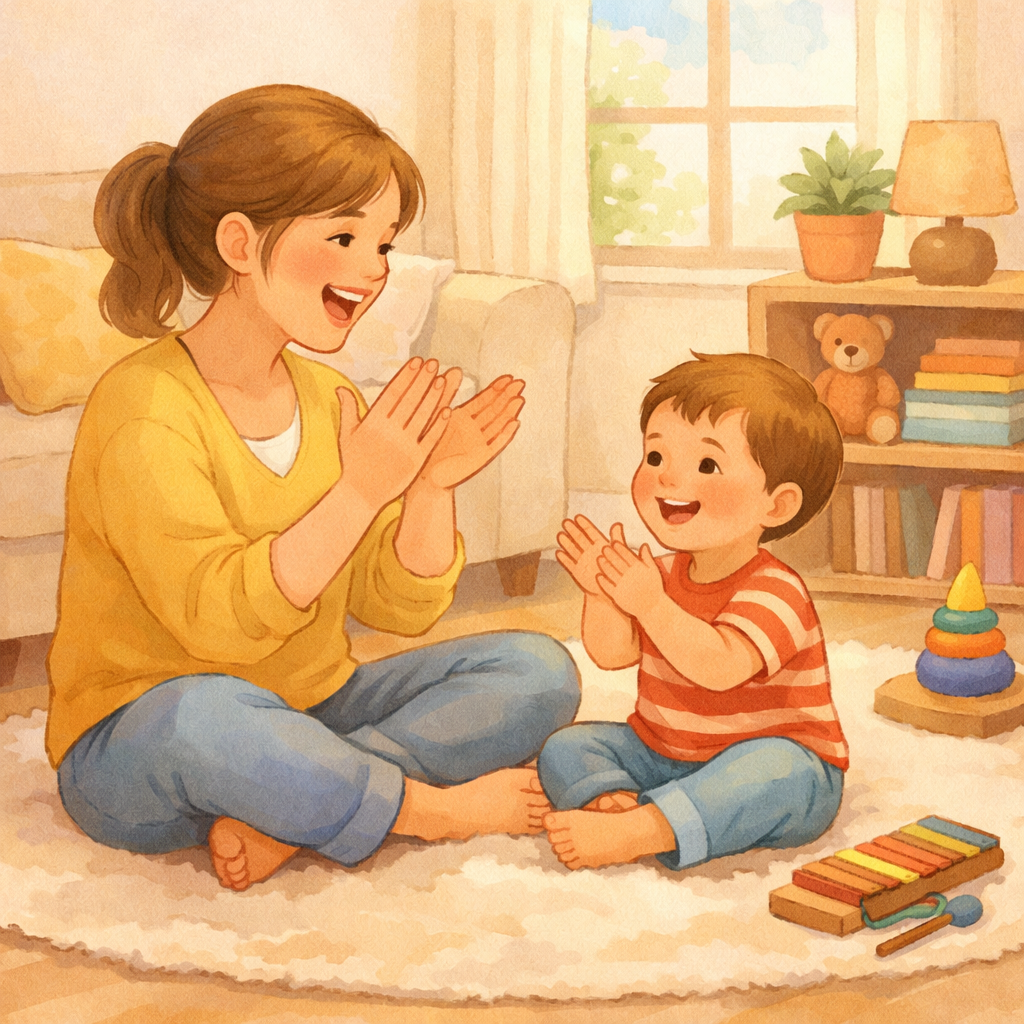
- Play turn-taking games like peekaboo
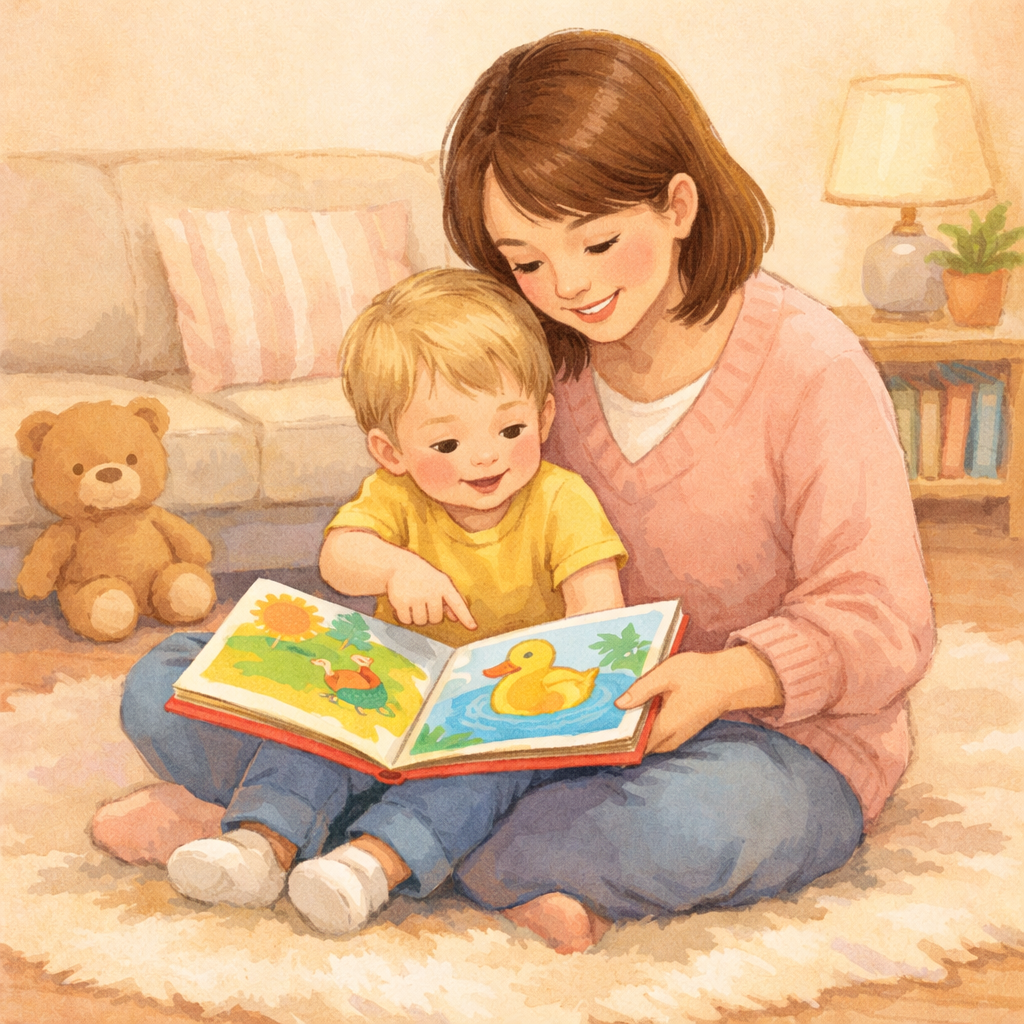
- Read simple first words books while sitting face to face
Clear picture books make it easier to look at the image together, then back at each other.
ye contact often develops alongside pointing and waving.
If your toddler points to something and then looks at you, that is a strong communication moment.
You can explore this further in
Using Gestures to Support Speech.
Eye contact and gestures both support confident talking later on.