ChattyCubs
£0.00 0

Basket

No products in the basket.

Using Music for Communication Skills

Using Music for Communication Skills

Music is a powerful way to support early speech and language.

For babies and toddlers, songs create rhythm, repetition and predictable patterns. That makes it easier for them to join in.

If you are exploring ways to build confidence with talking, start with music. It feels playful and natural.

This page sits within our Speech and Communication guide, where you can find more simple, practical support.

Why Music Supports Communication

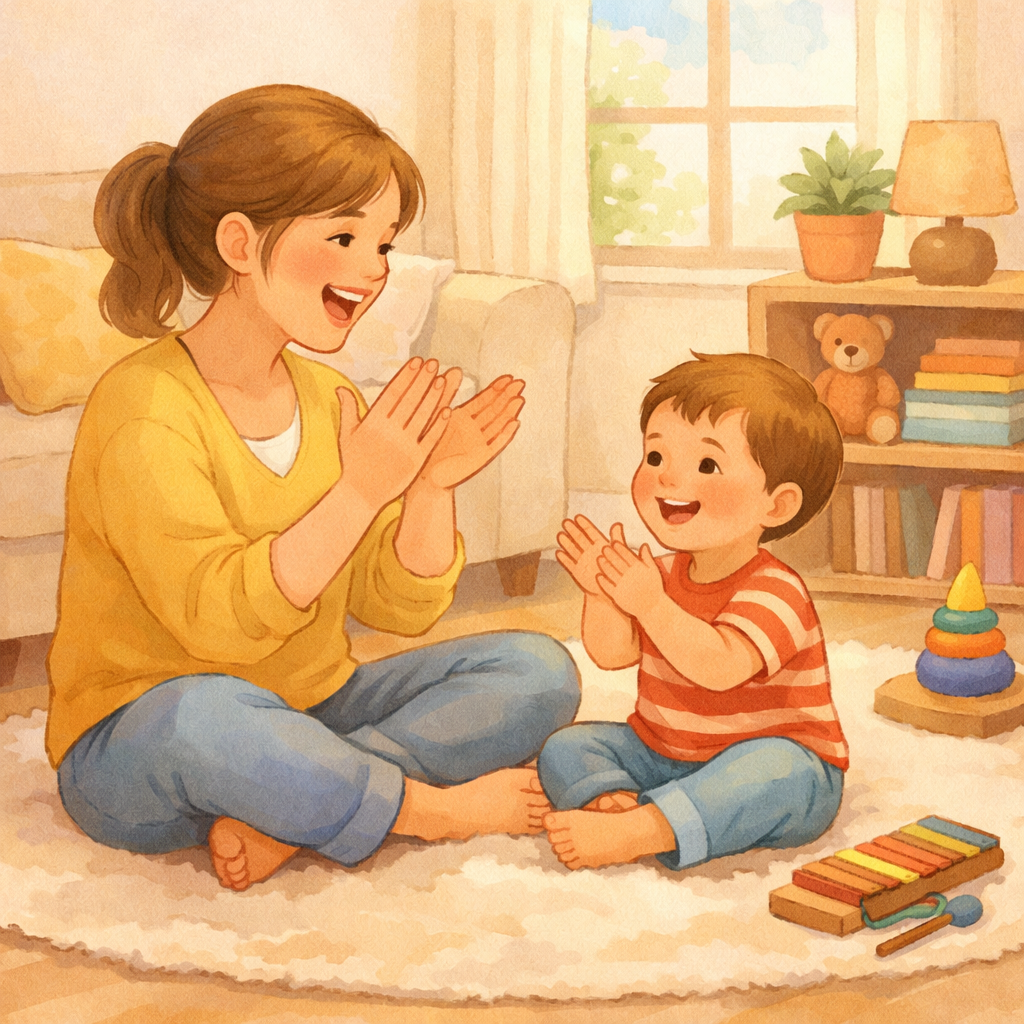
Parent and toddler sitting on the floor singing and clapping together.
Songs slow language down.

They stretch out sounds and repeat key words. This helps toddlers hear how words are formed.

Music also supports:
  • Listening skills
  • Memory and recall
  • Turn-taking
  • Confidence using new words
You may notice your toddler joins in with a song long before they use the same words in everyday speech. That is completely normal.

Simple Ways to Use Music at Home

You do not need instruments or special equipment.

Your voice is enough.

Pause and Wait

Sing a familiar song and pause before the final word.

For example, “Twinkle, twinkle little…” and wait.

Give your toddler time to fill the gap. Even a sound attempt counts.

This links closely with Turn-Taking Skills in Conversation and helps children understand back-and-forth interaction.
Add Actions to Songs

Action songs build understanding as well as speech.

Clapping, stamping or pointing helps toddlers connect words to movement.

This supports the early communication skills described in Understanding Gestures and Sounds.
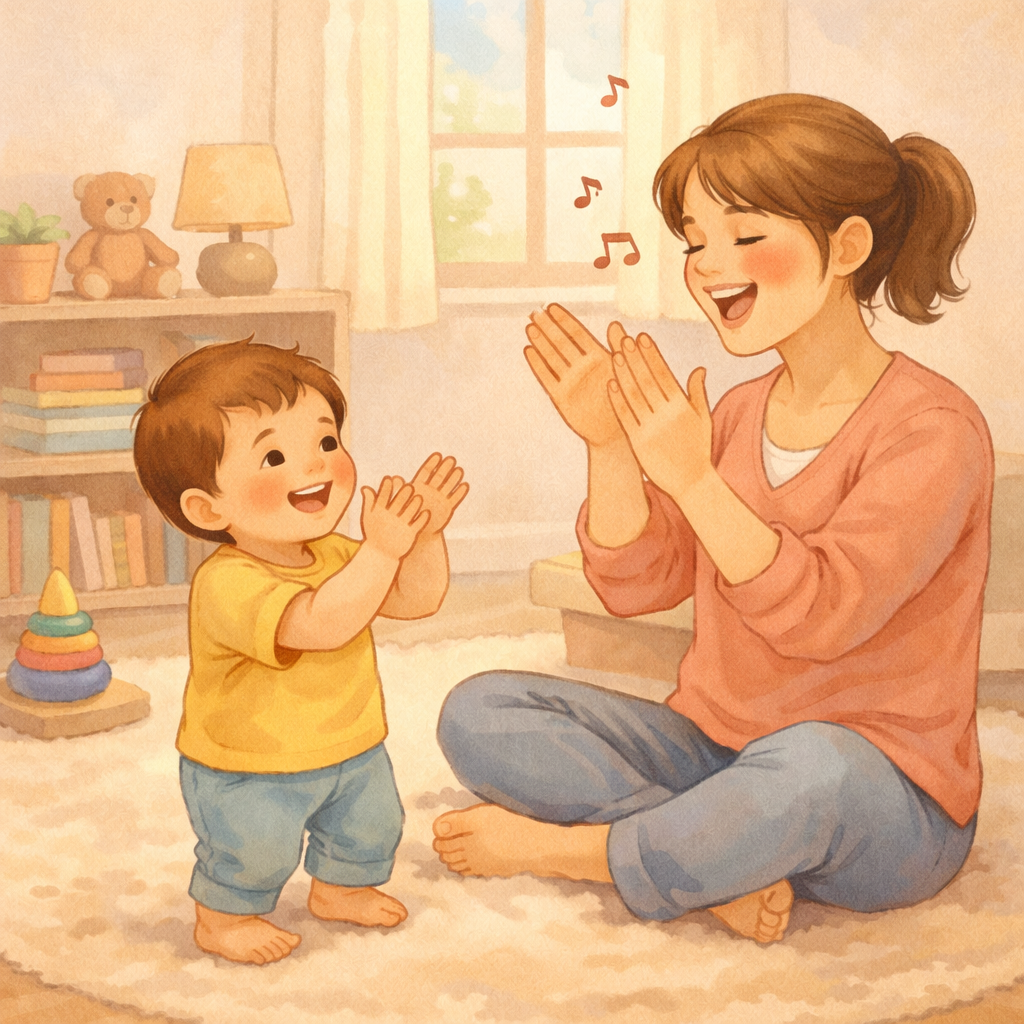
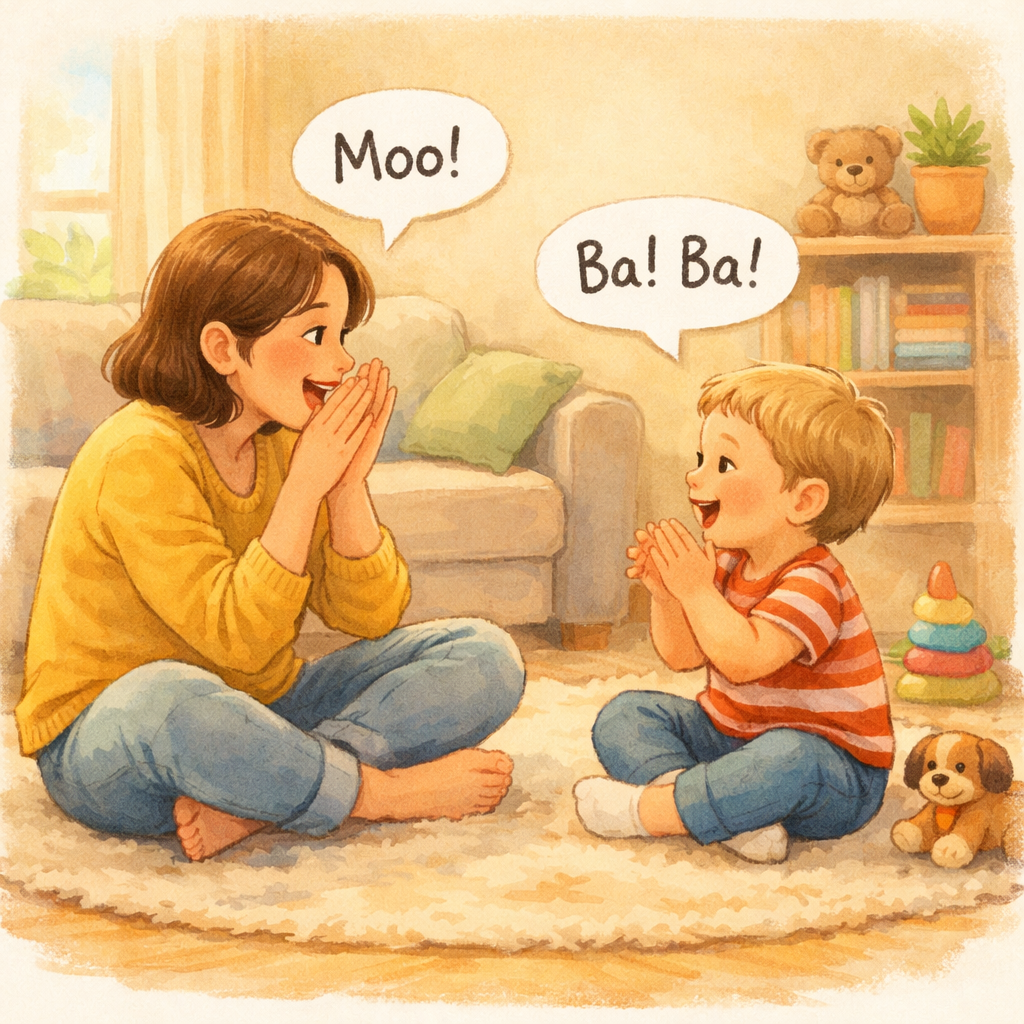
Toddler clapping hands while parent sings a nursery rhyme.

Repeat Favourite Songs

Toddlers love repetition.

Hearing the same words again and again strengthens understanding and makes it easier to attempt speech.

If your child enjoys sound effects, combine songs with ideas from How to Use Sound Play.

Using Music to Encourage Talking

Music can gently encourage conversation.

After singing, talk about the song.

You might ask:
  • “Who was in the song?”
  • “What animal did we sing about?”
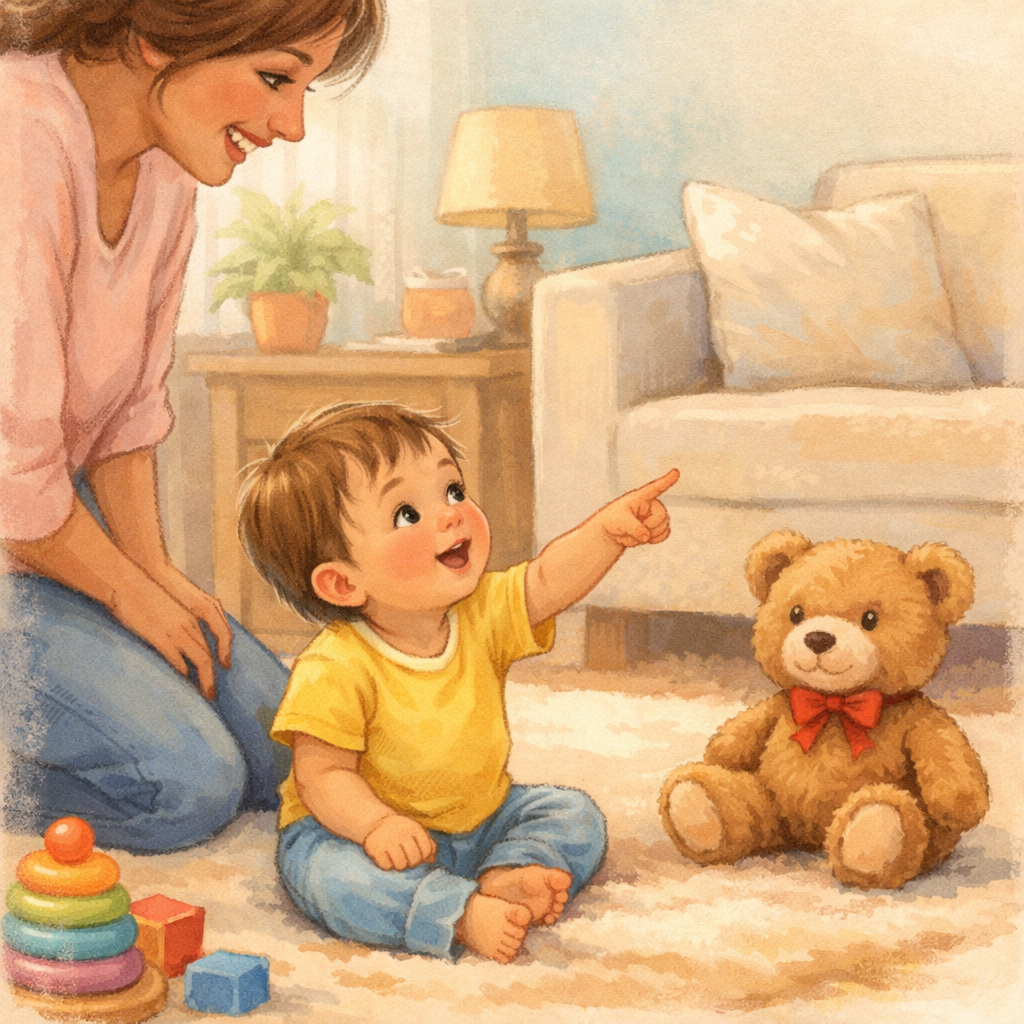
  • “Can you show me the star?”
Keep questions simple and give time to respond.

If you would like more support with asking questions, read How to Ask Open Ended Questions.

Music and Everyday Words

Songs are a lovely way to introduce new vocabulary.

Animal songs, transport songs and daily routine songs all reinforce real-life language.

You can link this with everyday object learning from Everyday Words to Practice Together.

For example, sing about “shoes” while getting ready, or “cup” during snack time. The more connections your toddler makes, the stronger their understanding becomes.

What If My Toddler Does Not Join In?

Some children listen quietly before they participate.

That is still learning.

Keep singing. Keep it relaxed. Avoid putting pressure on them to perform.

Music should feel joyful, not like a test.

If you are concerned about slower speech development, you may find helpful guidance in Responding to Baby Babble and Reading Aloud to Support Speech.

A Gentle Way to Build Confidence

Music creates connection first, words second.

When your toddler feels safe and engaged, communication grows naturally.

Even one short song each day can make a difference.

Keep it simple. Keep it playful.

Newsletter

Join our Early Readers Club for fun learning tips, sneak peeks at new books, and free printable activities!
ChattyCubs™ 2026 All Rights Reserved.