ChattyCubs
£0.00 0

Basket

No products in the basket.

Responding to Baby Babble

Responding to Baby Babble

Baby babble is not just noise.

It is your child practising speech.

How you respond in these early moments shapes their confidence, listening skills and first words.

For a wider look at early communication development, visit Speech and Communication.

Why Baby Babble Matters

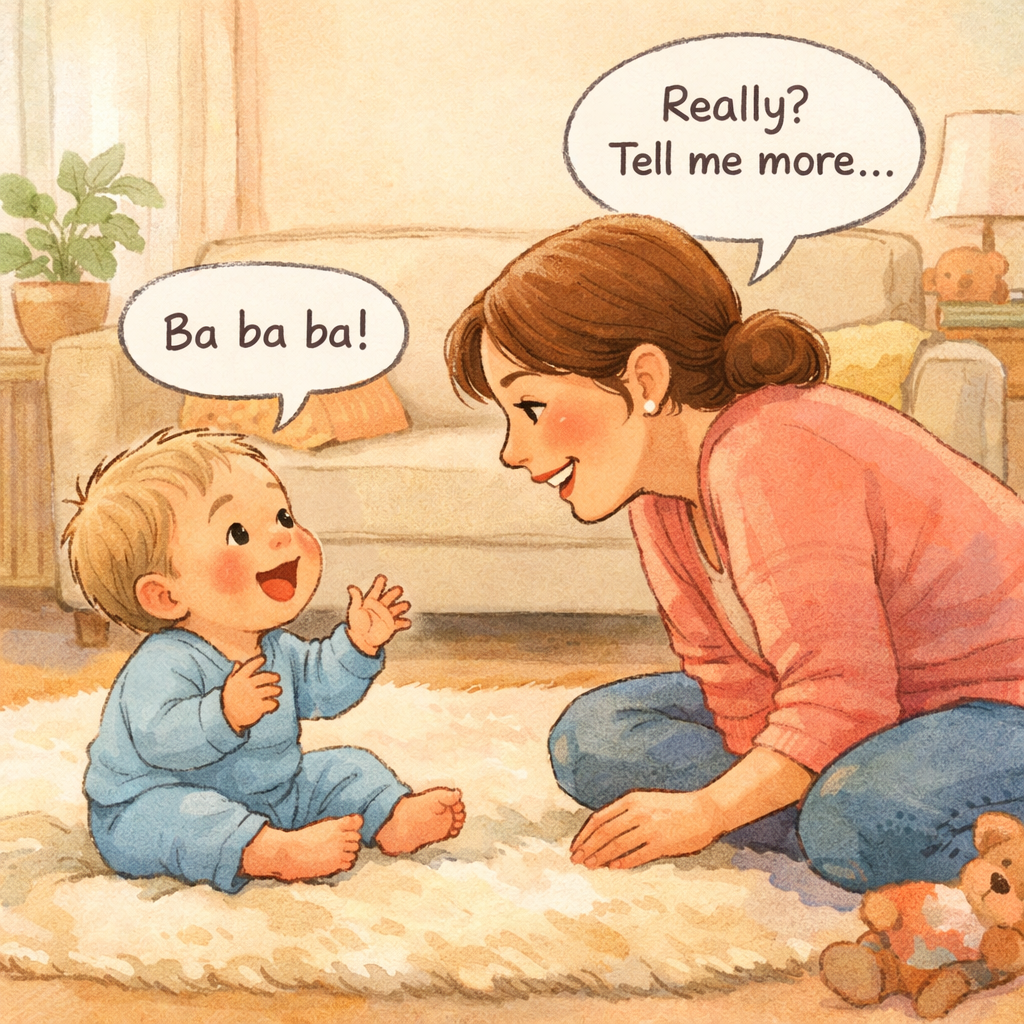
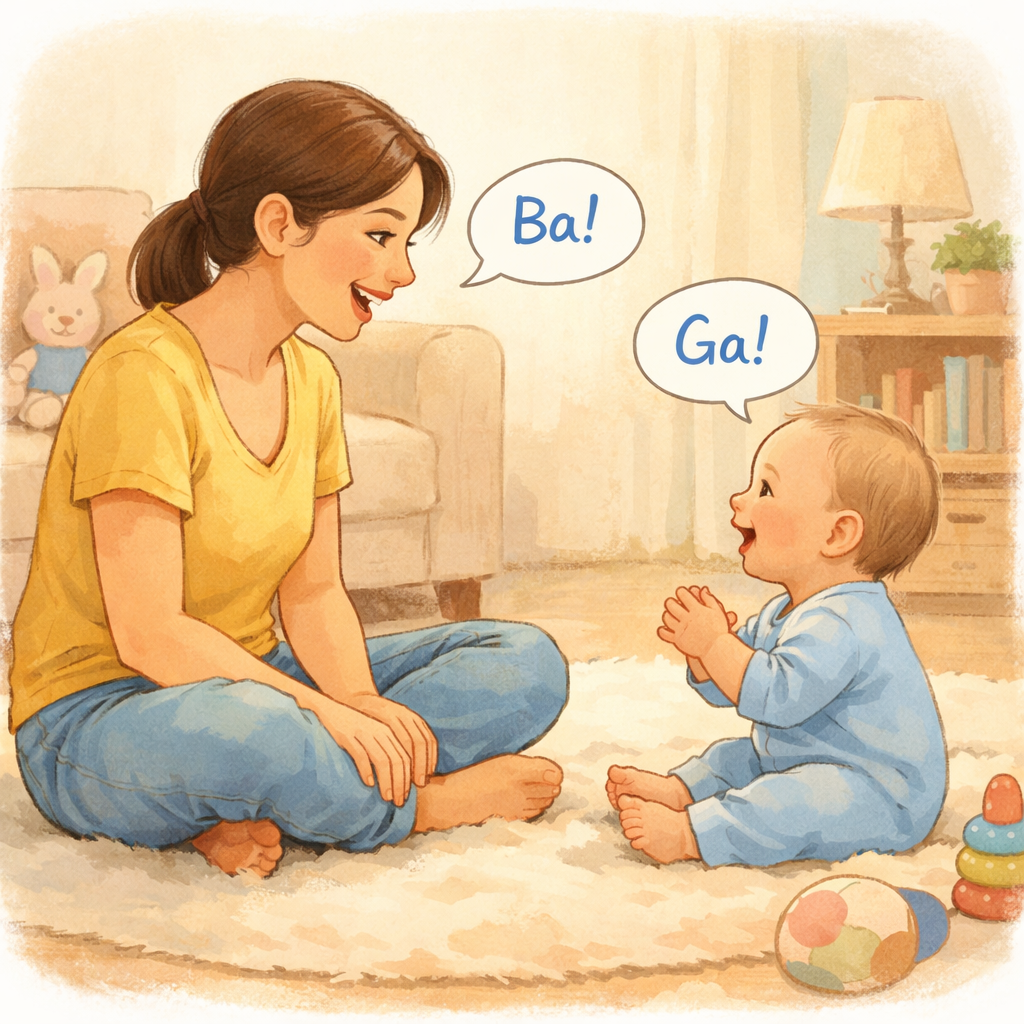
Baby babbling while a parent smiles and responds warmly.
Babbling is practice.

Your baby is experimenting with sounds like “ba”, “da” and “ma”.

They are learning how their mouth moves and how sound works.

When you respond, you show them their voice matters.

That simple exchange builds connection and language at the same time.

How to Respond to Baby Babble

1. Pause and Listen

Give your baby a moment to finish their sound.

Look at them.

Smile.

This shows you are paying attention.

2. Copy the Sound Back

If they say “ba ba”, say “ba ba” back.

Keep it playful.

This back and forth is the beginning of conversation.

3. Add One Extra Sound

Once you have copied them, gently extend it.

If they say “da”, you might say “da da” or “da da da”.

You are modelling slightly more complex speech without pressure.

4. Connect It to Meaning

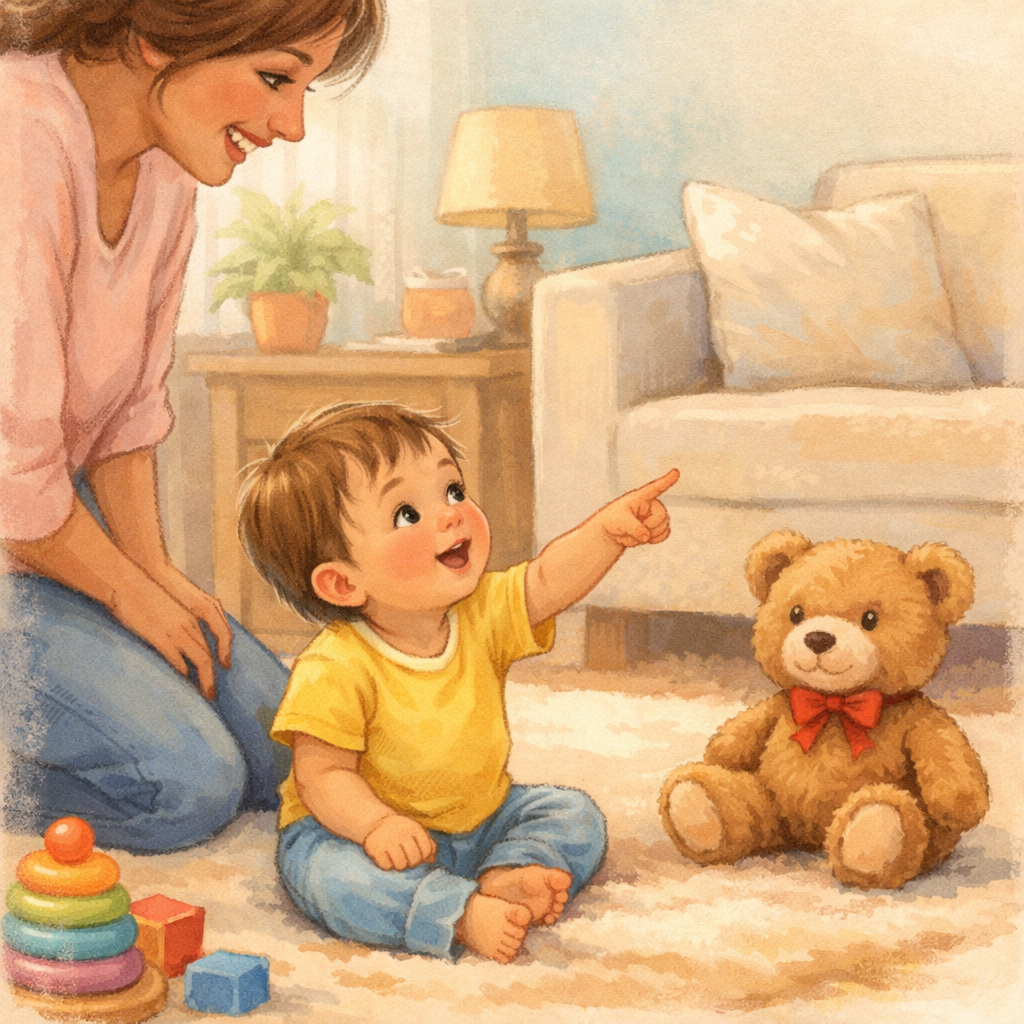
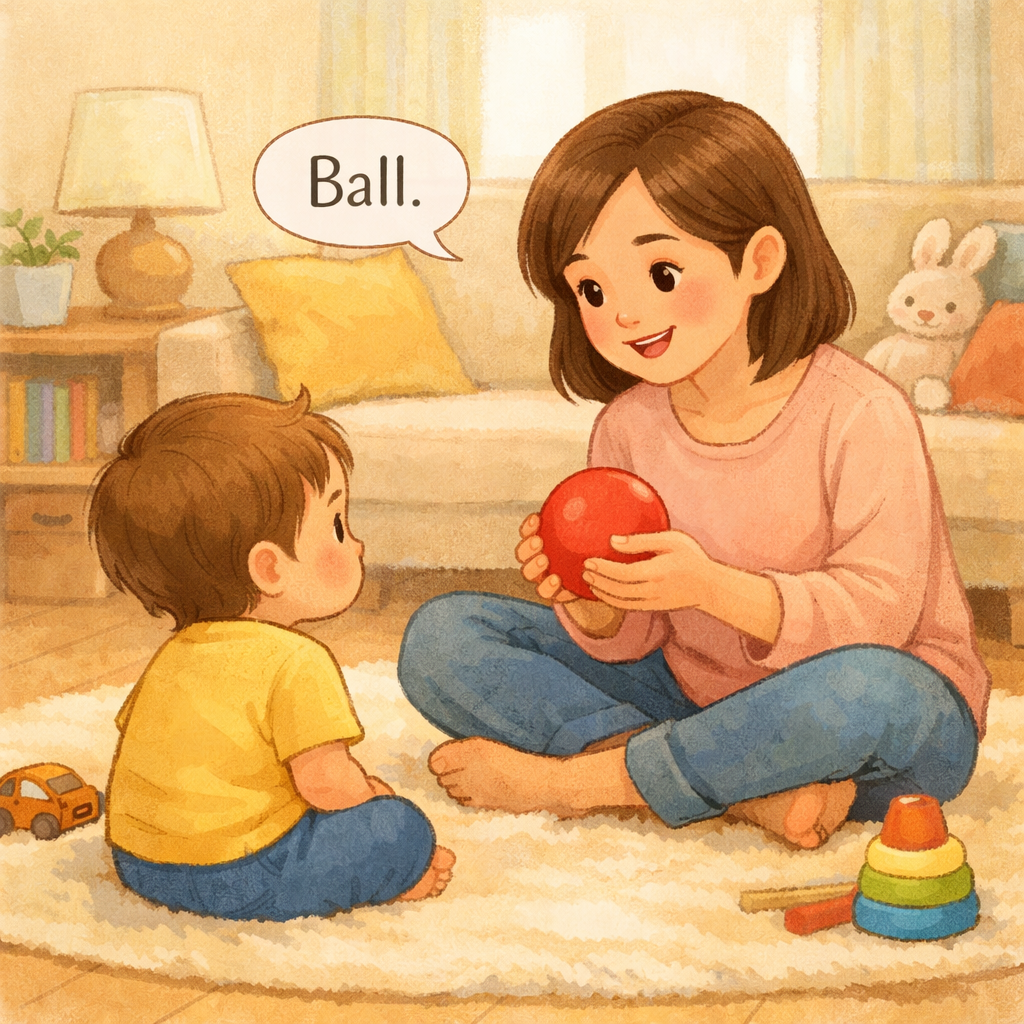
If they are looking at a ball and babbling, respond with:

“Yes, ball. Big ball.”

This links sound to real words naturally.

Turn Babble into Conversation

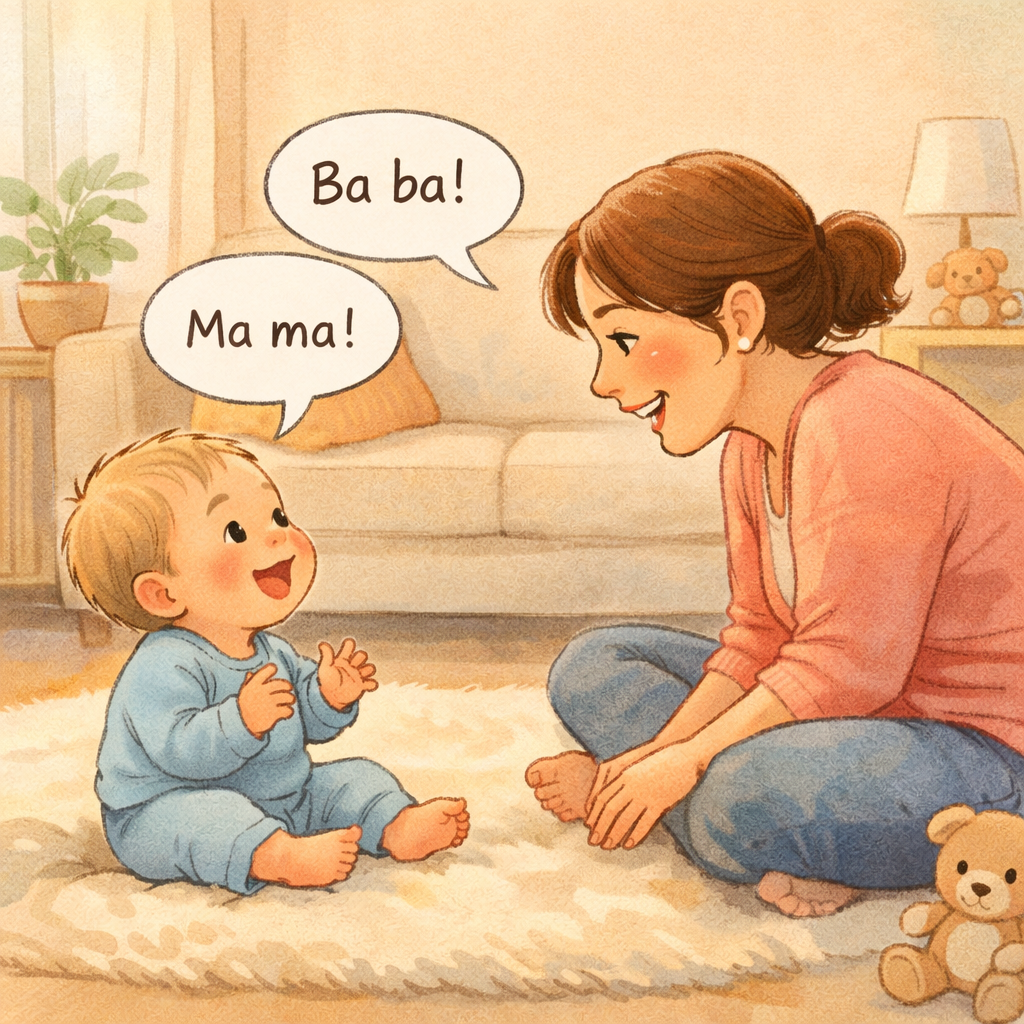
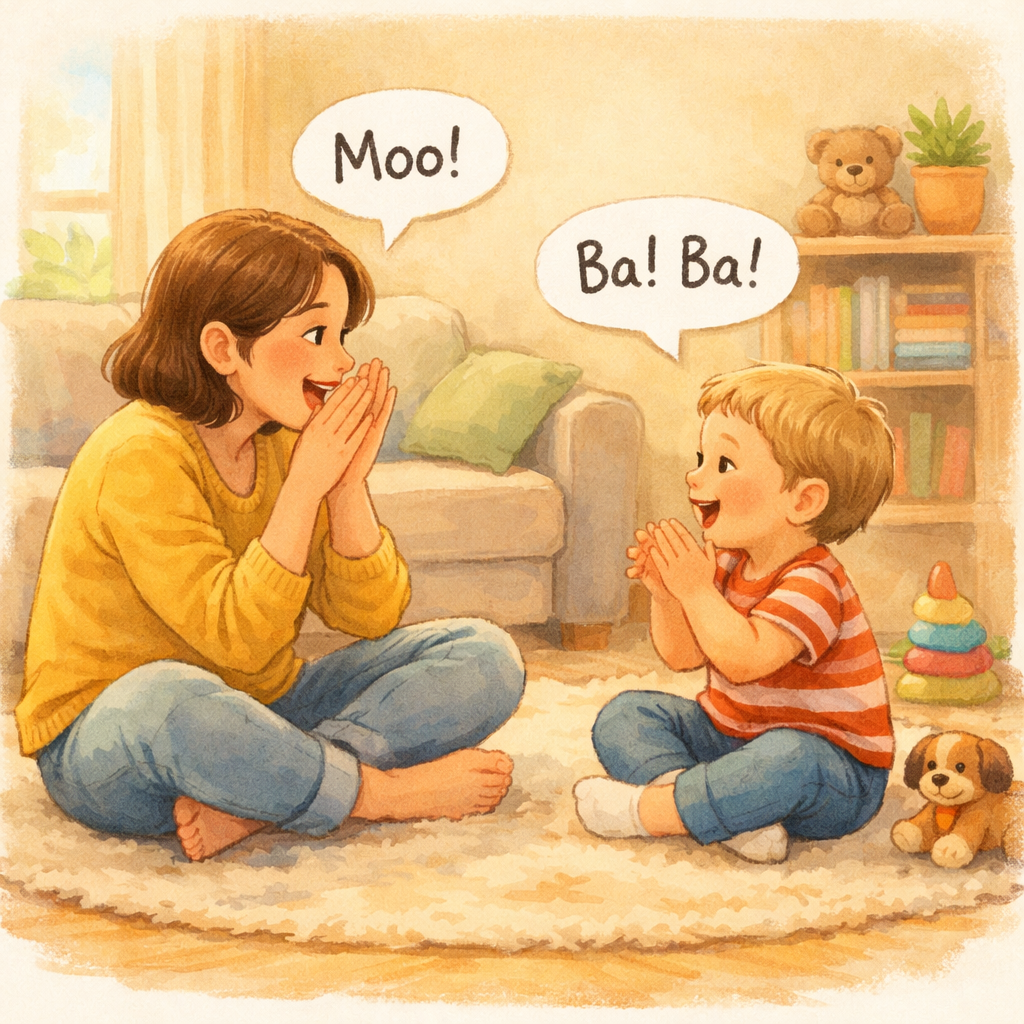
Parent and baby smiling while taking turns making sounds.
Conversation is about turn-taking.

Even before words appear, babies can practise this skill.

Try this simple rhythm:
  • Baby babbles
  • You copy
  • You add a small extra sound
  • Pause and wait
That pause is powerful.

It gives your baby space to respond again.

What If My Baby Is Quiet?

Some babies babble constantly.

Others are quieter observers.

Both can be normal.

If your baby is under one year, focus on:
  • Face-to-face time
  • Simple songs and nursery rhymes
  • Slow, clear speech
  • Responding warmly to any sounds they make
If you ever feel unsure about speech development, trust your instincts and speak to your health visitor for reassurance.
Using Books to Encourage Babble

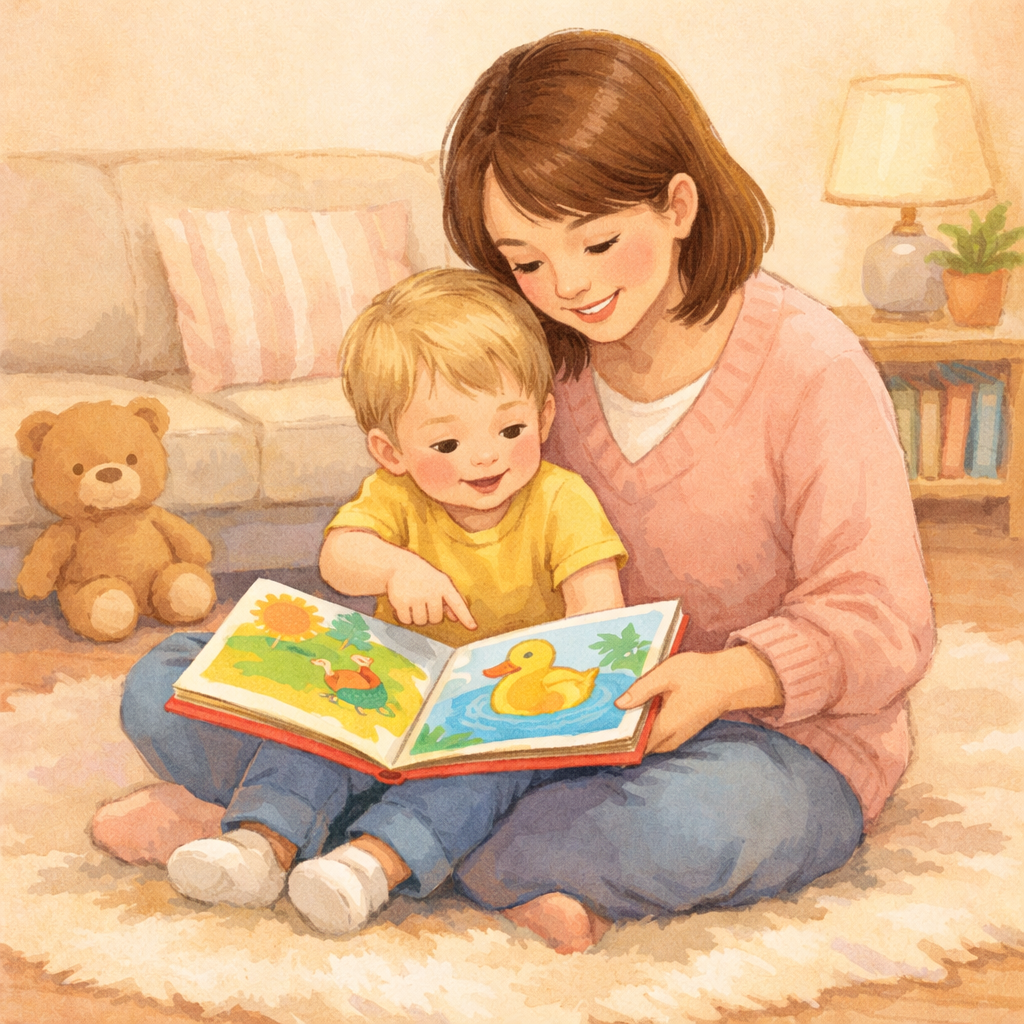
Simple first word books are perfect for this stage.

Point to one picture.

Say the word clearly.

Pause and see if your baby responds with a sound.

If they babble, respond warmly and repeat the word.

Books with clear, single images help reduce distraction and keep the focus on sound and connection.

ChattyCubs First Words books are designed for exactly this kind of gentle interaction.

You are not testing your child.

You are sharing attention.

That is where language grows.

Small Moments Build Big Skills

Responding to baby babble does not require special techniques.

It requires attention.

Warmth.

And small pauses.

Those everyday exchanges are laying the foundation for first words, conversation and confidence.

You are already doing more than you think.

Newsletter

Join our Early Readers Club for fun learning tips, sneak peeks at new books, and free printable activities!
ChattyCubs™ 2026 All Rights Reserved.