ChattyCubs
£0.00 0

Basket

No products in the basket.

How First Words Develop Into Sentences

How First Words Develop Into Sentences

Your child’s first words are just the beginning. Over time, those single words slowly connect, expand, and turn into simple sentences. This page explains how that happens, what to expect at different stages, and how you can gently support the process at home without pressure.

From Single Words to Meaningful Speech

Early language grows in small, natural steps. Children do not jump straight from one word to full sentences. Each stage builds on the last.

Stage 1: Single Words (Around 12–18 Months)

At this stage, one word can mean many things. A single word often stands in for a full sentence.
  • “Milk” can mean I want milk
  • “Dog” can mean look at the dog
  • “Up” can mean pick me up
Children rely heavily on tone, pointing, and facial expression to add meaning.

How parents can help:
  • Respond as if your child said a full sentence
  • Expand their word gently (“Milk? You want milk”)
  • Keep language slow and clear

Stage 2: Two-Word Phrases (Around 18–24 Months)

This is a big leap in language development. Two words put together show your child is starting to understand relationships between things.
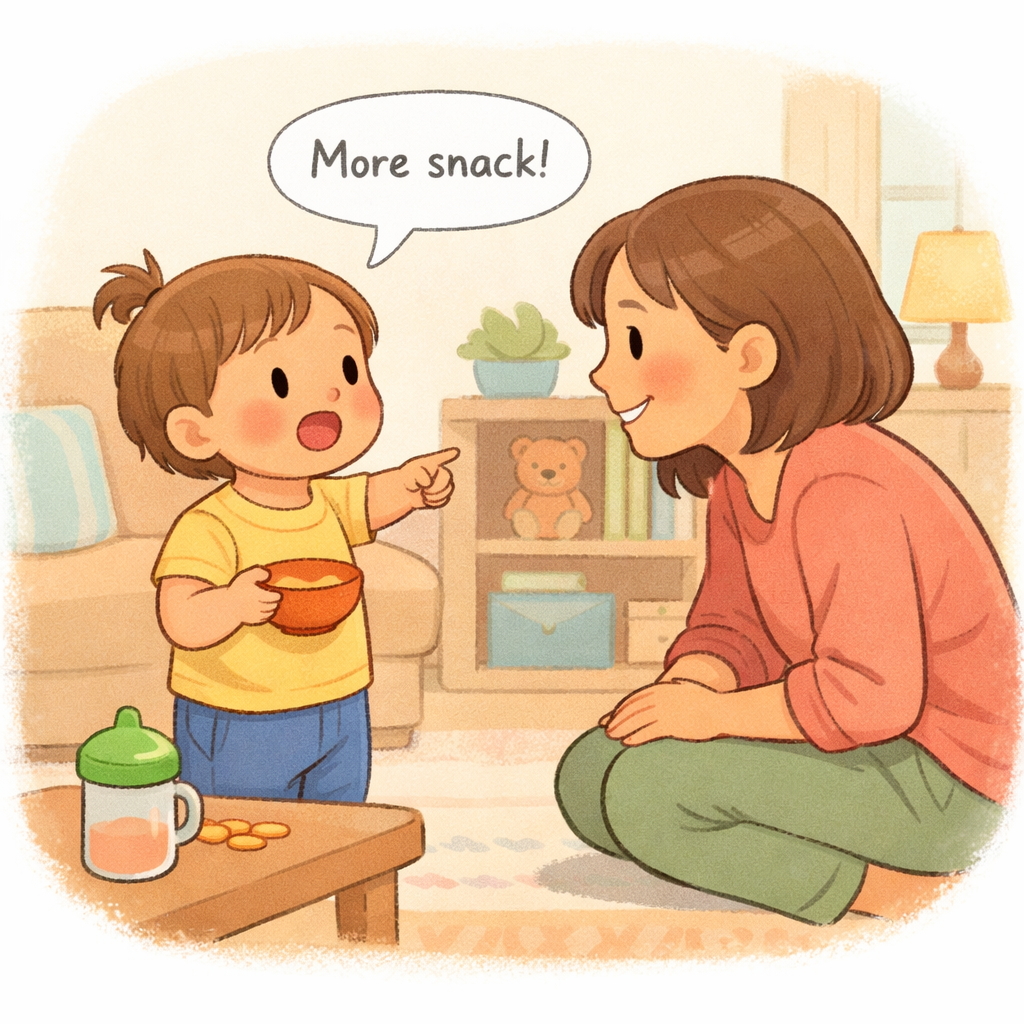
Toddler using two-word phrases during everyday routines
Common two-word combinations include:
  • More snack
  • Mummy up
  • Big car
  • All gone
These phrases usually focus on needs, actions, and familiar people or objects.

How parents can help:
  • Repeat the phrase back slightly expanded (“More snack please”)
  • Model simple combinations during play and routines
  • Avoid correcting or testing

Stage 3: Short Sentences (Around 2–3 Years)

As vocabulary grows, children begin joining three or more words together. Sentences may sound incomplete, but the meaning is clear.
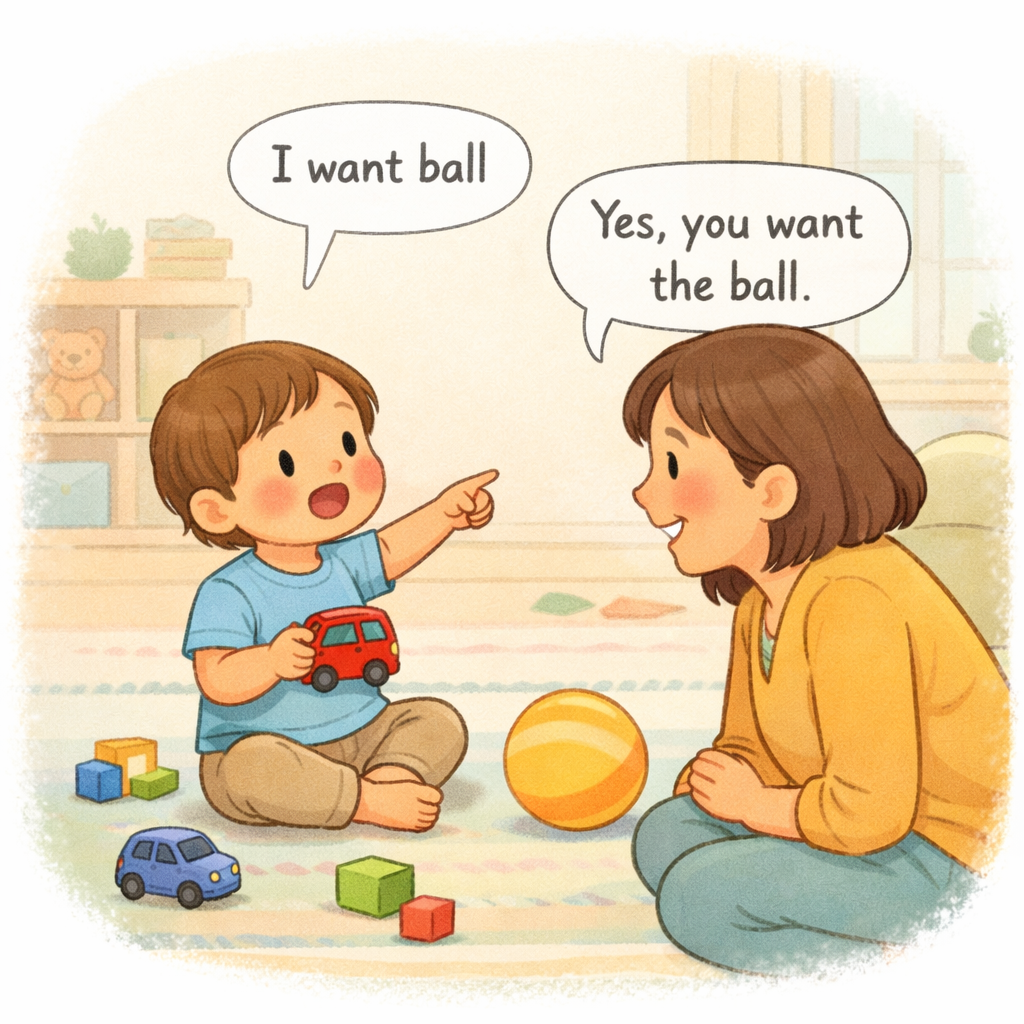
Toddler using two-word phrases during everyday routines
Examples include:
  • I want ball
  • Daddy go work
  • Me do it
Grammar develops gradually. Missing words like “the” or “is” are completely normal.

How parents can help:
  • Model correct sentences without correcting (“Yes, Daddy is going to work”)
  • Keep conversations going during play
  • Give time for your child to respond

Why Repetition Matters

Children learn sentence structure by hearing it again and again in real situations. Everyday routines provide the best practice.
  • Getting dressed (“Socks on feet”)
  • Mealtimes (“Cut apple please”)
  • Bath time (“Wash your tummy”)
Hearing the same patterns helps children absorb how sentences work.

When to Be Reassured

Language development varies widely. Some children speak early, others focus more on understanding before talking.

Reassuring signs include:
  • Understanding simple instructions
  • Using gestures alongside words
  • Trying new sounds and words regularly
If your child is progressing in their own way, that is usually a good sign.

Supporting Sentence Development With Books

Simple first words books are ideal for this stage. They encourage naming, combining words, and talking about pictures together.

Point to the picture, say the word, then gently add one more word. Over time, those small additions turn into sentences.

You may also find it helpful to explore:
What Are First Words? First Word Milestones by Age How to Practice First Words Daily

Newsletter

Join our Early Readers Club for fun learning tips, sneak peeks at new books, and free printable activities!
ChattyCubs™ 2026 All Rights Reserved.