For children aged 0–3, formal sight word drills are not necessary.
What matters more at this stage are:
- Strong listening skills
- Enjoying books
- Recognising patterns in language
- Developing sound awareness
If your child is still building these foundations, you may find
Pre-Reading Skills in Toddlers helpful.
When children start school, sight word recognition becomes more relevant.
Reading fluency is about smooth, confident reading.
When children instantly recognise common words, they can focus on understanding the story.
Instead of stopping at every word, they move through sentences more naturally.
Sight words work alongside sound skills.
If you are supporting early sound awareness at home, read
Phonemic Awareness for Beginners.
Together, these skills build strong readers.
Keep it playful and low-pressure.
Short, relaxed moments work best.
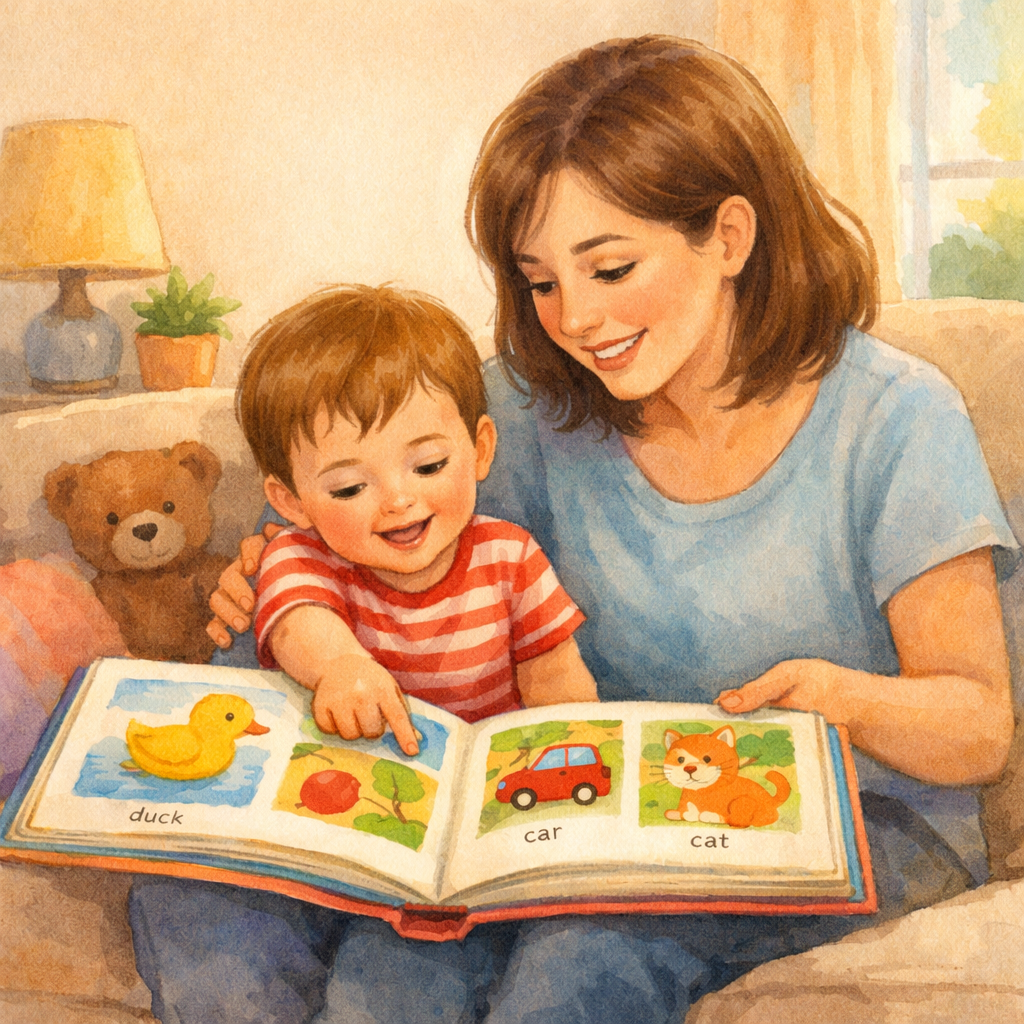
During shared reading, occasionally point to a repeated word.
Say it clearly and naturally.
Then carry on enjoying the story.
Reading aloud remains the most powerful tool. If you need ideas, visit
How Reading Aloud Builds Literacy.
Notice simple words on food packets, signs, or birthday cards.
Keep it light.
A quick “That says ‘to’” is enough.
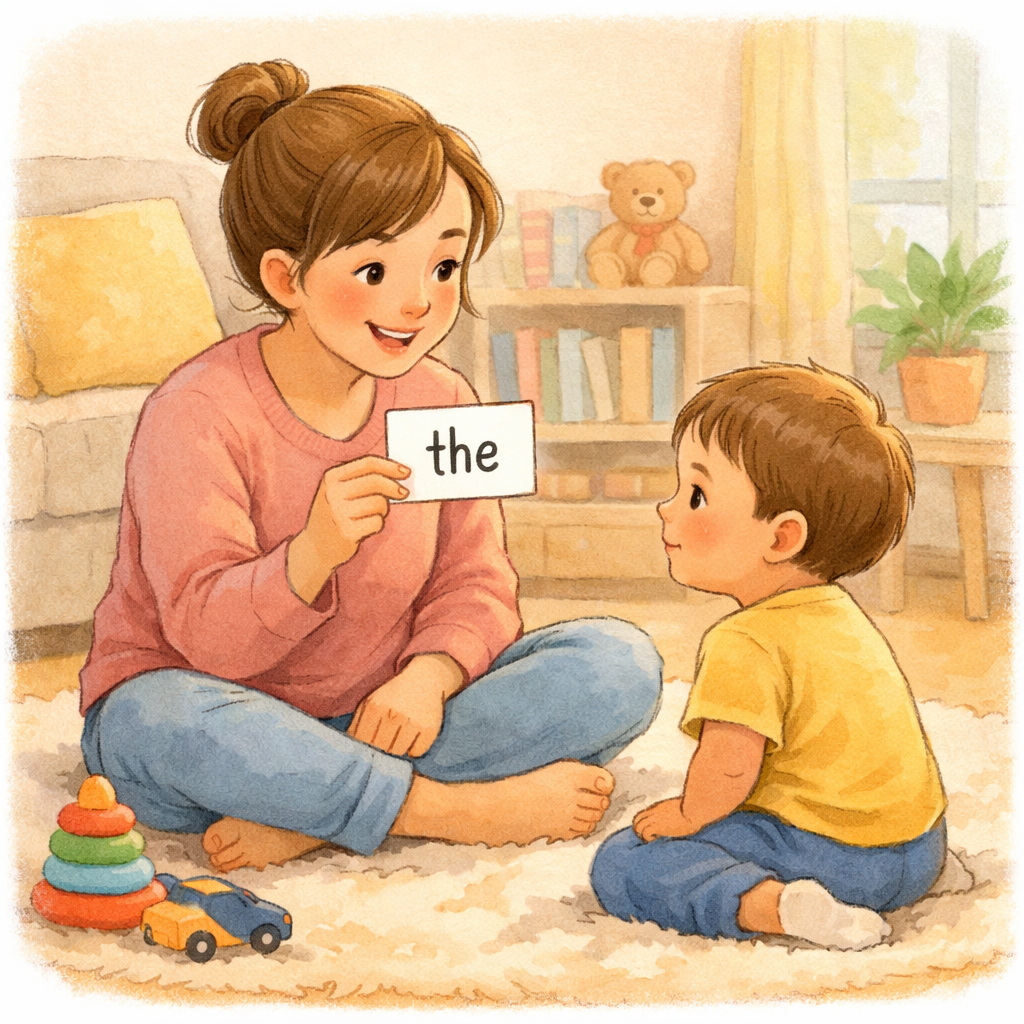
Write one simple word on a small card.
Hide it around the room and let your child find it.
Celebrate recognition warmly, without pressure.