ChattyCubs
£0.00 0

Basket

No products in the basket.

Common First Word Mistakes

Common First Word Mistakes

Helping a child learn their first words should feel gentle and enjoyable. Many parents worry they are doing something wrong, when often it is just small, easy-to-fix habits getting in the way. This page covers common first word mistakes and how to avoid them, without pressure or guilt.

Expecting Words Too Early

Every child develops language at their own pace. Some children understand lots of words long before they say any.

Pushing for spoken words too early can create stress for both parent and child.
  • Babies often understand words months before they say them
  • Pointing, smiling, or responding shows learning is happening
  • Speech usually follows understanding
Focus on talking, naming, and enjoying interaction rather than waiting for spoken words.

Talking Too Much at Once

Long sentences can be overwhelming for young learners. Short, clear words are easier to copy and remember.
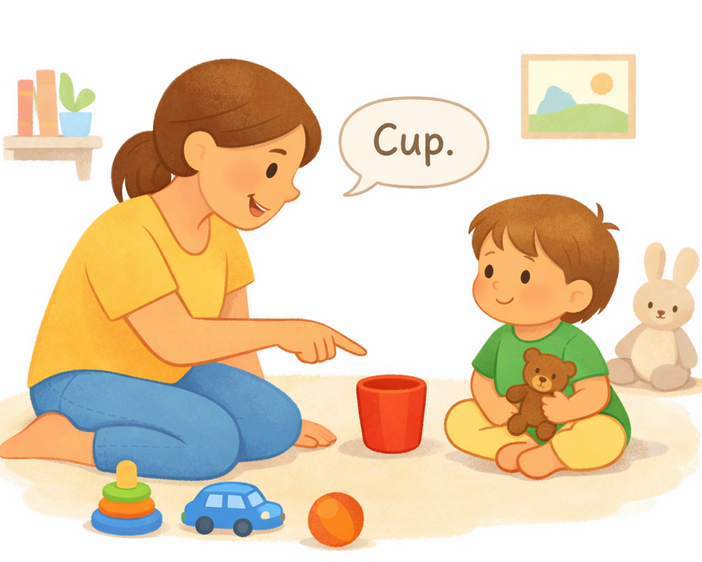
Parent using simple words to help toddler learn first words
  • Use one or two words at a time
  • Repeat the same word often
  • Pause to give your child time to respond
Simple language supports confidence and makes words easier to copy.

Correcting Instead of Modelling

It is tempting to correct a child when a word sounds wrong, but correction can stop them trying again.

Instead, repeat the word correctly in a natural way.
  • Child says ba for ball, you say yes, ball
  • Avoid telling them they are wrong
  • Keep the moment positive and relaxed
Children learn through hearing correct examples, not through being corrected.


Quizzing Instead of Talking

Asking constant questions can turn language into a test rather than a shared experience.
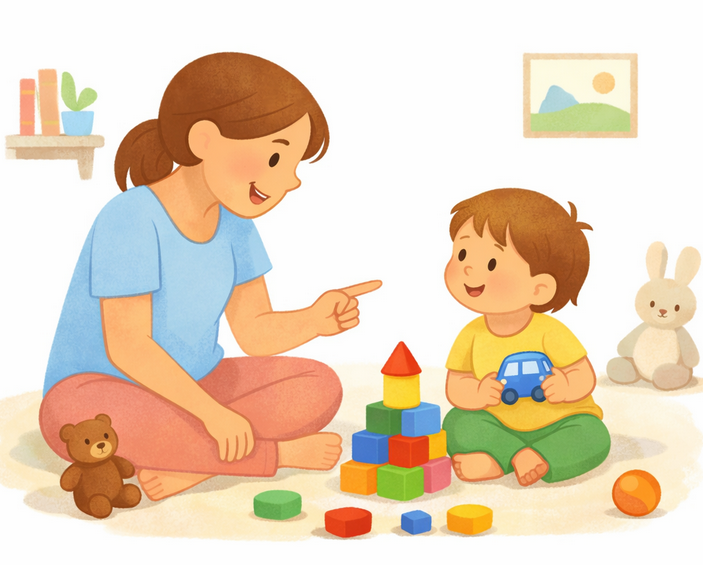
Parent talking naturally during play to support first word learning
  • Talk about what your child is doing
  • Name objects and actions as they happen
  • Save questions for later language stages
Commenting builds understanding without pressure.

Relying Only on Screens

Screens can show words, but they do not replace real interaction.

Children learn best when words are linked to real objects and shared attention.
  • Real objects help children understand meaning
  • Face-to-face talking builds connection
  • Books encourage shared focus and repetition
Reading together and talking during daily routines supports stronger learning than screens alone.

Forgetting Repetition

Hearing a word once is rarely enough. Children need to hear words many times before using them.
  • Repeat favourite words every day
  • Use the same word in different situations
  • Be patient with progress
Repetition builds familiarity and confidence.

How to Support First Words Gently

Avoiding these common mistakes can make first word learning feel calmer and more enjoyable.
  • Use simple, repeated words
  • Follow your child’s interests
  • Talk during everyday routines
  • Share first words books regularly
A supportive approach helps children feel confident to try new words in their own time.

Related learning pages

Why First Words Matter Best First Words For Babies Parent Tips to Teach First Words

Newsletter

Join our Early Readers Club for fun learning tips, sneak peeks at new books, and free printable activities!
ChattyCubs™ 2026 All Rights Reserved.