ChattyCubs
£0.00 0

Basket

No products in the basket.

Parent Tips to Teach First Words

Parent Tips to Teach First Words

Helping your baby learn their first words does not need special equipment, flashcards, or strict routines. The most powerful tools are you, your voice, and everyday moments you already share.

These simple, parent-tested tips focus on natural interaction, repetition, and confidence. Small changes in how you talk and play can make a big difference to early language.

Follow Your Baby’s Lead

Babies learn words best when they are interested and engaged. Rather than directing play, let your child show you what matters to them.
  • Watch what your baby looks at, reaches for, or points to
  • Name the object, action, or person they are focused on
  • Repeat the same word calmly instead of introducing new ones
If they are holding a ball, say “ball” rather than changing the topic. Interest comes first, words follow.

Talk Little and Often

You do not need long explanations. Short, clear words are easier for babies to hear and copy.
  • Use single words or short phrases
  • Speak slowly and clearly
  • Repeat key words during the day

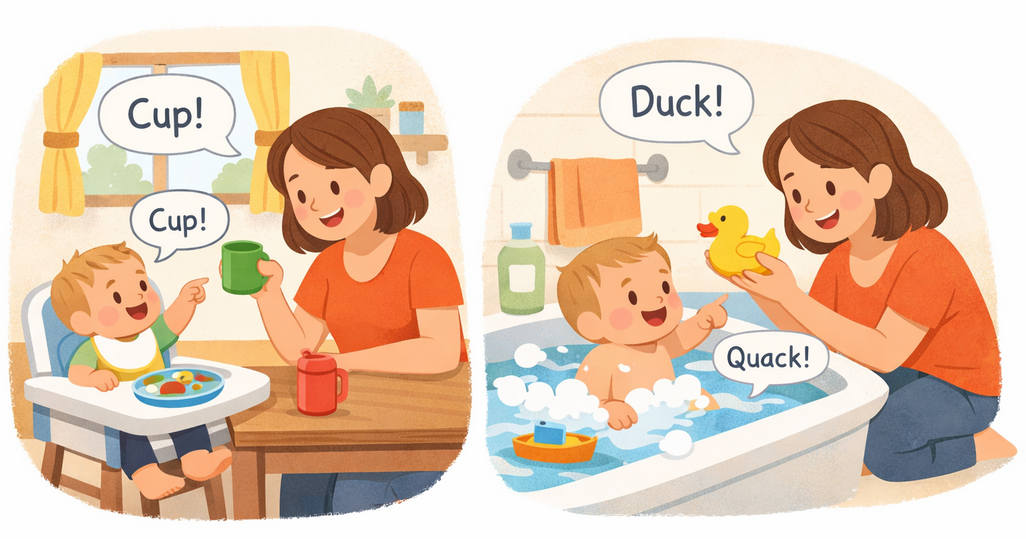
Saying “cup”, “more milk”, or “bye bye” many times across different moments helps your baby make strong word connections.
When you name objects, actions, and feelings during everyday routines, you help your child:
  • Build vocabulary naturally
  • Improve listening and attention
  • Understand cause and effect
  • Develop early thinking skills
This happens through repetition, not formal teaching. Simple talk during play, meals, and bath time is enough.

Use Everyday Routines

Daily routines are perfect for teaching first words because they happen again and again.
  • Mealtimes (cup, spoon, eat, more)
  • Bath time (water, splash, duck)
  • Getting dressed (sock, shoe, hat)
  • Leaving the house (coat, car, bye)
Hearing the same words during familiar routines helps babies predict, understand, and eventually say them.
Parent naming everyday objects during daily routines to help baby learn first words

Repeat Without Pressure

Repetition builds understanding, but pressure can slow progress. Babies learn at their own pace.
  • Repeat words naturally, not as a test
  • Avoid asking them to “say it” repeatedly
  • Praise attempts, sounds, and gestures
If your baby points or babbles instead of speaking, respond warmly and model the word back to them.

Point, Show, and Name Together

Seeing and hearing a word at the same time strengthens learning.
  • Point to objects as you name them
  • Hold items close so your baby can see clearly
  • Use picture books with simple, realistic images
This is where first words books work especially well. Sitting together, pointing, and repeating the same words builds confidence for both parent and child.
Parent reading a first words book with their toddler and naming pictures

Respond to All Communication

First words do not start with clear speech. Sounds, gestures, and expressions all count.
  • Respond to babbling as if it is conversation
  • Acknowledge pointing and eye contact
  • Turn sounds into words where possible
If your baby says “ba” while reaching for a ball, you can reply with “ball, yes, ball”.

Keep It Playful and Relaxed

Babies learn best when they feel safe, happy, and connected.
  • Smile and keep your tone warm
  • Turn words into games or songs
  • Stop if your baby loses interest
Short, enjoyable moments throughout the day are far more effective than long teaching sessions.

Related learning pages

What are first words Best first words for babies First Word Milestones

A Gentle Reminder for Parents

Every child develops language at their own pace. Some babies say words early, others take longer but understand plenty.

Consistency, warmth, and repetition matter more than hitting milestones on a schedule. You are already doing more than you think.

Newsletter

Join our Early Readers Club for fun learning tips, sneak peeks at new books, and free printable activities!
ChattyCubs™ 2026 All Rights Reserved.