ChattyCubs
£0.00 0

Basket

No products in the basket.

How to Adjust Routine for Travel

How to Adjust Routine for Travel

Travel can feel exciting and unsettling for toddlers at the same time.

Changes in sleep, meals and surroundings often affect mood, focus and language. The good news is that you do not need to pause learning altogether.

With a few small adjustments, you can keep things calm and familiar wherever you are.

Why Routine Still Matters When Travelling

Toddlers thrive on predictability.

Routine helps them feel safe, especially in new environments.

If you already have a simple rhythm at home, such as your Creating a Daily Learning Routine, you do not need to recreate it perfectly. You just need to keep the anchors.

These are the small daily moments that stay consistent.

Keep the Anchors, Not the Timetable

You do not need strict clock times.

Instead, think in order.
  • Morning cuddle and chat
  • Short reading moment
  • Snack and conversation
  • Bedtime book
Even in a hotel room or at Grandma’s house, those anchors can stay.

A bedtime story in particular provides strong reassurance. You can read more about building this habit in Family Reading Traditions.
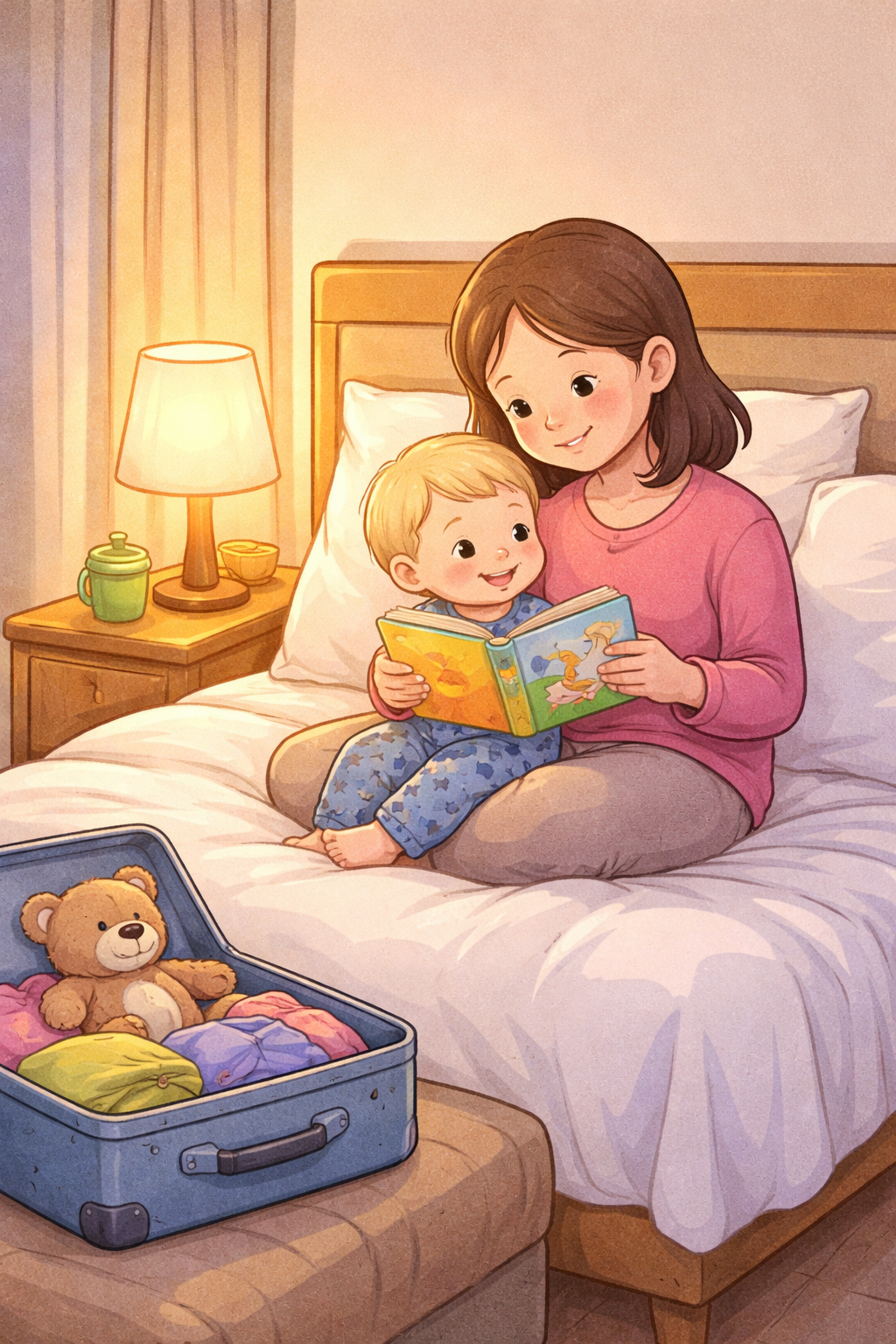
Parent reading a bedtime book to toddler in a hotel room.

Adjust Expectations Gently

Travel often means:
  • Later bedtimes
  • Different food
  • More stimulation
  • Less quiet time
It is completely normal for behaviour to wobble.

This is where your mindset matters more than the schedule. If you need a reminder, visit Parent Mindset for Early Learning.

Short, positive interactions will go further than trying to “catch up” on missed activities.

Use Travel as a Learning Opportunity

New environments are full of language.

Airports, trains, beaches and countryside walks all offer rich vocabulary.

You might point and say:
  • “Big plane.”
  • “Fast train.”
  • “Blue sea.”
  • “Tall building.”
Keep it simple and natural.

Travel is not about worksheets or structured lessons. It is about noticing and naming.

If you are unsure how much to do, trust your instincts and reflect on When to Push and When to Pause.

Pack a Familiar Learning Kit

A small bag can make a big difference.

Consider including:
  • One favourite board book
  • A small set of crayons
  • A comfort toy
  • A simple first words book
A familiar first words book can be especially grounding.
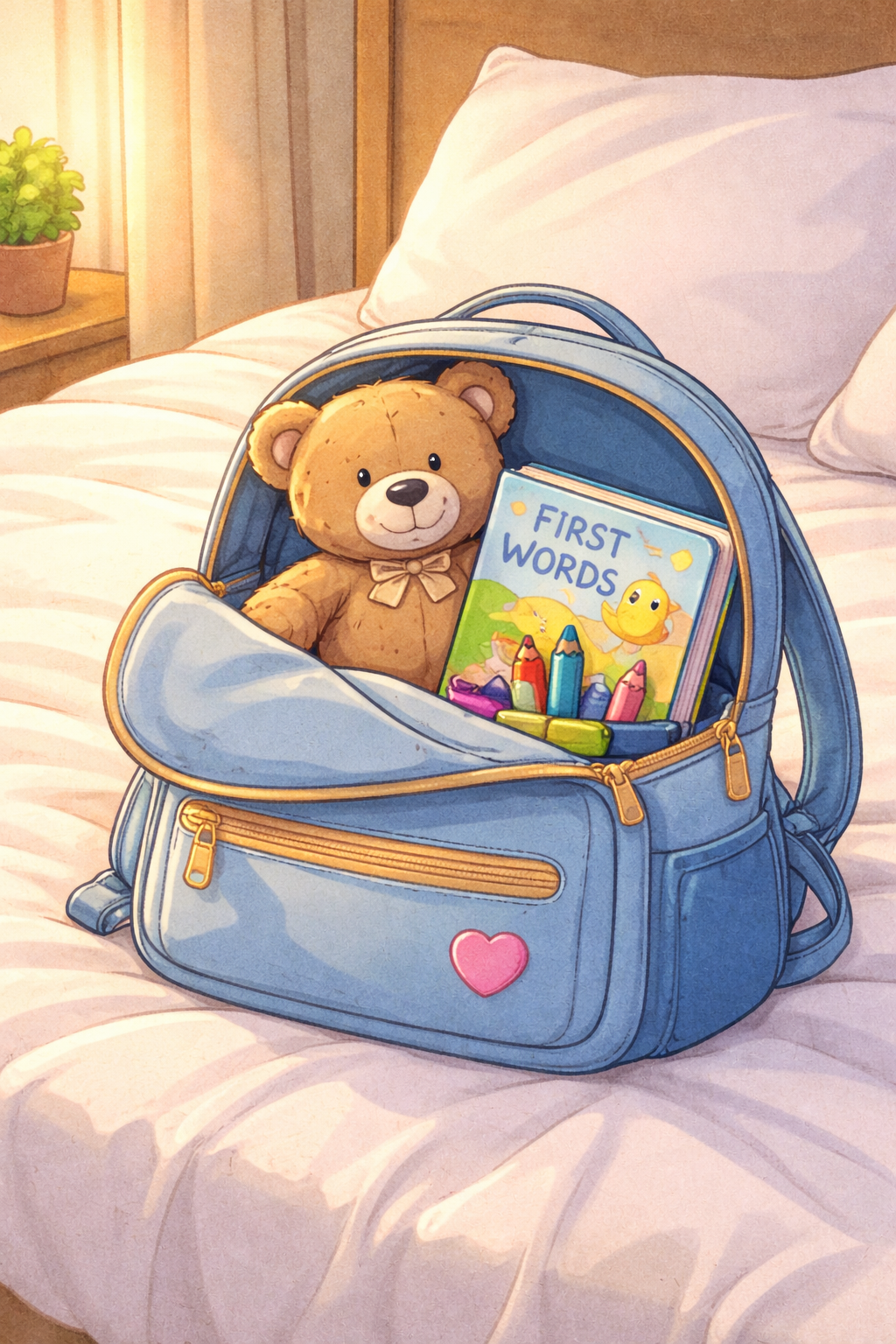
Toddler backpack packed with book, crayons and comfort toy for travel.

Support Emotional Regulation

New places can feel overwhelming.

You may notice clinginess, tears or frustration.

Stay close. Narrate calmly.
  • “It is noisy.”
  • “Lots of people.”
  • “You feel tired.”
Naming feelings helps toddlers regulate.

If frustration rises during travel, you may also find support in Dealing With Frustration in Learning.

After Travel, Ease Back In

Returning home can feel just as disruptive.

For the first few days:
  • Keep mornings slower
  • Return to your reading anchor
  • Prioritise connection over productivity
Learning rhythms usually settle again within a few days.

You do not need to compensate for time away. Early learning is built over months and years, not weekends.

Travel can stretch routines slightly, but it also builds resilience, vocabulary and shared family memories.

Small, steady anchors are enough.

Newsletter

Join our Early Readers Club for fun learning tips, sneak peeks at new books, and free printable activities!
ChattyCubs™ 2026 All Rights Reserved.