ChattyCubs
£0.00 0

Basket

No products in the basket.

Dealing With Frustration in Learning

Dealing With Frustration in Learning

Toddlers are desperate to do things for themselves.

They want to say the word, stack the block, turn the page, put the shoe on. When it does not work, frustration can appear very quickly.

The good news is that frustration is not a bad sign. It often means your child is trying, thinking, and stretching their skills. The key is knowing how to support them without taking over.

Why Toddlers Get Frustrated When Learning

Learning new skills is hard work.

Your toddler might feel frustrated because:
  • They understand more than they can say
  • Their hands cannot yet do what their brain wants
  • They are tired or hungry
  • The task is slightly too difficult
  • They want to be independent
This is especially common when building early language skills. They may know what they want to say but cannot get the word out clearly yet.

If you are working on first words, you might also find our guide on First Words Learning helpful for understanding how language develops step by step.
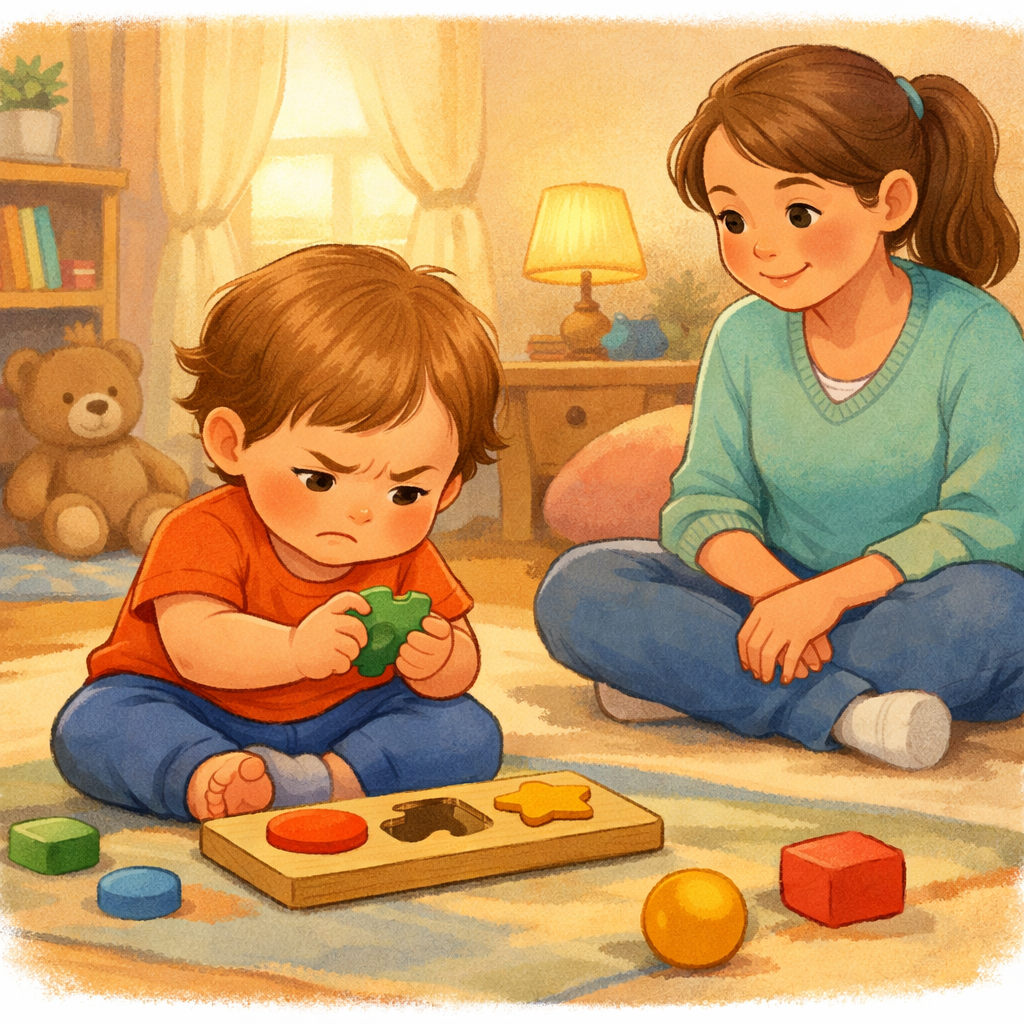
Toddler looking frustrated while trying to complete a simple puzzle as a parent watches calmly.

How to Respond in the Moment

Your reaction teaches your child how to handle tricky feelings.

Stay Calm and Close

Move nearer. Lower your voice. Keep your body relaxed.

If we become tense or rushed, frustration often increases.

Acknowledge the Feeling

Simple phrases work well:
  • “That’s tricky.”
  • “You’re trying so hard.”
  • “It’s not working yet.”
You are not fixing it. You are showing you understand.

Offer Just Enough Help

Instead of taking over, try:
  • Adjusting the object slightly
  • Giving a small hint
  • Breaking the task into a smaller step
This builds resilience.

Preventing Frustration Before It Starts

You cannot remove all frustration, and you should not. But you can reduce unnecessary struggles.
  • Choose age-appropriate activities
  • Keep sessions short
  • Practise new skills when your child is well rested
  • Build learning into daily routines
If you have not already, creating a simple daily learning routine can make practice feel predictable and calmer.

Frustration and First Words

Language frustration is very common between 12 and 24 months.

Your toddler may:
  • Point and grunt
  • Cry when you do not understand
  • Repeat a word that sounds unclear
In these moments, model the word gently.

For example, if they point to a cup and become upset:
  • Say the word slowly, “Cup.”
  • Hand it to them.
  • Smile and pause.
Repetition through picture books can reduce this frustration because the environment is calm and predictable. A large-format book such as ChattyCubs First Words allows toddlers to point clearly while you model the word without pressure.

When to Step Back

Sometimes the best support is space.

If your child is becoming overwhelmed:
  • Pause the activity
  • Offer a cuddle
  • Switch to something easier
  • Try again later
Learning should feel challenging, not distressing.

Teaching Resilience Through Small Wins

Frustration handled gently builds confidence.

When your toddler finally says the word, fits the shape, or completes the task, celebrate calmly:
  • Smile
  • Name what they did
  • Keep praise simple and specific
“You did it. Block in.”

That quiet success builds far more confidence than rushing in too soon.

If you are exploring more ways to support your toddler’s development, you might also find helpful ideas in our guides on Managing Screen Time and Toddler Language Development.

Frustration is part of learning. With calm support, it becomes a stepping stone rather than a setback.


Newsletter

Join our Early Readers Club for fun learning tips, sneak peeks at new books, and free printable activities!
ChattyCubs™ 2026 All Rights Reserved.