ChattyCubs
£0.00 0

Basket

No products in the basket.

Creating a Daily Learning Routine

Creating a Daily Learning Routine

A daily learning routine does not need to look like school.

For babies and toddlers, learning happens through small, repeated moments across the day. A simple routine gives your child security, helps language grow, and makes learning feel natural rather than forced.

The key is consistency, not perfection.

Why a Daily Learning Routine Helps Toddlers

Young children thrive on predictability. When they know what usually happens next, they feel calmer and more confident.

A gentle routine helps:
  • Build language through repeated words and phrases
  • Strengthen memory through repetition
  • Reduce tantrums caused by uncertainty
  • Create regular bonding time
  • Support early independence
If you are already following predictable mealtimes and bedtimes, you already have the foundation in place.

What a Simple Daily Learning Routine Looks Like

It does not need to be complicated. Think of it as small learning anchors placed throughout your normal day.

Morning Connection Time (5–10 Minutes)

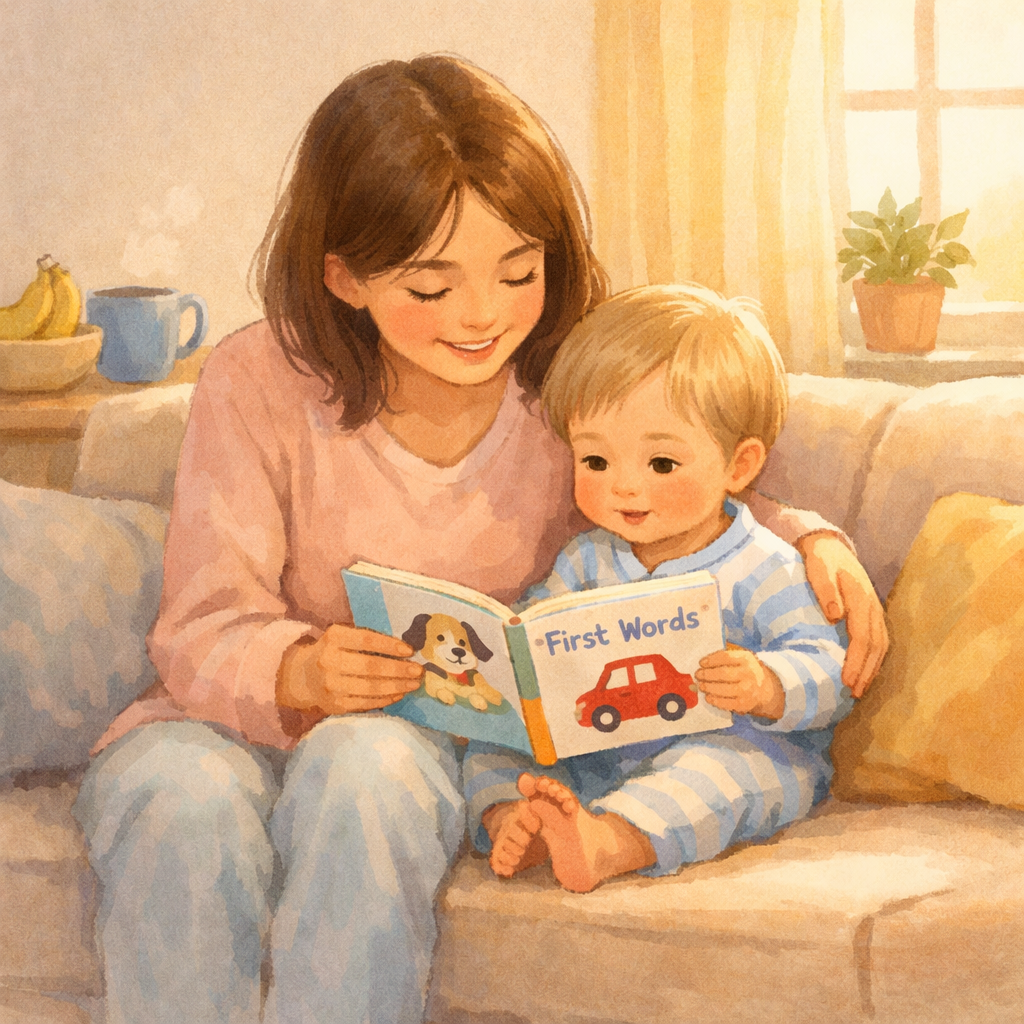
Parent and toddler reading a simple first words book together in the morning.
After breakfast or getting dressed, spend a few minutes looking at a simple picture book.

Point, name, and pause.
  • “Dog.”
  • “Car.”
  • “Ball.”
Keep it short and positive. This builds vocabulary without overwhelming them.

You may find our First Words books helpful here, especially themed books like animals or everyday objects that match your child’s interests.

Learning Through Everyday Routines

Daily life is full of teaching opportunities.

During dressing:
  • “Socks on.”
  • “Blue jumper.”
At mealtime:
  • “Spoon.”
  • “More?”
  • “All gone.”
Bath time:
  • “Splash.”
  • “Wash feet.”
If you would like more ideas, see our guide on using everyday objects to teach language.

Afternoon Play and Talk

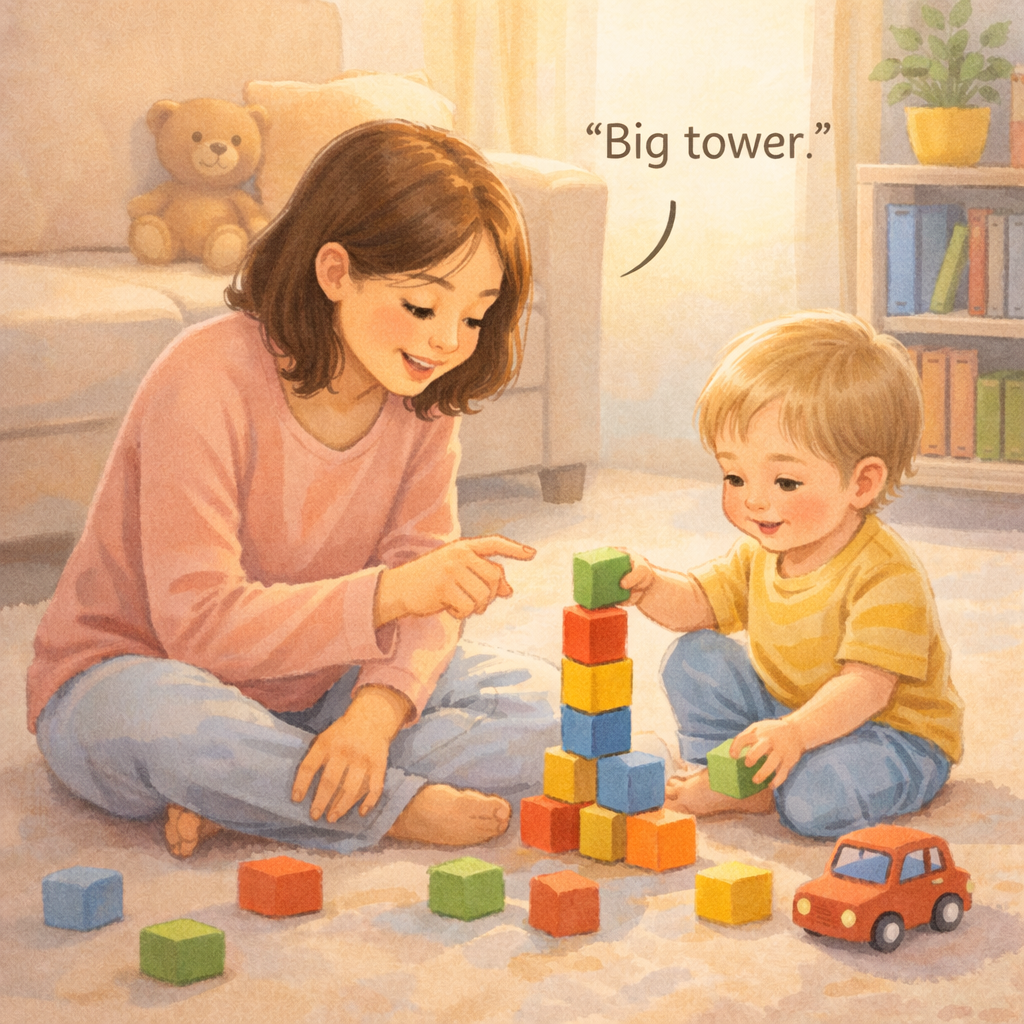
Parent describing a toddler’s play with blocks.
Follow your child’s lead during play.

Instead of directing, describe.
  • “Up.”
  • “Big tower.”
  • “Oh no, it fell.”
This approach is powerful for language development. If you would like more detail, our page on expanding toddler vocabulary builds on this idea.

Calm Bedtime Language

Bedtime is perfect for repetition.

Choose one or two short books and rotate them across the week. Children love hearing the same words again and again.

Keep phrases predictable:
  • “Night night teddy.”
  • “Sleepy eyes.”
Consistency here supports both language and emotional security.

How to Keep It Realistic

A daily learning routine should fit around your life, not the other way around.

If you work, have multiple children, or are simply exhausted, focus on:
  • One short book time
  • Naming during one daily routine
  • Five minutes of focused play
That is enough.

Short, repeated interactions are more effective than one long session.

Adjusting for Different Ages

0–12 Months

Keep it simple.
  • Single words
  • Lots of repetition
  • Face-to-face talking

12–24 Months

Start adding two-word phrases.
  • “Big ball.”
  • “Daddy’s shoes.”
Encourage pointing and copying.

2–3 Years

Begin simple questions.
  • “Where’s the cat?”
  • “What’s that?”
Pause and wait for a response.

If you are concerned about progress, you may also want to read our tips for slow talkers.

The Secret Ingredient Is Repetition

Children learn through hearing the same words many times in meaningful situations.

You do not need flashcards, expensive toys, or long lessons.

You need:
  • Consistency
  • Warmth
  • Short daily moments
Over time, those small moments build a confident communicator.

If you would like a gentle starting point, our ChattyCubs First Words books are designed to fit naturally into daily routines, helping you turn five minutes a day into powerful early learning.


Newsletter

Join our Early Readers Club for fun learning tips, sneak peeks at new books, and free printable activities!
ChattyCubs™ 2026 All Rights Reserved.