If your toddler avoids an activity repeatedly, it may be slightly too challenging.
Step back a level.
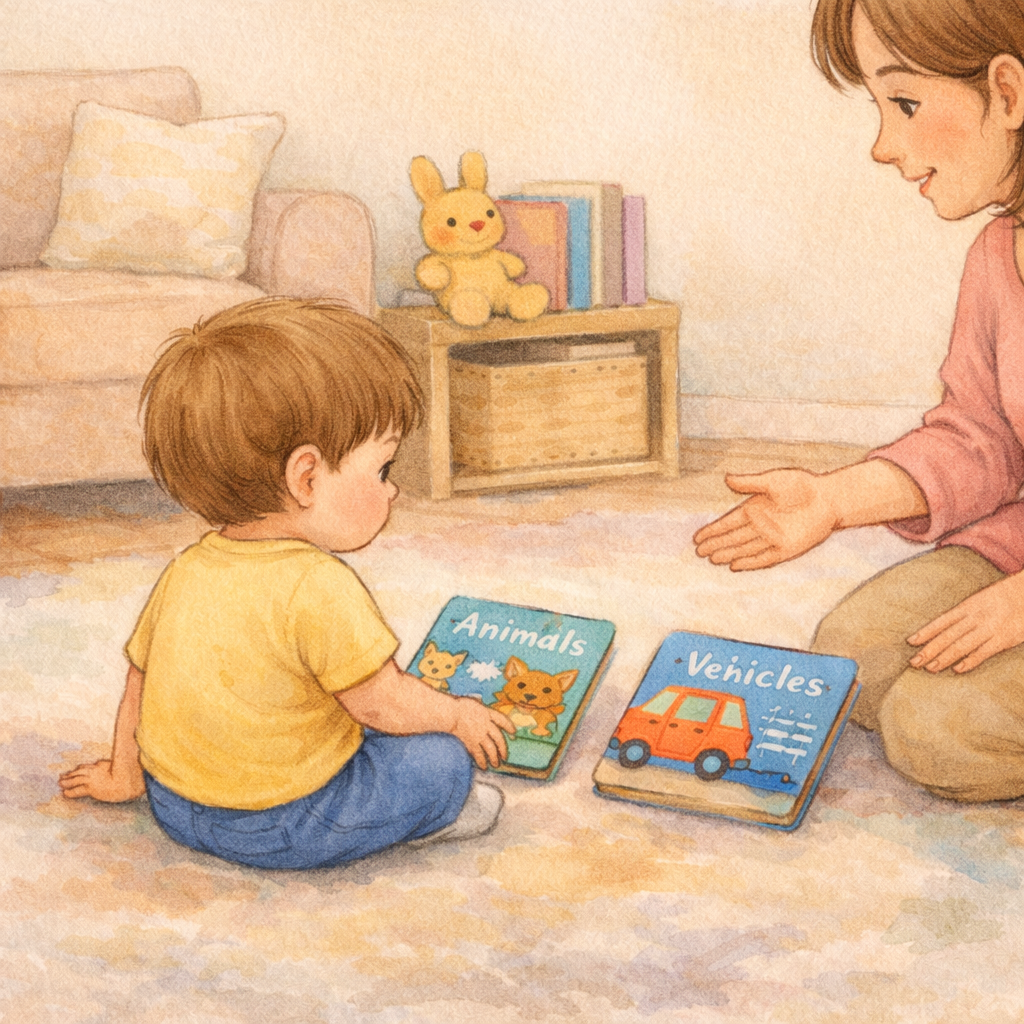
If they will not name the animal, simply point and name it yourself.
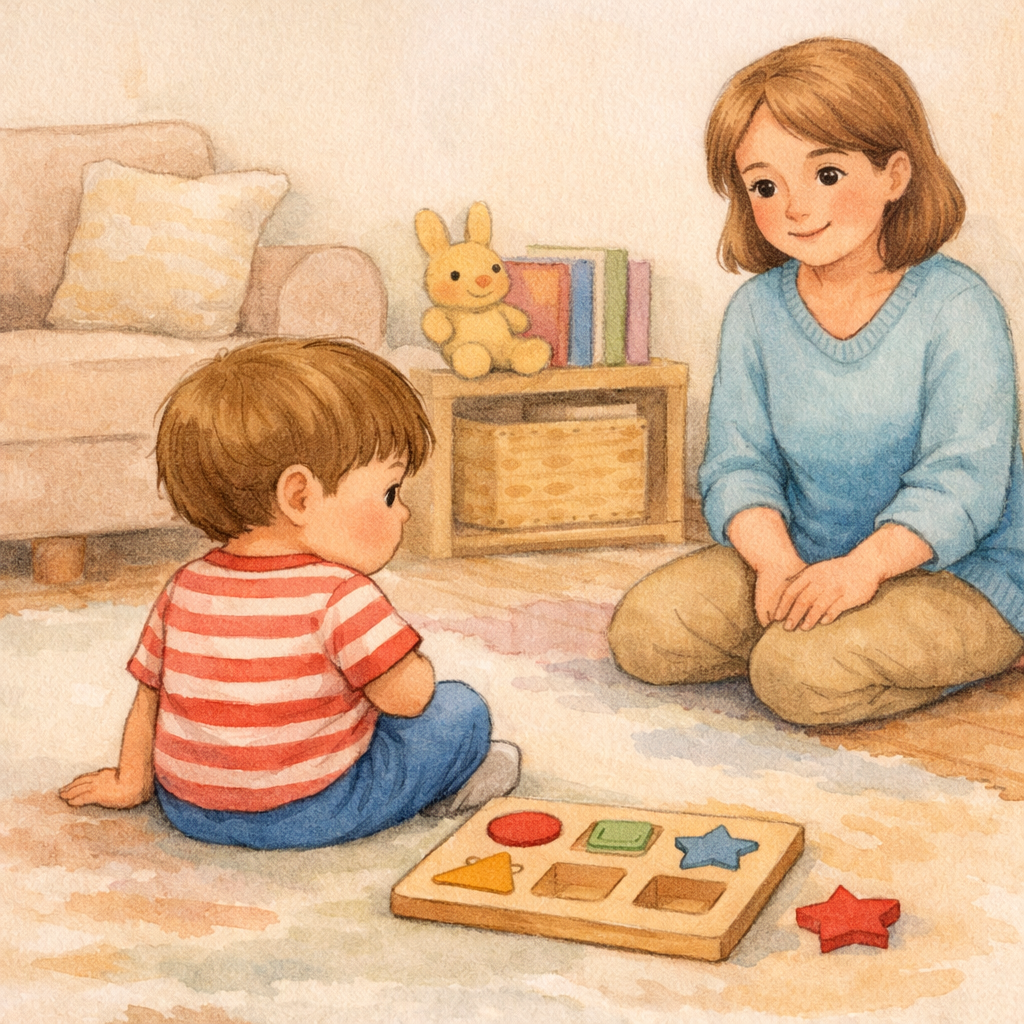
If they will not complete the puzzle, help with the first piece.
Success builds motivation. Frustration builds avoidance.
If you are seeing regular frustration, you may also find our guide on
Dealing With Toddler Frustration helpful.
Reluctant learners often become enthusiastic when the topic matches their curiosity.
Notice what they talk about, point to, or carry around.
- Vehicles
- Animals
- Food
- Family members
- Favourite characters
Then build learning around that theme.
For example, if your child loves animals, pointing and naming together from a first words book can feel like play rather than practice.
Avoid big, over-the-top praise.
Instead, notice effort:
- “You tried.”
- “You put the block in.”
- “You said cat.”
Specific feedback builds confidence.
If you would like more ideas, our page on
Praise and Encouragement for Toddlers explores how simple language shapes long-term confidence.
Screens, background noise, and busy environments can lower motivation.
If you are working on building focus, you might also find our guide on
Managing Screen Time useful.
A calm space helps reluctant learners feel more secure and willing to engage.
Some days your toddler will engage easily.
Other days they will not.
That is normal.
Motivation at this age is not about discipline or pushing harder. It is about creating an environment where curiosity feels safe.
Small, warm moments repeated daily are far more powerful than forcing progress.
Over time, reluctance often turns into confidence.