ChattyCubs
£0.00 0

Basket

No products in the basket.

Managing Screen Time for Toddlers

Managing Screen Time for Toddlers

Screens are part of modern family life. Video calls with grandparents, a quick cartoon while you cook, a favourite song on YouTube. It is normal.

For toddlers aged 0 to 3, though, real-world interaction is still the most powerful way to learn. This guide will help you manage screen time calmly and confidently, without guilt or stress.

Why screen time matters in the early years

In the first three years, your child’s brain grows rapidly. They learn best through:
  • Face-to-face interaction
  • Hearing real voices and conversations
  • Touching, moving and exploring
  • Repeating words in everyday routines
Screens cannot fully replace this. Even high-quality programmes are less effective than a parent talking, pointing and responding.

That does not mean all screens are “bad”. It just means they need boundaries.
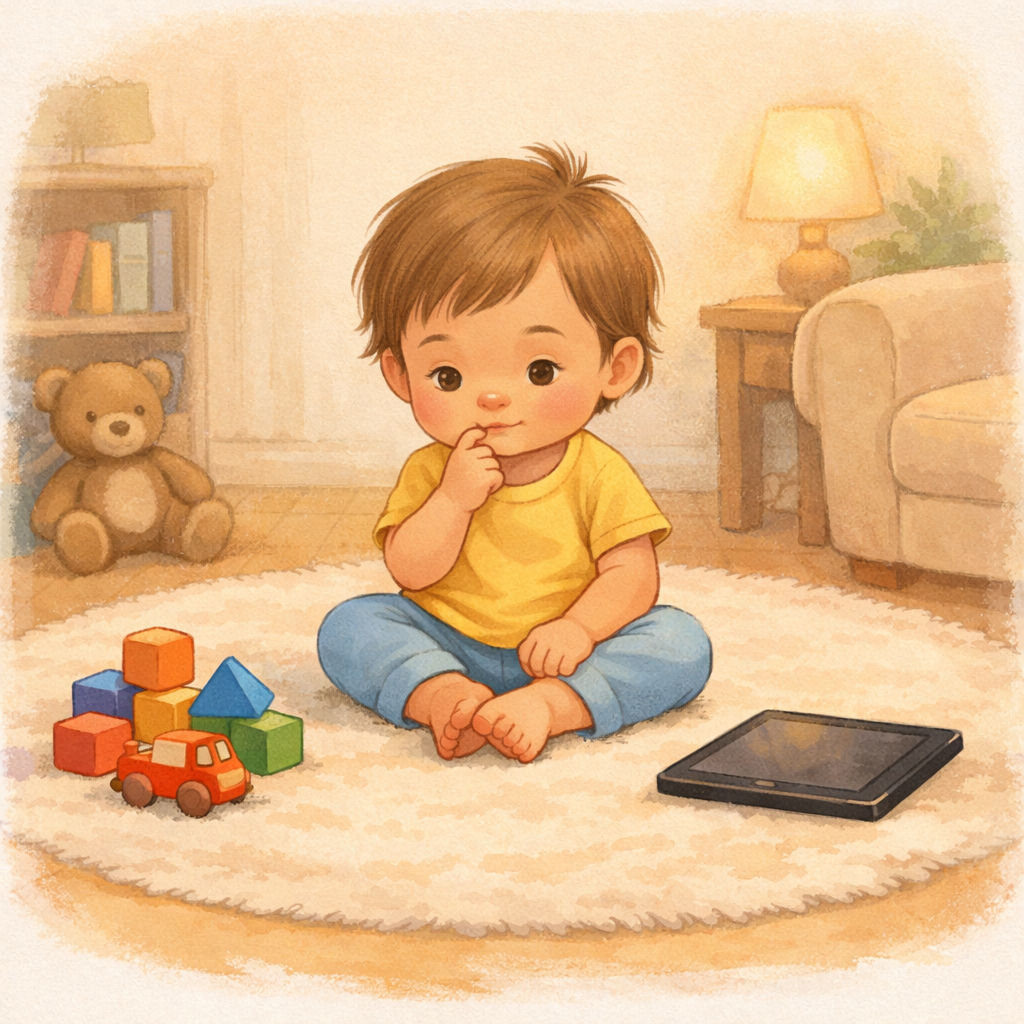
Toddler sitting on the floor with toys and a tablet nearby.

How much screen time is recommended?

In the UK, guidance suggests:
  • Under 18 months, avoid screens where possible, except video calls
  • 18 to 24 months, very limited use with an adult watching and talking alongside
  • 2 to 3 years, no more than around 1 hour per day of high-quality content
Every family is different. The key question is not just how long, but how screens fit into your day.

Signs screen time may be too much

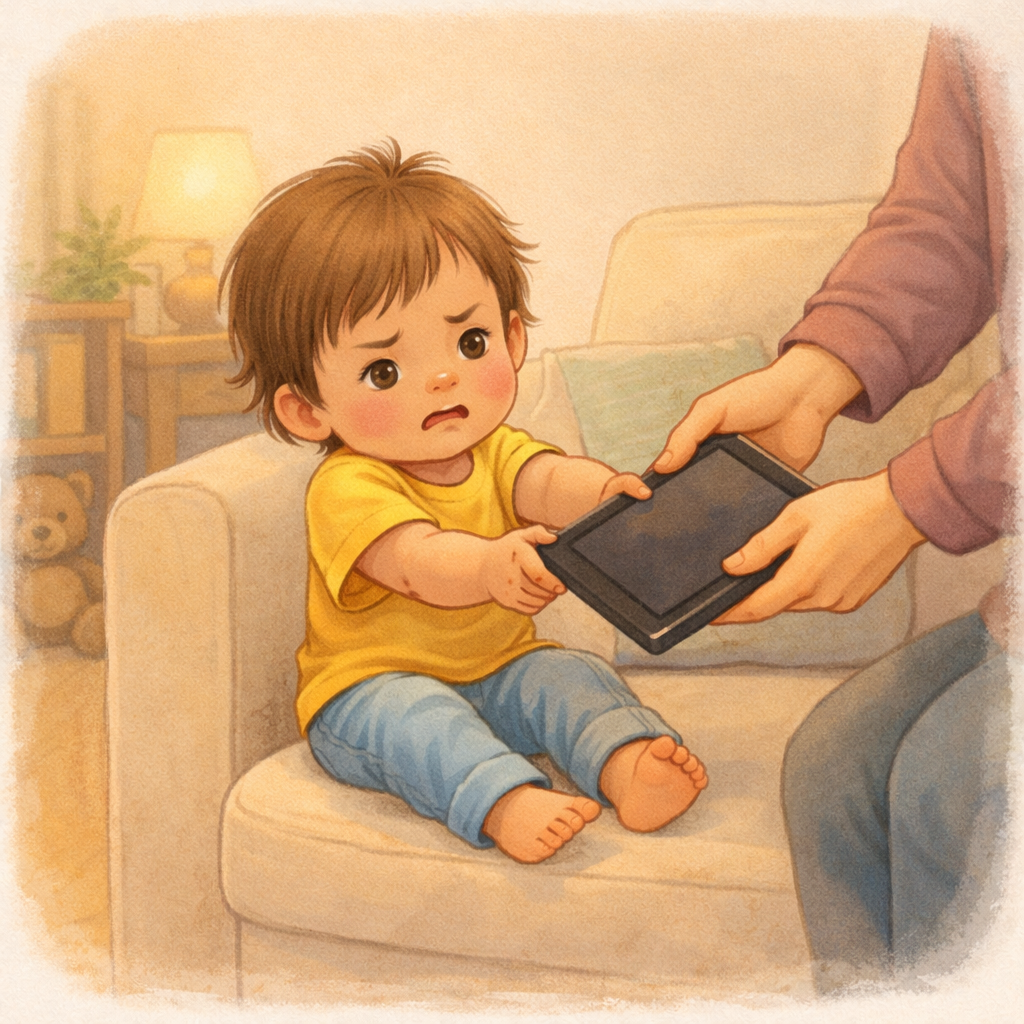
Parent calmly taking a tablet from a toddler who looks frustrated.
You might notice:
  • Big meltdowns when screens are turned off
  • Less interest in toys or books
  • Sleep becoming more unsettled
  • Fewer attempts at talking or interacting during the day
If this sounds familiar, small changes can make a big difference.

Simple ways to manage screen time

1. Create clear routines

Toddlers feel safer with predictable patterns.

  • Keep screens at the same time each day
  • Avoid screens before bed
  • Turn them off at least 30 to 60 minutes before sleep
Consistency reduces battles.

2. Watch together

If your child is watching something, sit with them when you can.
  • Name what you see on screen
  • Repeat simple words
  • Ask easy questions like “Where’s the dog?”
This turns passive watching into language learning.

You can then reinforce those words later using a real book, such as ChattyCubs First Words – Animals.

3. Offer a strong alternative

Instead of just saying “no tablet”, offer something engaging.
  • A favourite board book
  • Building blocks
  • Drawing with chunky crayons
  • Helping stir dinner
Children move on more easily when something interesting replaces the screen.

If you are building your child’s vocabulary, our First Words Learning pillar page includes practical ideas for screen-free word learning at home.

4. Keep screens out of bedrooms

Bedrooms should feel calm and screen-free.
  • No tablets in cots or beds
  • No background TV during sleep
  • Charge devices outside the room overnight
This protects sleep and helps bedtime feel predictable.

What about educational apps?

Many apps claim to teach letters, numbers or words.

For under threes, the most effective learning still comes from:
  • Talking during everyday routines
  • Reading simple picture books together
  • Singing action songs
  • Playing and naming objects around the house
If you use apps, think of them as a small extra, not the main event.

A balanced approach works best

Managing screen time is not about perfection. It is about balance.

Some days you will need the screen while you answer a work call or settle a baby. That is real life.

What matters most is that your toddler has plenty of:
  • Conversation
  • Shared book time
  • Active play
  • Warm, responsive interaction
Those moments build language, confidence and connection far more powerfully than any programme.

If you would like more practical ways to build language without screens, explore our guide to toddler language development and try using a simple first words book during everyday routines. Small daily habits add up quickly in the early years.

You might also find helpful

If you are working on building healthy routines and language at home, these guides will support you:


Newsletter

Join our Early Readers Club for fun learning tips, sneak peeks at new books, and free printable activities!
ChattyCubs™ 2026 All Rights Reserved.