ChattyCubs
£0.00 0

Basket

No products in the basket.

Visual Schedules for Toddler Learning

Visual Schedules for Toddler Learning

Toddlers feel safer when they know what is coming next.

A simple visual schedule can gently support understanding, transitions and language development.

It does not need to be complicated.

It just needs to be clear and consistent.

For the wider framework behind structured home routines, visit Routines & Environments.

What Is a Visual Schedule?

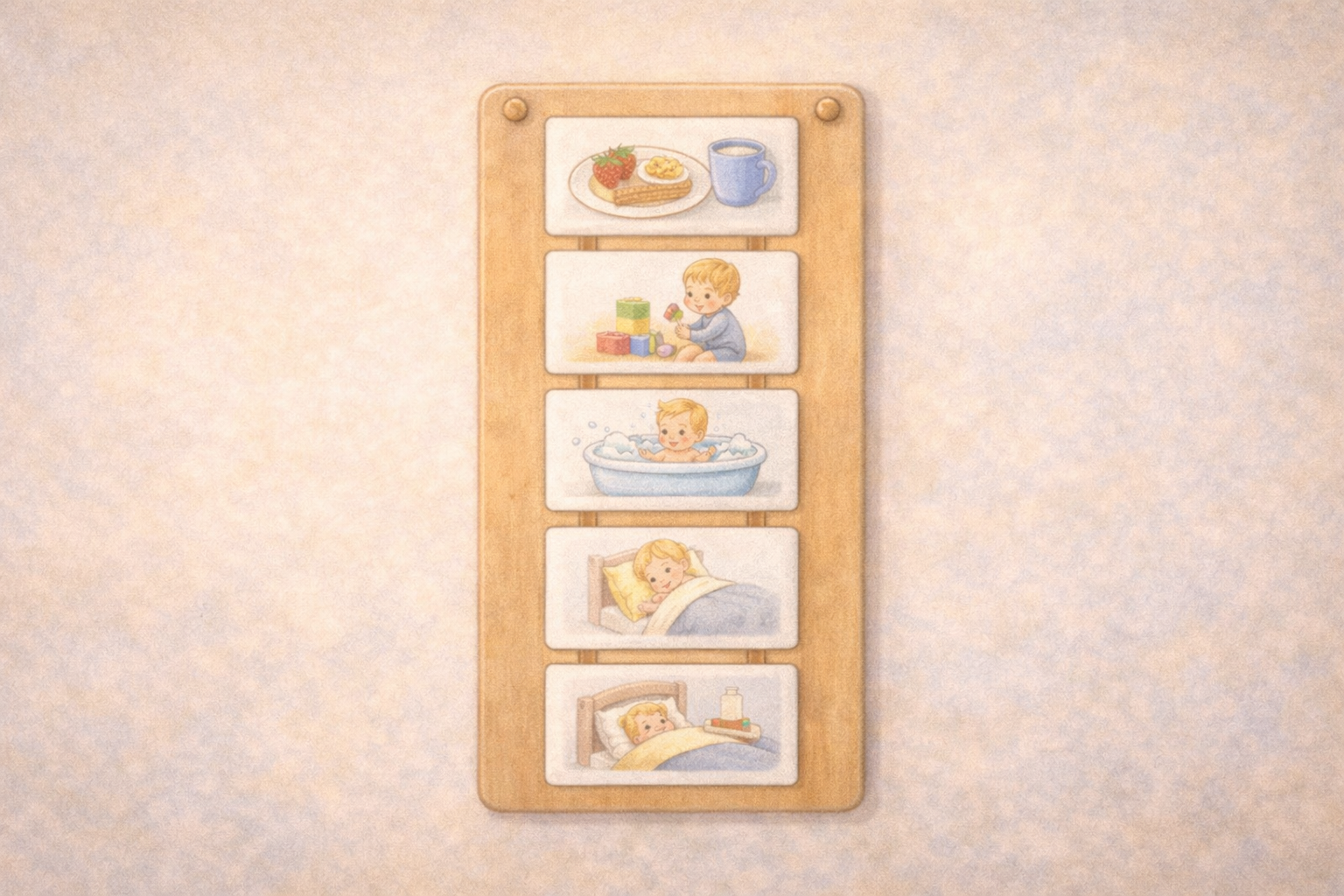
A visual schedule uses pictures to show the order of the day.

For example:
  • Breakfast
  • Play
  • Snack
  • Bath
  • Bed
Young children understand images before they understand time.

Seeing the sequence reduces anxiety and supports communication.

If you are already building repetition into your day, see Daily Routines That Teach Words.

Why Visual Schedules Support Language

Visual schedules create opportunities to repeat key words daily.

You can point and say:
  • Breakfast next
  • Bath time
  • Story time
This repeated language strengthens understanding.

Over time, toddlers begin to anticipate and use the words themselves.

How to Create a Simple Visual Schedule

Simple visual schedule board with picture cards for daily routine.
Keep it simple.
  • Use real photos or clear illustrations
  • Limit to 4 to 6 steps
  • Place at toddler eye level
Too many steps can feel overwhelming.

Use It Throughout the Day

Before transitions, walk over together.

Point to what is happening next.

For example:
  • “Play finished. Snack next.”
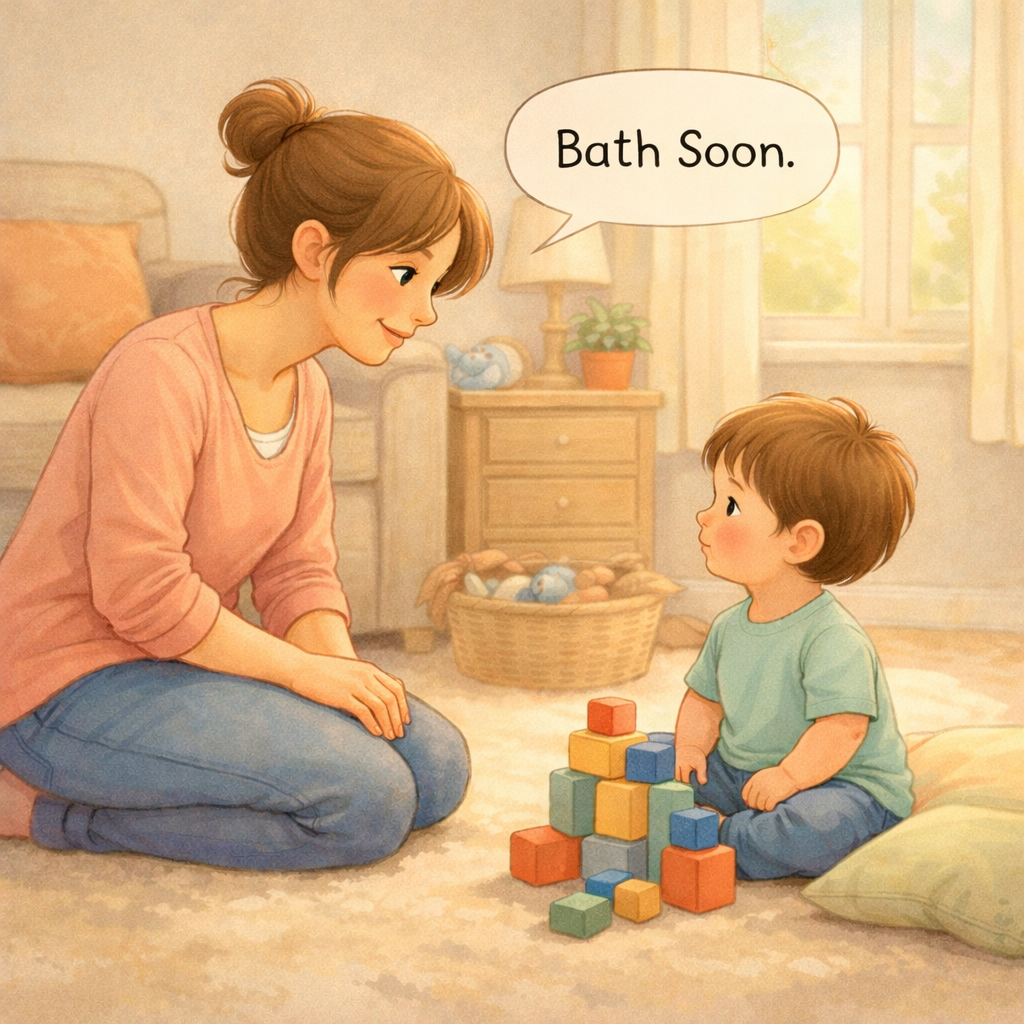
  • “Bath next. Then bed.”
This supports both understanding and emotional regulation.

You can combine this with Using Morning Routines to Teach Words for strong daily repetition.

Keep the Tone Calm

A visual schedule is a guide, not a rulebook.

If the day changes, calmly explain it.

Flexibility matters.

The schedule supports your child.

It does not control them.

When to Adjust

As your toddler grows, you can:
  • Add new steps
  • Introduce simple words alongside pictures
  • Encourage them to move cards independently
This builds ownership and confidence.

Visual schedules for toddler learning are not about strict routines.

They are about clarity.

And clarity builds calm, language and trust.
Newsletter

Join our Early Readers Club for fun learning tips, sneak peeks at new books, and free printable activities!
ChattyCubs™ 2026 All Rights Reserved.