ChattyCubs
£0.00 0

Basket

No products in the basket.

How Toy Rotation Boosts Language

How Toy Rotation Boosts Language

Toy rotation is not just about reducing clutter.

It can gently strengthen your toddler’s language development.

When fewer toys are available at one time, children focus more deeply.

And deeper focus creates richer language opportunities.

For a wider look at creating supportive spaces, visit Routines & Environments.

What Is Toy Rotation?

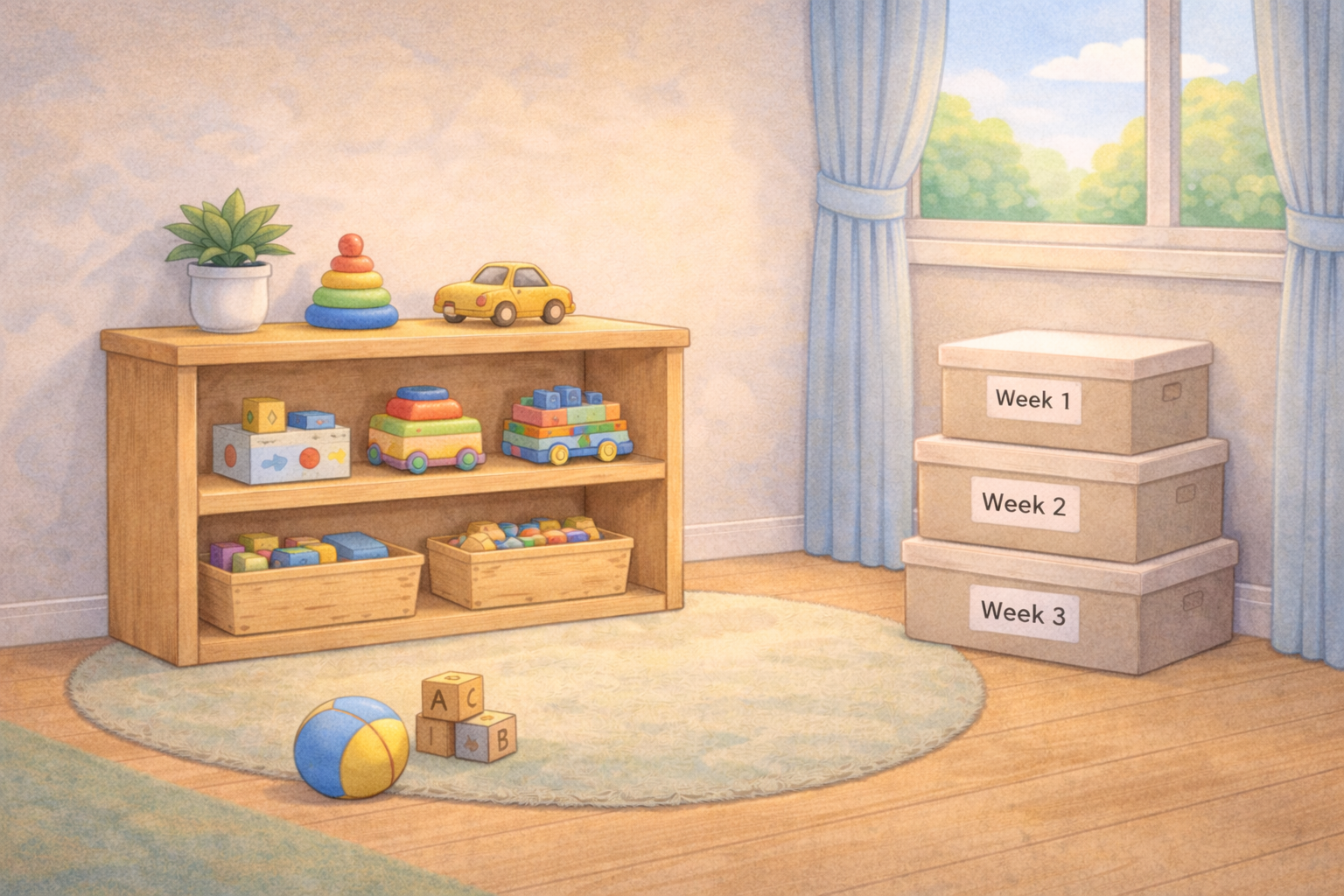
Toy rotation simply means keeping some toys out and storing others away.

Every week or two, you swap them.

Your toddler does not need constant access to everything.

In fact, fewer choices often lead to more meaningful play.

If you are organising your environment, you may also enjoy Toddler Playroom Setup for Learning.
Why Fewer Toys Support More Language

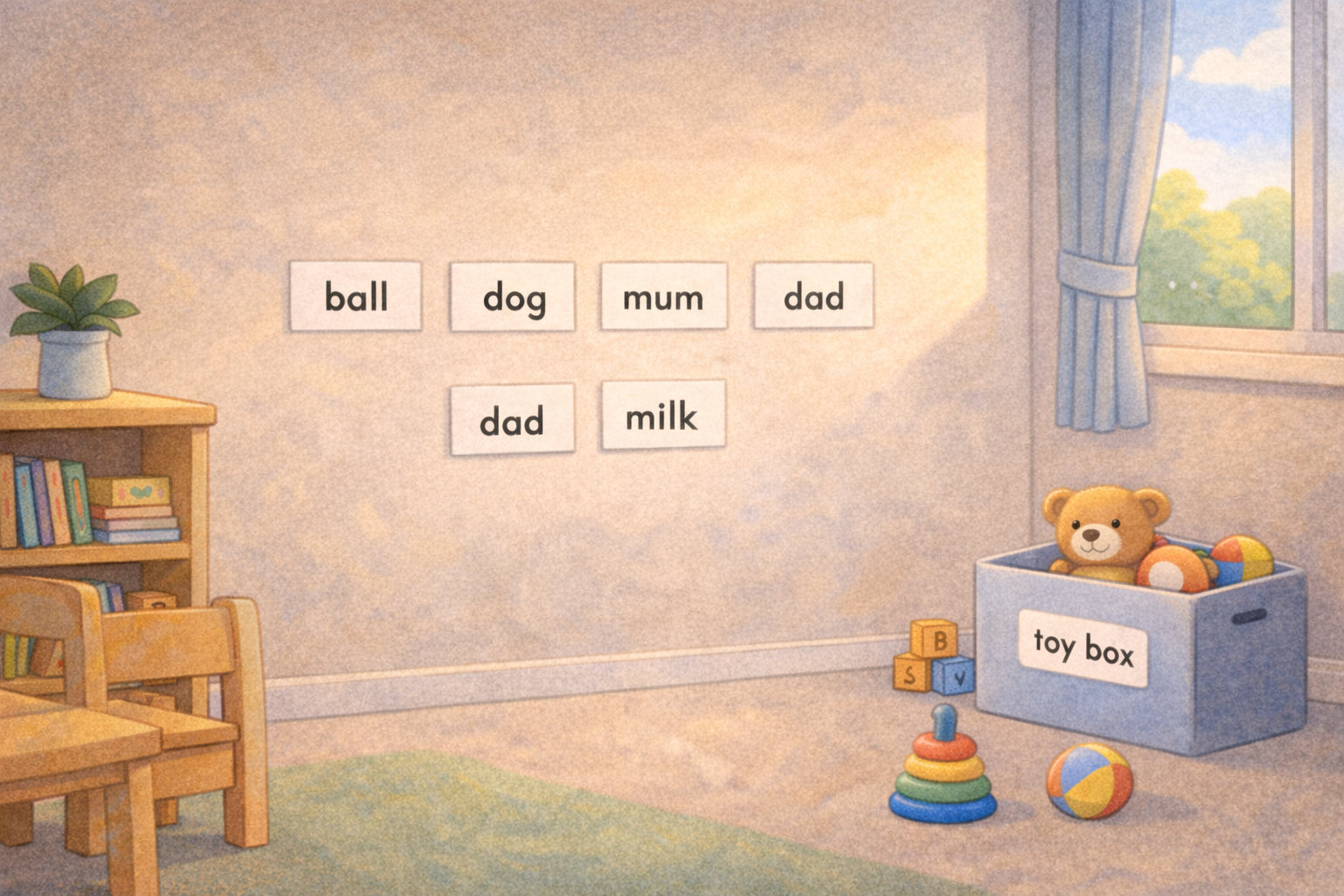
When the space is calm and uncluttered, your toddler is more likely to:
  • Stay with one activity longer
  • Use imagination
  • Engage in back-and-forth play
  • Repeat key words
Less distraction creates space for conversation.

How to Rotate Toys Simply

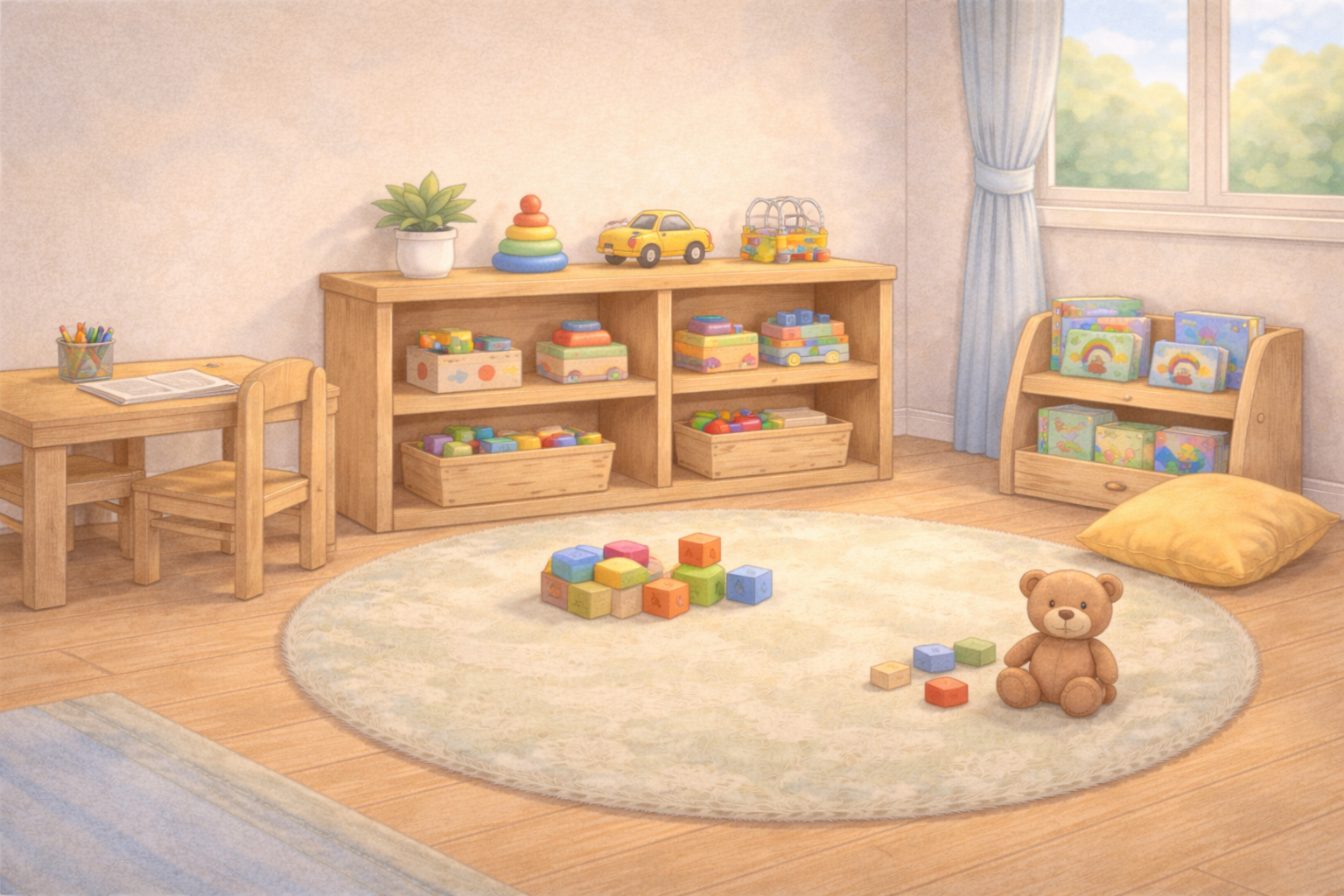
Minimal toy shelf with stored boxes for toy rotation.
You do not need a complicated system.

Start with:
  • Choose 6 to 8 toys for display
  • Store the rest out of sight
  • Swap every one to two weeks
Watch what your toddler enjoys most.

Keep favourites in rotation longer.

How Rotation Builds Vocabulary

When a toy returns after a short break, it feels new again.

This sparks renewed interest and conversation.

You can model:
  • Action words
  • Describing words
  • Imaginative phrases
For example:
  • “Big tower.”
  • “Car goes fast.”
  • “Teddy sleeping.”
Repetition builds confidence.

Link Toys to Books

You can deepen language by pairing toys with books.

If blocks are out, choose a building-themed book.

If farm animals are out, read an animal book.

This works beautifully alongside Incorporating Books Into Meal Times or your reading nook setup in Organizing a Reading Nook.

Linking play and reading strengthens word learning.

Keep It Flexible

Toy rotation should reduce stress, not add to it.

There is no perfect schedule.

Some weeks you will rotate.

Some weeks you will not.

That is fine.

The goal is calm focus.

And calm focus naturally boosts language.

Over time, toy rotation becomes a simple way to create space for deeper play, stronger conversations and richer vocabulary growth.

Newsletter

Join our Early Readers Club for fun learning tips, sneak peeks at new books, and free printable activities!
ChattyCubs™ 2026 All Rights Reserved.