Good questions are:
- Open, not yes or no
- Simple and short
- Linked to what they can see or touch
- Asked in a warm tone
Avoid rapid-fire questioning.
One thoughtful question is far more powerful than five rushed ones.
- What do you think will happen if we put this on top?
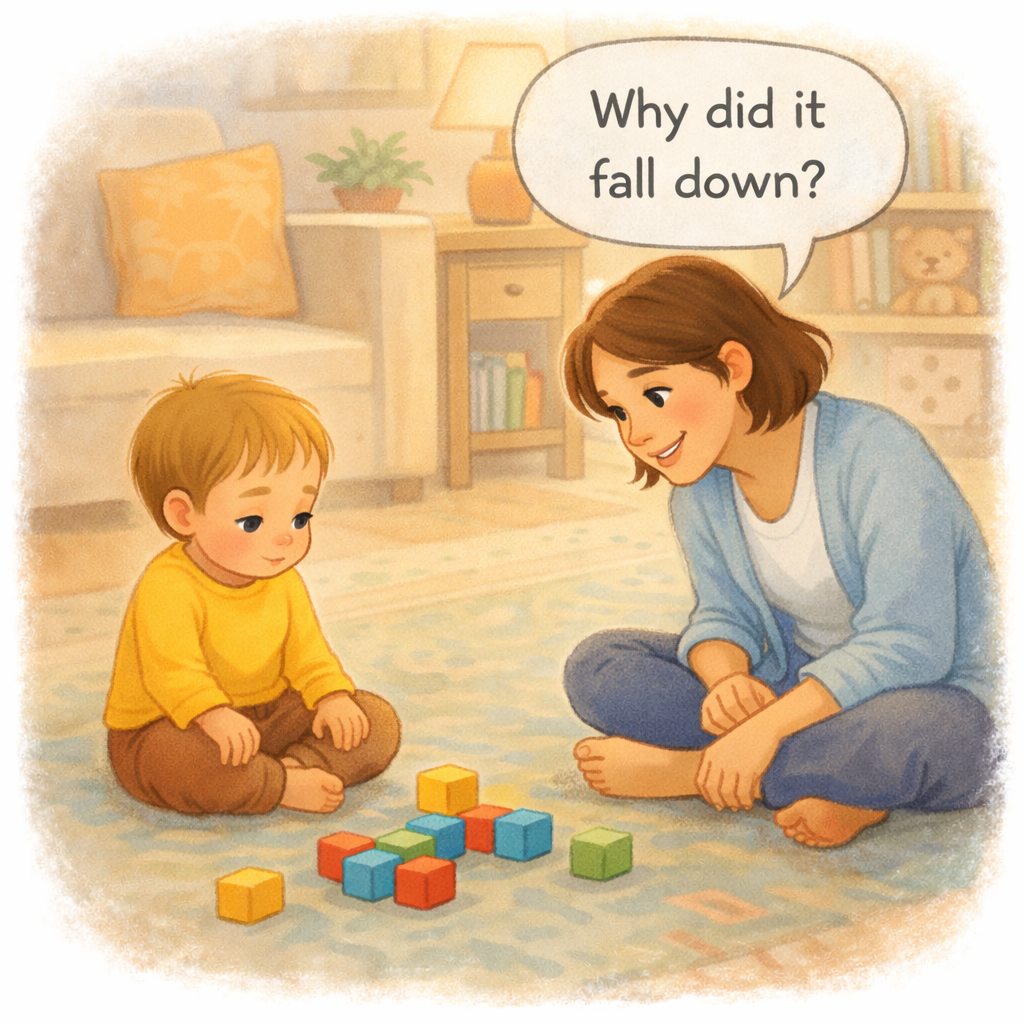
- Why did it fall down?
- Which one is bigger?
- Where should this go?
You are helping them predict, compare and solve.
- What can you see on this page?
- What do you think happens next?
- How does the dog feel?
- Where is the ball?
Picture books are perfect for gentle thinking.
If reading is already part of your routine, you might enjoy our guide to
Family Reading Traditions for building consistency.
- Which sock goes on this foot?
- What do we need before we go outside?
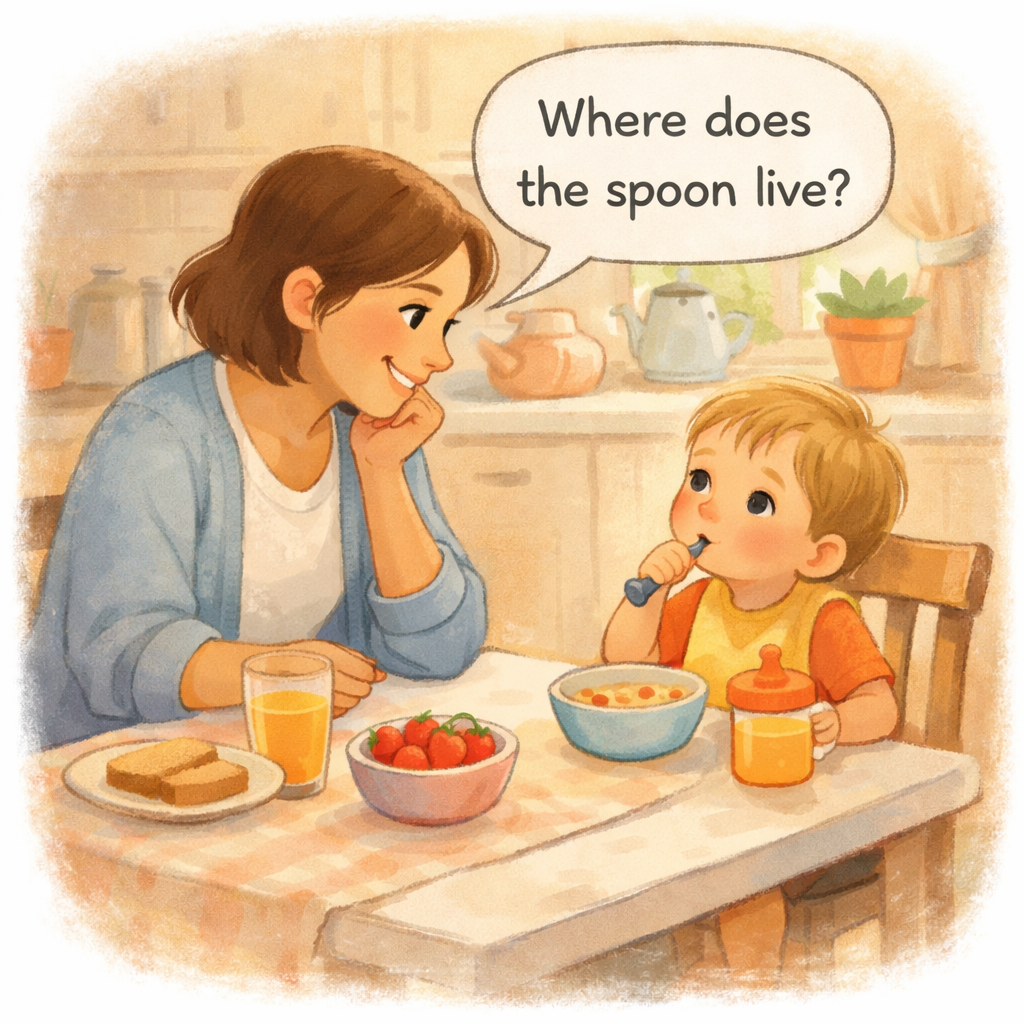
- Where does the spoon live?
- What colour is your cup?
Learning does not need a special setup.
It fits naturally into ordinary moments.
Sometimes they will ignore you.
Sometimes they will shrug.
Sometimes they will say something completely unexpected.
That is normal.
Give them time.
Repeat the question slowly.
Or answer it yourself and model the thinking:
“I think the big block goes at the bottom.”
If your child often resists interaction, you may also find support in
How to Motivate Reluctant Learners.