ChattyCubs
£0.00 0

Basket

No products in the basket.

Speech vs Language Delays

Speech vs Language Delays

It can feel confusing when someone says your child may have a speech delay or a language delay.

They sound similar.
But they are not the same thing.

Understanding the difference helps you feel clearer about what your child might need.

If you would like a broader overview first, you can visit Language Milestones by Age.

What Is a Speech Delay?

A speech delay relates to how a child says sounds and words.

It is about clarity and pronunciation.

A child with a speech delay may:
  • Use words but be difficult to understand
  • Miss certain sounds
  • Swap sounds, such as saying “tat” instead of “cat”
  • Have unclear speech beyond what is typical for their age
Their understanding may be completely age appropriate.

They know what they want to say.
It just does not come out clearly.

What Is a Language Delay?

A language delay relates to understanding and using words to communicate.

It is about meaning, not just sound.

A child with a language delay may:
  • Use very few words for their age
  • Struggle to combine words into short phrases
  • Find it hard to follow simple instructions
  • Rely heavily on gestures instead of words
Sometimes both speech and language are delayed together.

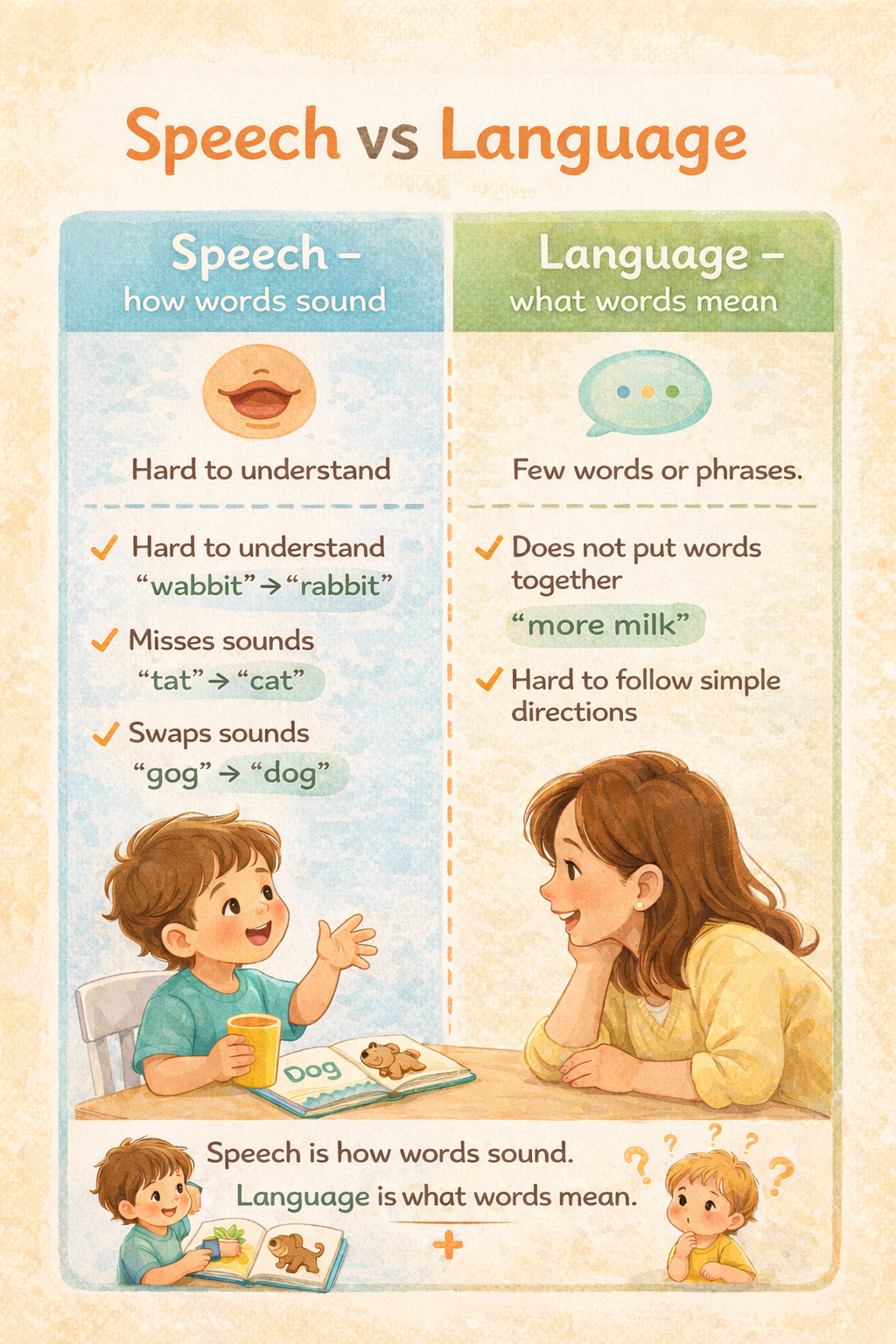
Simple Visual Guide

Diagram comparing speech sounds and language understanding in toddlers.
Speech is how words sound.
Language is what words mean and how they are used.

When Is It Typical?

All toddlers mispronounce words at first.

For example, a two-year-old saying “nana” for banana can be completely normal.

You can explore typical development at each stage here:
These guides can help you see what is within the usual range.

When Might It Be a Delay?

You may want to look closer if your child:
  • Is not using words by around 18 months
  • Is not combining two words by around 2½ years
  • Is very difficult to understand at age 3
  • Does not seem to understand simple everyday instructions
For a fuller breakdown by age, visit Common Red Flags by Age.

What Should I Do If I Am Unsure?

Trust your instincts.

You see your child every day.
You notice the small changes.

If you feel unsure, read When to Seek Help for calm next steps.

If you are already concerned about delay, you may find Speech Delay Support useful, along with How to Spot a Speech Delay.

How to Support Both Speech and Language at Home

Small changes in daily routines can support both areas.

You can:
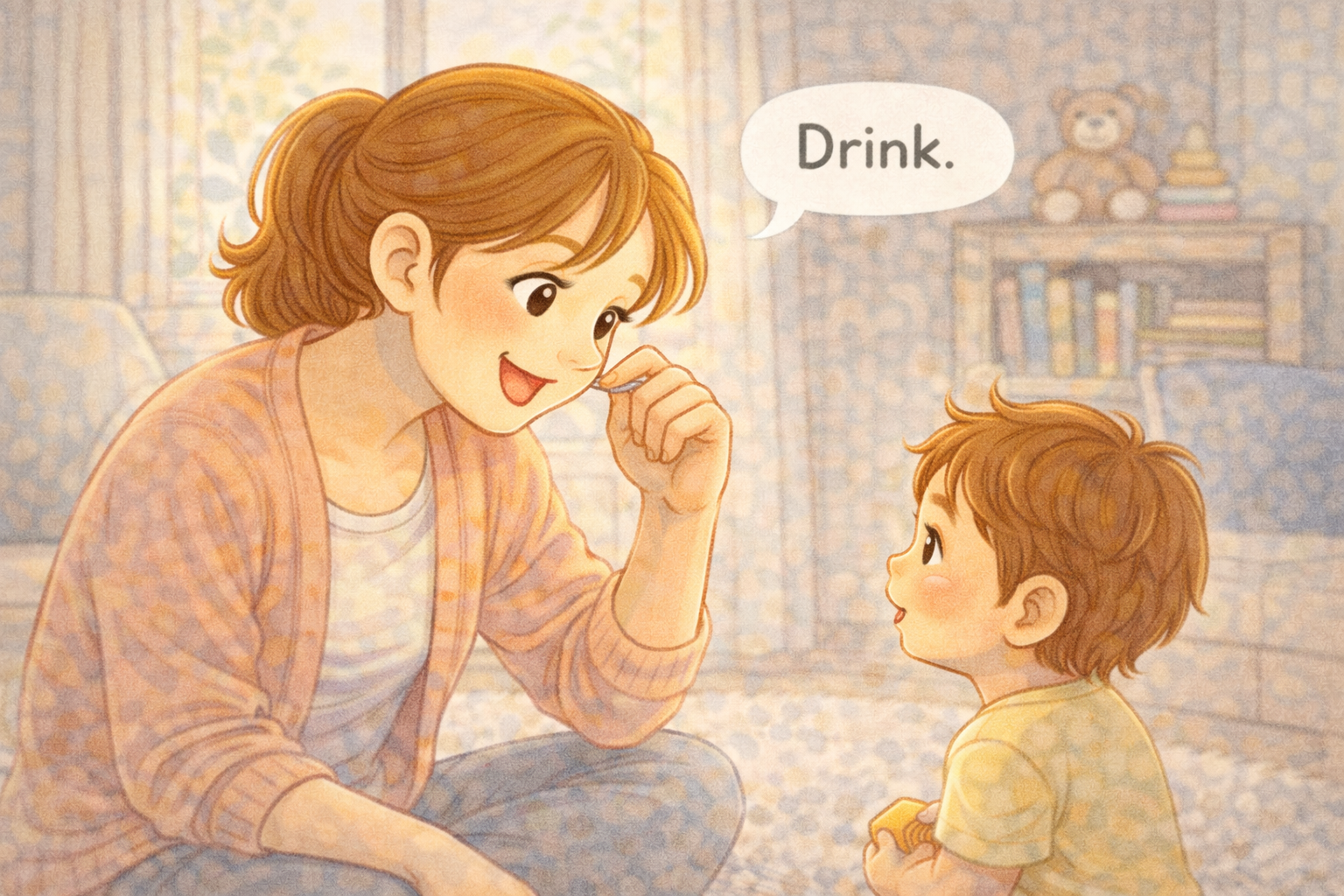
  • Model clear, slow speech
  • Repeat your child’s words correctly without correcting harshly
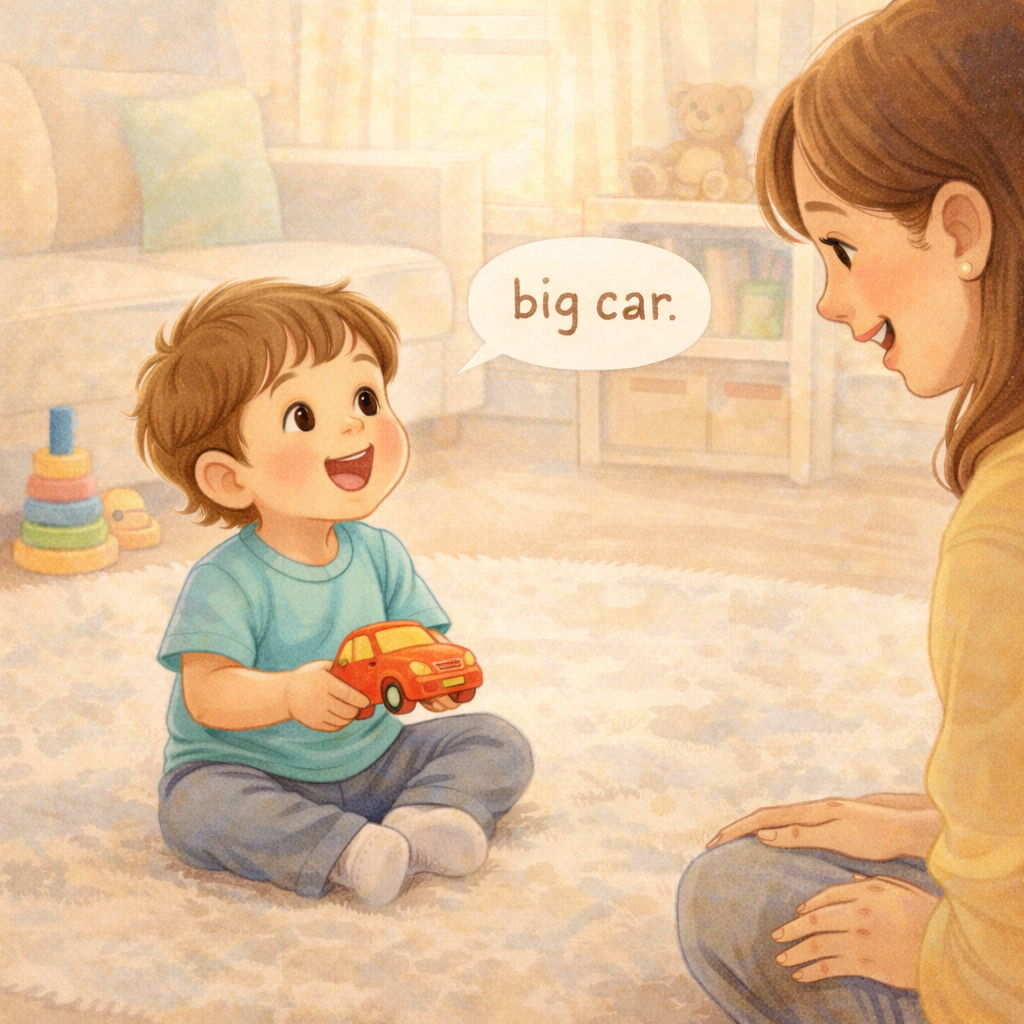
  • Expand what they say, for example “car” becomes “big car”
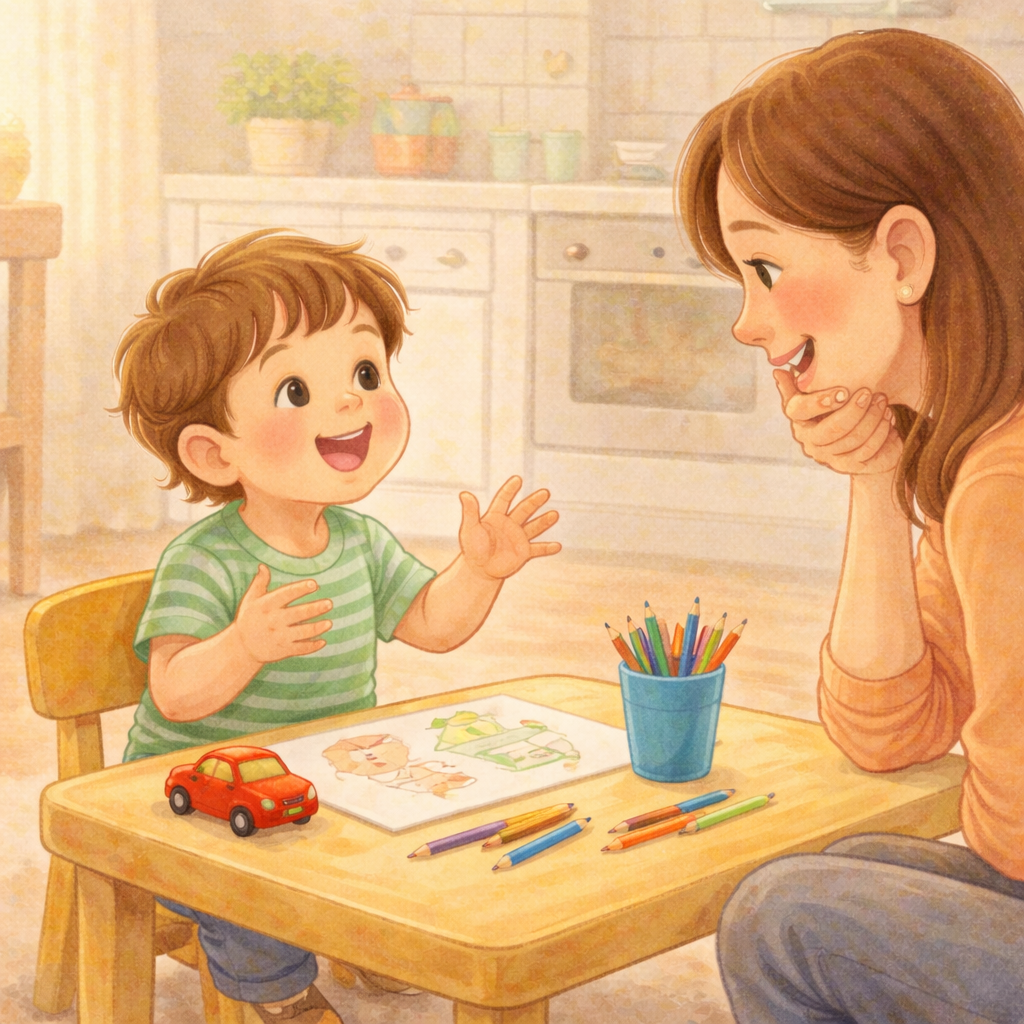
  • Read simple picture books and talk about the images
Language grows through connection and conversation.

You do not need perfect words.
You just need everyday moments together.

Newsletter

Join our Early Readers Club for fun learning tips, sneak peeks at new books, and free printable activities!
ChattyCubs™ 2026 All Rights Reserved.