ChattyCubs
£0.00 0

Basket

No products in the basket.

First Sentences: When They Appear

First Sentences: When They Appear

Hearing your child combine words for the first time is a special moment.

It often happens quietly.

Two simple words, placed side by side, suddenly carry much more meaning.

If you would like to understand how this fits into overall development, visit Language Milestones by Age.

When Do First Sentences Usually Start?

Many children begin combining words between 18 and 24 months.

Some start a little earlier.
Some a little later.

Early “sentences” are usually two words.

For example:
  • “More milk”
  • “Mummy up”
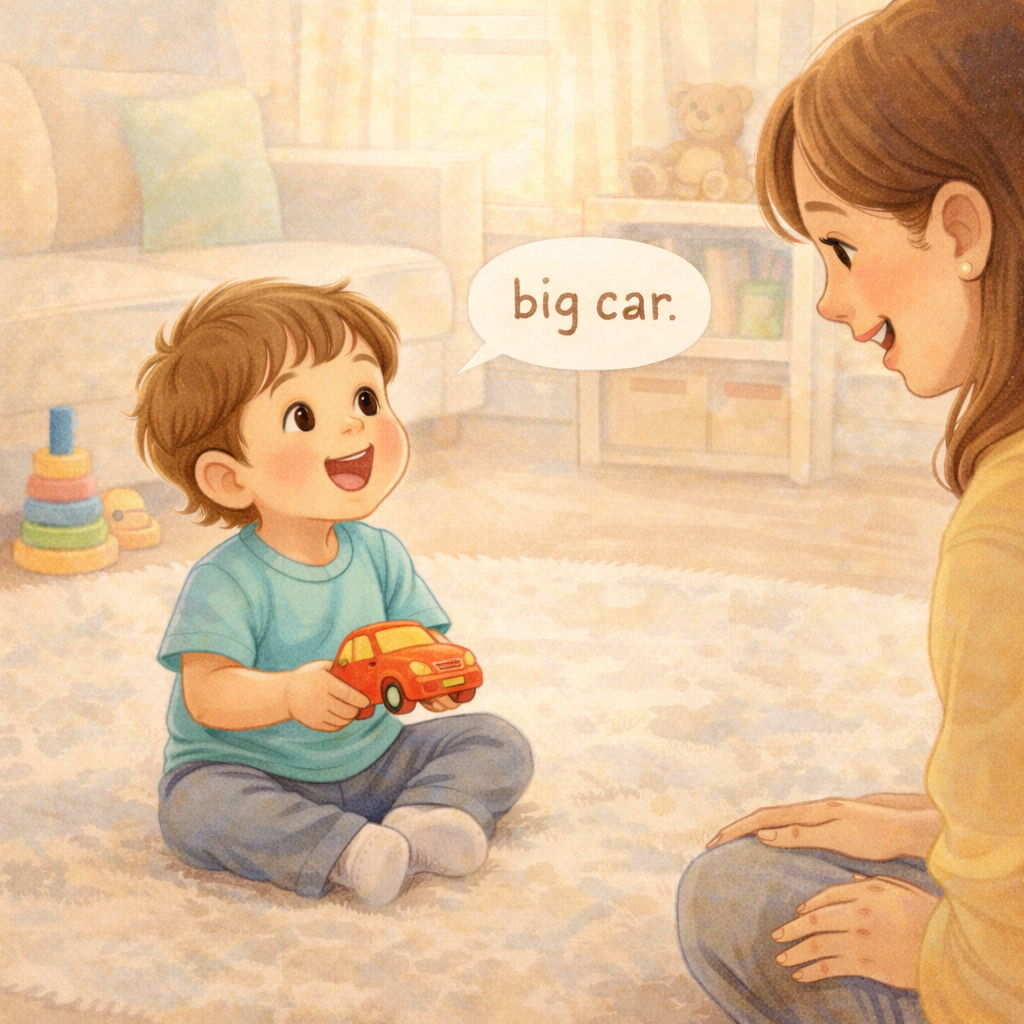
  • “Big car”
  • “Daddy gone”
These short combinations are an important milestone.

They show your child is beginning to connect ideas.
What Counts as a Sentence?

At this stage, grammar does not need to be perfect.

A sentence is simply two or more words used together with meaning.

“Doggy run” counts.
“Me juice” counts.

Your child is experimenting with structure.

That experimentation builds confidence.

What Happens Next?

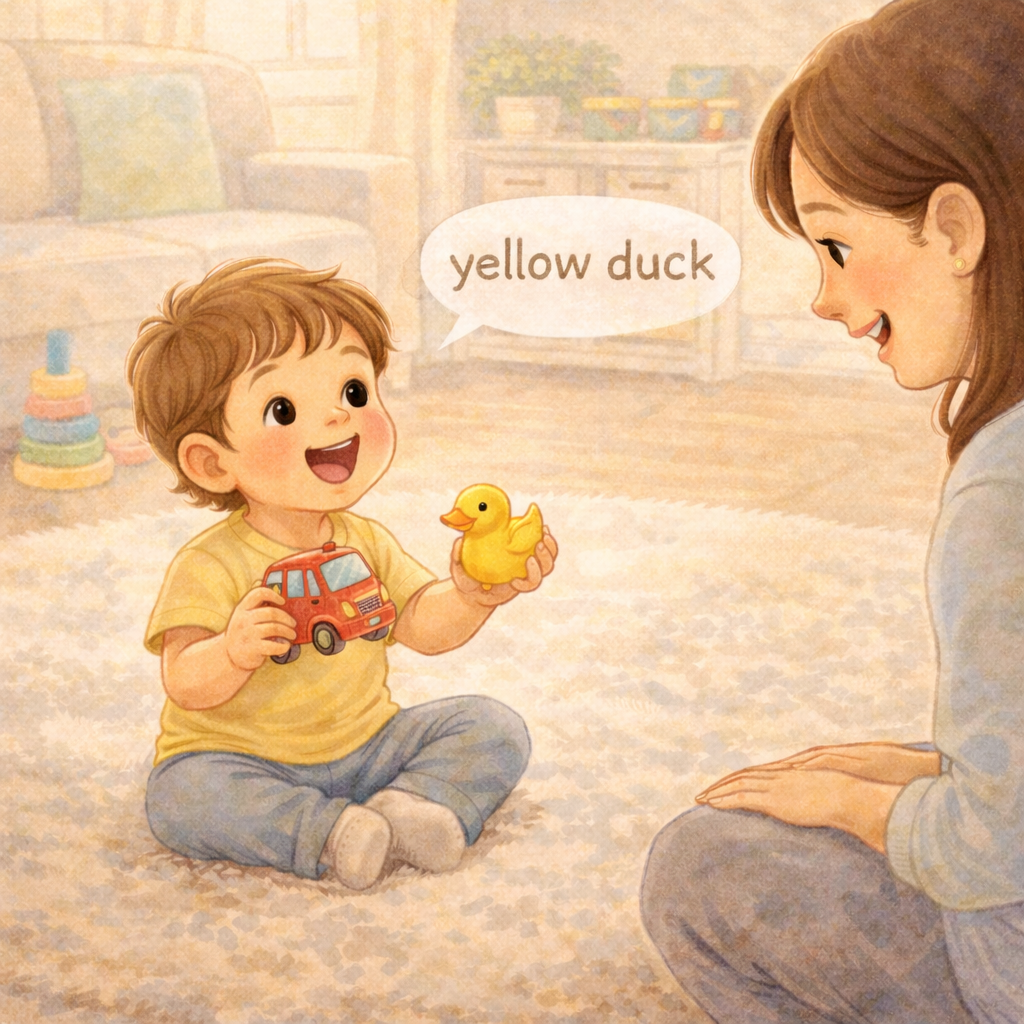
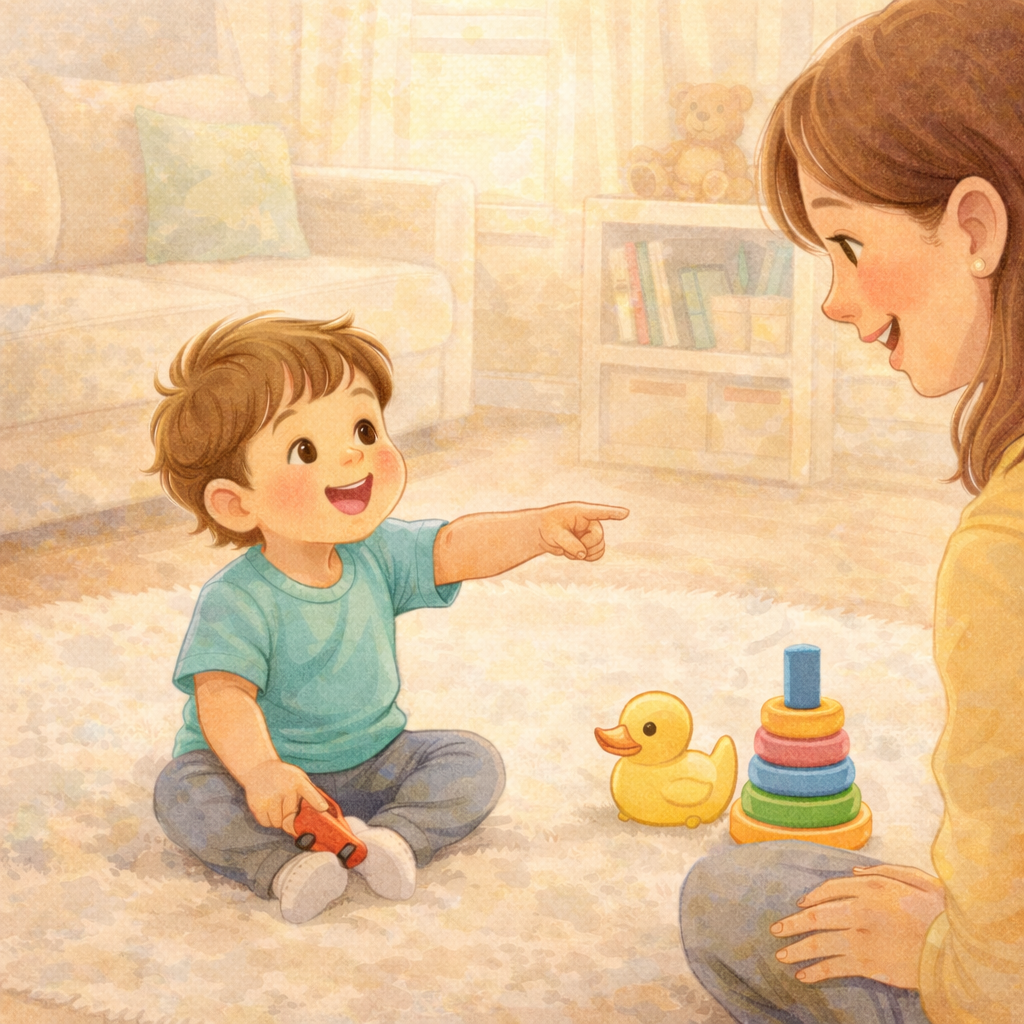
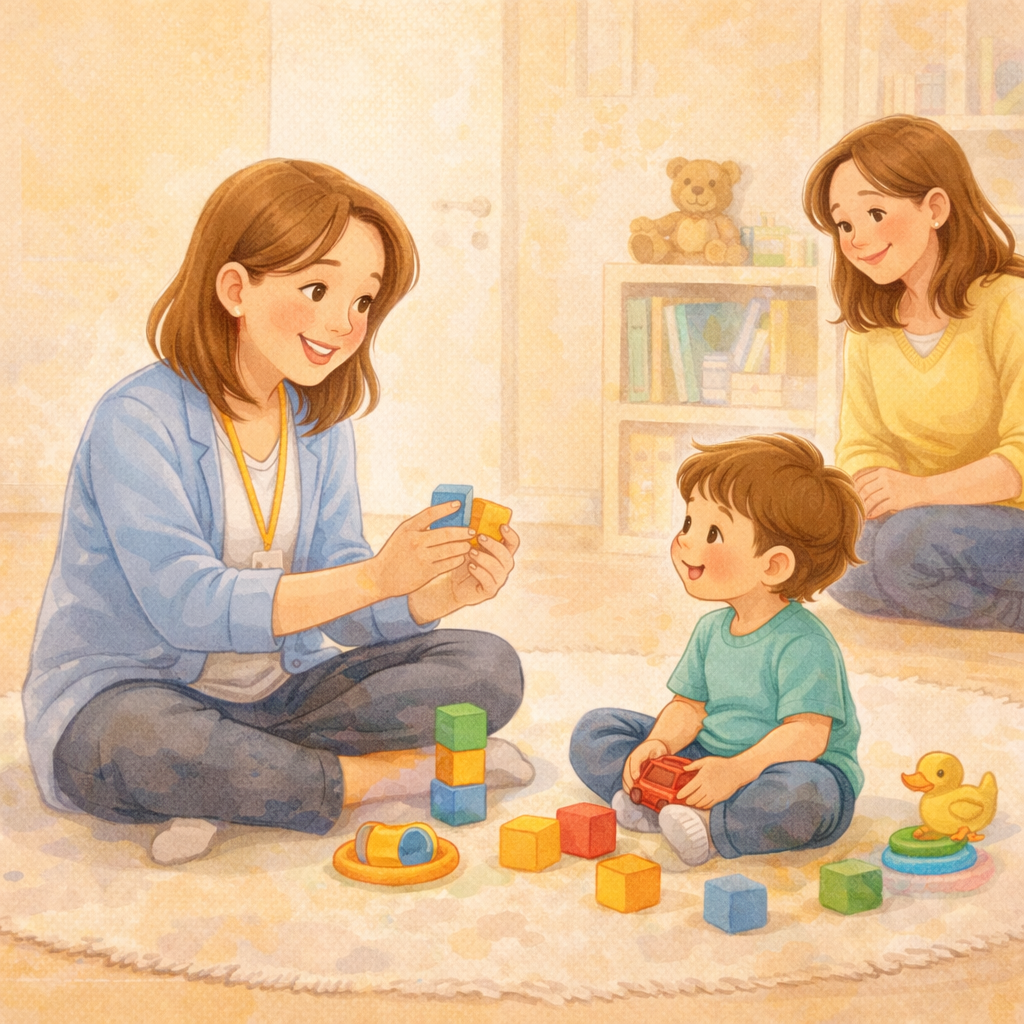
Toddler combining two words while playing on the floor.
After two-word phrases, many children begin:
  • Adding describing words such as “big” or “red”
  • Using simple pronouns like “me” and “you”
  • Asking short questions
  • Using three-word sentences
This growth can feel rapid once it begins.

When Might You Look Closer?

It may be helpful to seek advice if:
  • Your child is not combining words by around 2½ years
  • They use only single words with little progress
  • They struggle to understand simple instructions
  • They seem frustrated when trying to communicate
You can compare typical development at:
For additional guidance, see Common Red Flags by Age.

How to Encourage First Sentences

You can gently support this stage by:
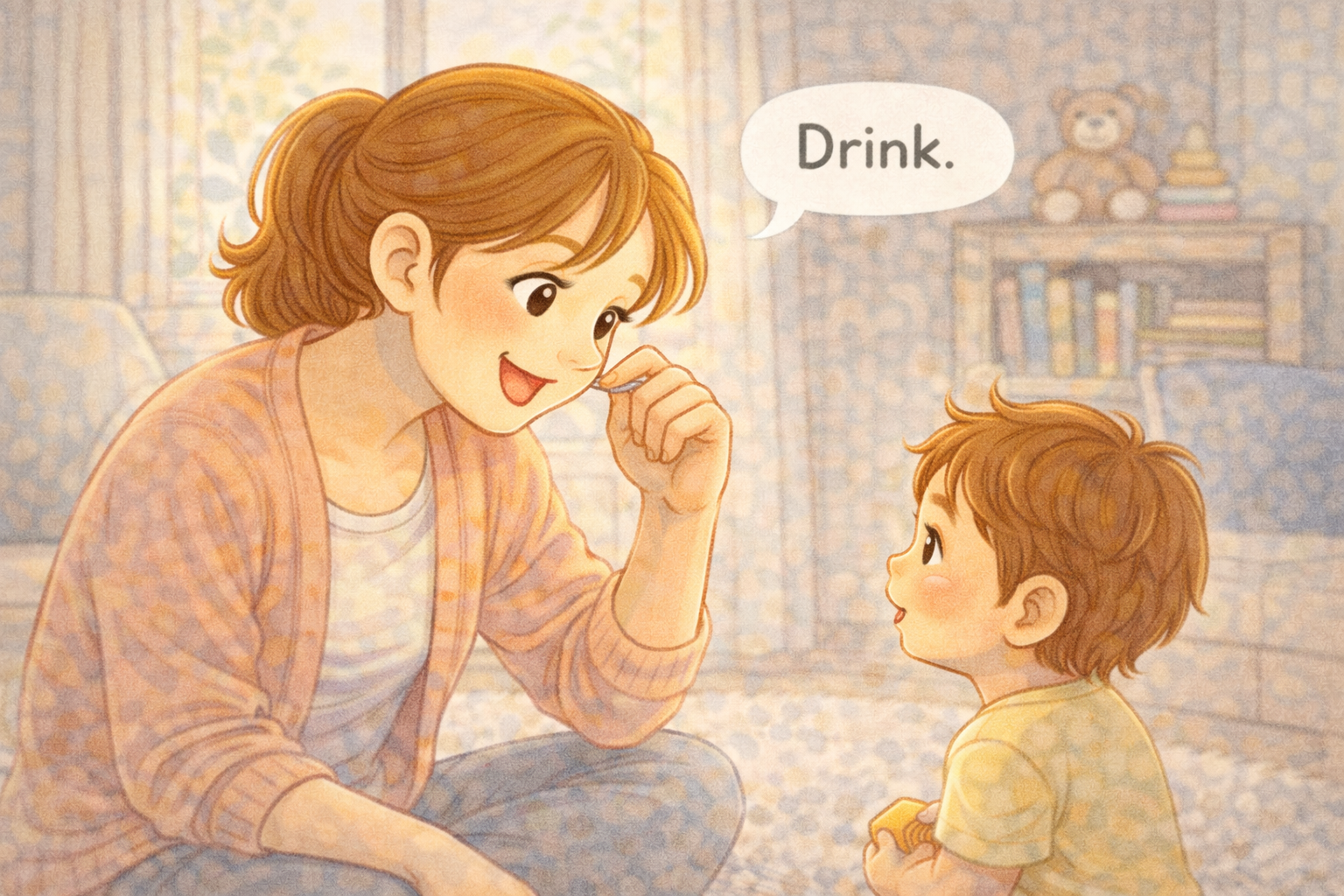
  • Expanding what your child says, for example “car” becomes “big car”
  • Offering simple choices
  • Pausing to give them time to respond
  • Talking about what you are doing together
Language builds through shared moments.

Those small two-word phrases are the beginning of something much bigger.

Newsletter

Join our Early Readers Club for fun learning tips, sneak peeks at new books, and free printable activities!
ChattyCubs™ 2026 All Rights Reserved.